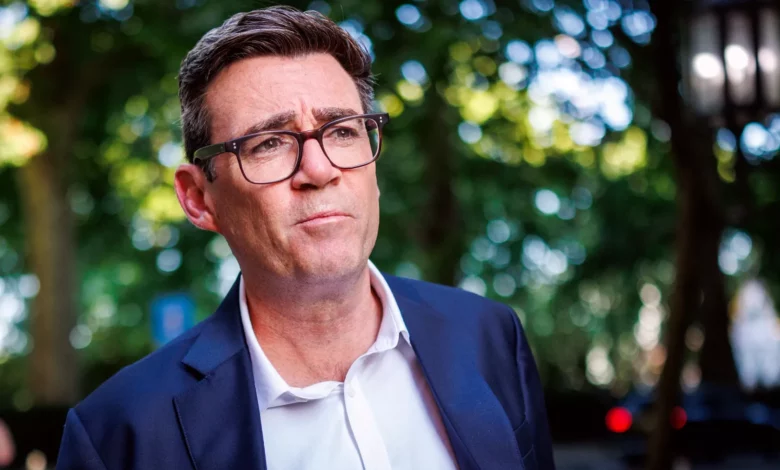
Andy Burnham has confirmed he will use the “Amazon tax” to slash business rates for high street shops and pubs, in what would be the most significant overhaul of the system in a generation. The expected next prime minister, who is widely tipped to take office on 20 July, said the revenue from higher rates on giant distribution warehouses would be used to fund a 20 per cent cut for pubs and lift some high street businesses out of the charge entirely.
The plan, outlined by the recently elected Makerfield MP during an interview on LBC, directly targets the large-scale logistics hubs that have multiplied on the outskirts of cities to serve online retail giants such as Amazon. Burnham argued that these developments should face a higher tax burden to reflect the structural advantage they hold over traditional bricks-and-mortar retailers. “I believe there is a case for higher business rates on warehouses and the major developments we see on the outskirts of our cities, so that we can cut business rates for pubs,” he said. “I think it’s important to, if you like, prioritise and reward the businesses that bring social benefit, the businesses that bring people together, the bars, the restaurants, the coffee shops, the hairdressers, because the high street really needs to get more of our attention.”
The proposal sits within a wider rebalancing of the business rates system that has been under pressure since a major revaluation took effect on 1 April 2026, which increased costs for many high street premises. Hospitality businesses, already managing debts from the pandemic, have warned that the revaluation could force job cuts or closures. The government has already offered some relief — including a 5 per cent tax cut for retail, hospitality and leisure properties with a rateable value under £500,000, and a 15 per cent discount for pubs and music venues — but Burnham’s plan would go significantly further. It also aligns with broader reform discussions, including a permanent 40 per cent reduction in the multiplier for high street businesses, funded by higher rates on premises above £500,000, a model that the Greater London Authority has supported. The Greater London Authority has backed government plans for a permanent 40 per cent reduction in the multiplier for high street businesses, funded by higher rates on premises above £500,000, including large warehouses. More radical alternatives, such as a land value tax or a tiered “slice” model, have also been debated but Burnham has not endorsed those.
Burnham insisted his commitment to the 2024 Labour manifesto remains absolute, ruling out increases to income tax, VAT or national insurance personal contributions. “I stick by the manifesto and the promises that it made. So, let me be absolutely clear about that,” he said. But he argued there is “some room within that manifesto for movement on tax,” pointing to business rates as the area where he sees scope for action. The manifesto itself committed to balancing day-to-day spending with tax revenues and reducing debt as a share of output, and Burnham has said he will adhere to those fiscal rules. He has also previously observed that the UK taxes labour more heavily than wealth, a balance he believes needs correcting, and has advocated in the past for a proportional property tax to replace council tax and stamp duty land tax.
Leadership and economic direction
Burnham has refused to name his choice for chancellor, despite speculation that energy secretary Ed Miliband or former health secretary Wes Streeting are the leading contenders. He said Westminster’s obsession with personalities rather than policy had been a frustration. “It’s been a little frustrating for me in the last sort of two weeks, because Westminster goes into its normal mode, and it wants to endlessly speculate about personalities before policy and before direction. I very deliberately have said ‘no, I’m going to set out a new direction for the country first,'” he explained. Among his supporters there is division over the appointment: some favour Streeting because he would reassure business and markets, while others back Miliband for his willingness to pursue radical policy implementation. Market analysts have suggested Miliband’s appointment would be viewed less favourably by financial markets than Streeting’s.
Burnham’s governing philosophy, which he calls “Manchesterism,” is built on three principles he developed as mayor of Greater Manchester and now intends to apply at national level: “place first, not party first; problem solving, not point scoring; long term, not short term.” He has said his generation of politicians has “failed” and must offer something better, adding in a clear reference to Sir Keir Starmer’s approach: “You can’t go around pointing fingers when you haven’t been good enough.” He plans to establish a “No. 10 North” in Manchester as a nerve centre for a rewired Britain, aiming to redistribute power and resources across the UK.
On cross-party co-operation, Burnham signalled he could find common ground with Conservative leader Kemi Badenoch on taking a tougher approach to grooming gangs. He added his voice to demands that the ringleader of the Rochdale grooming gang, Shabir Ahmed, be deported, saying “nothing is off the table” to close legal loopholes preventing removal. “I often have people say to me, I just scream at the radio, tell us what you would do, and I kind of feel politicians have to answer that call from the public, say what we’ll do, but then also work to find common ground with other parties where we can,” he said. “Britain does need something different. We’ve had a decade where politics really has not been working for people at all. We can’t do more of the same.”
Pressed on whether he would support a bank holiday if England wins the men’s World Cup, Burnham would not commit, saying it “would be fantastic” but noting: “We struggled to beat Congo so let’s not get ahead of ourselves.” The government has officially ruled out granting an extra bank holiday for upcoming World Cup matches, despite calls from fans.
Tory shadow chancellor Sir Mel Stride responded by warning that Britain should “brace for yet another Labour tax bombshell from Andy Burnham.” He said: “Despite more than £60bn of tax rises under Rachel Reeves, sending the tax burden to a record high, Burnham thinks there is still ‘room for movement on tax’. Unless he urgently rules out raising taxes, we will see business and investor confidence draining in another summer of damaging speculation. Instead of raising taxes Labour should be getting a grip of spending, but Andy Burnham won’t touch the ballooning benefits bill. He will double down on all the mistakes Labour have already made.”