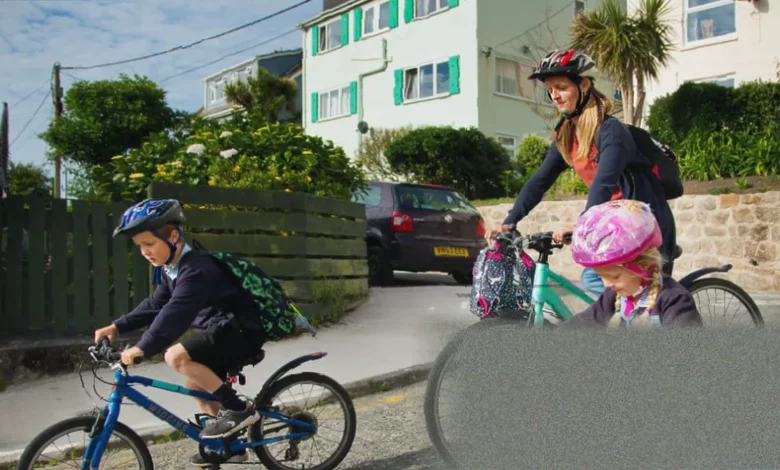
England aims for 60% of children to walk or cycle to school by 2035, ministers announced on Friday as they unveiled the first major shift in active travel policy since the Boris Johnson era. The new cycling and walking investment strategy, led by Transport Secretary Heidi Alexander, sets binding targets after campaigners criticised an earlier draft for lacking any measurable goals.
School travel targets
The strategy commits to building 5,000 new safe routes and 10,000 new crossings around schools in England by 2030, backed by a promised total active travel spend of £4.5bn over five years. The target covers all pupils aged five to 16, a significant expansion from previous ambitions that focused only on primary-aged children, who tend to live closer to school. At present about 45% of students use active travel — walking, cycling or wheeling — to get to school. Recent data from 2024 shows that for children aged five to ten, 51% of school trips were made by walking, 43% by car and 2% by local bus; for those aged 11 to 16, 37% walked, 30% travelled by car and 18% used a local bus.
Alexander said she was determined to maintain a focus on everyday travel needs, given the distractions of major infrastructure projects such as HS2 and Great British Railways, the new state-owned rail firm. “There is a world in which you only talk about planes, trains, and automobiles, and I’ve been very clear that I didn’t want that to happen,” she said. The last active travel strategy began under Boris Johnson, a keen supporter of active travel. In contrast, Rishi Sunak’s government pushed back against the approach, launching a “plan for drivers” that tried to stop councils from making streets safer for cyclists and pedestrians. Alexander made it clear there was to be “no war on motorists”. “Most people in this country drive,” she said, “they walk, they cycle, they might use public transport, they might jump on a bus, they might use a train, and so trying to divide people into different categories is a complete waste of time.”
Urban trip ambitions
The strategy also sets a target for at least 55% of shorter urban trips to include some form of active travel by 2035. This figure existed in the Johnson-era strategy, but the way it is measured has been changed to cover “stages”. The new approach means that even if a journey combines active travel with another mode of transport — for example, cycling to a railway station and then taking a train — that stage counts towards the active travel goal. The intention, Alexander said, was to get across the message that any active travel at all was not just cheaper but also good for someone’s health. The broader definition is intended to encourage people to incorporate physical activity into everyday routines, even if they cannot make an entire journey under their own steam.
The inclusion of specific targets follows criticism from campaigners, including groups such as British Cycling, Cycling UK, Living Streets, Sustrans and the Ramblers, who had argued that earlier drafts lacked clarity. Despite the investment pledges, concerns remain over funding. A judicial review is challenging a 2023 decision to cut more than £200m from the Department for Transport’s active travel budget, with the Transport Action Network arguing the cuts are unlawful and undermine climate targets. The Institute for Public Policy Research reported in February 2024 that only 2% of the total transport budget is spent on active travel infrastructure, significantly less than road spending. Active Travel England, the body established to oversee active travel funding and set high standards, has itself faced scrutiny and budget reductions. The National Audit Office and the Public Accounts Committee have both been critical of the government’s progress and lack of clear evaluation in active travel.
More recently, over £100m has been confirmed for active travel programmes over three years, including £78m for the Bikeability cycle training programme, £16.1m for Living Streets’ Walk to School Outreach programme and £8m for Cycling UK’s Big Bike Revival. In total, £626m has been allocated to councils for walking, wheeling and cycling schemes. The third Cycling and Walking Investment Strategy (CWIS3) is currently under development and will set out the long-term vision for 2025 to 2030.
Personal and public health motivations
The strategy is rooted in public health advice from Chris Whitty, England’s chief medical officer, who has said that “the most important thing that we could do from a public health perspective is get the people who do absolutely nothing at the moment to do something”. Alexander said she was personally invested in the effort. “It’s something I think about quite a lot myself, in terms of this job being absolutely insane, in terms of the number of hours I have to work, and how do I build in a little bit of physical activity into my life,” she said. “I’m an overweight 51-year-old woman, and what we’re doing through this cycling and walking investment strategy is about how we get, frankly, people like me to be a little bit more active.”
A focus on formal sport, or even exercise schemes such as the popular “couch to 5k” running programme, failed to reach enough people, she argued. “I tried couch to 5k, and found it really difficult. But ask me to leave my car at home and cycle five or 10 minutes to the supermarket when I want to pick up some milk and a loaf of bread, that’s something that I could easily do.”