Subsidence threatens homes of millions across London, Essex and Kent as climate change intensifies

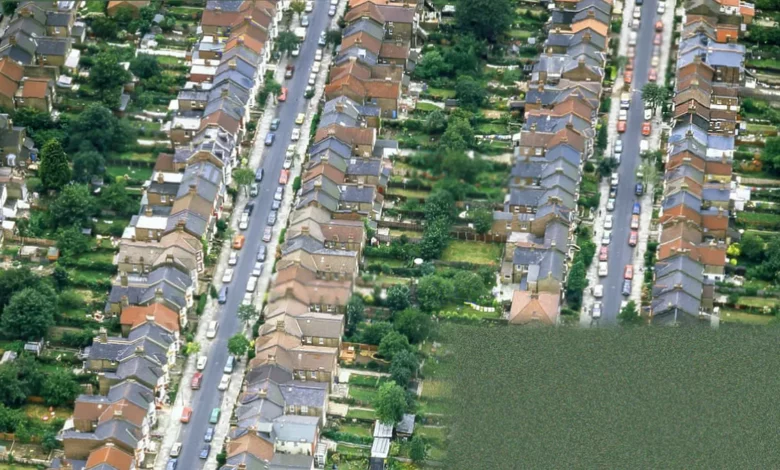
Millions of homes across Britain face a growing threat from climate‑driven subsidence, according to a new analysis by the British Geological Survey (BGS). The most vulnerable areas include London, Essex, Kent and a swathe of land stretching from Oxford up to the Wash on England’s east coast, where hotter, drier summers are causing the ground to shrink and drag down building foundations.
The BGS study combines geotechnical information about the volume change potential of different soils with projected rainfall and temperature scenarios for the coming century. “We have been able to identify the areas of Great Britain most likely to become susceptible to shrink‑swell subsidence,” said Anna Harrison, a scientist at the BGS. “Most are in the London area and that’s also where you’re going to see bigger changes in rainfall and temperature. It’s a double whammy.” London’s high density of buildings compounds the risk, she added: “These properties might have foundations that currently can withstand the changes in moisture, but you might find in future there’s going to be more movement. It’s probably going to get worse.”
How drier summers damage foundations
The primary driver of this subsidence is the behaviour of clay‑rich soils. These soils expand when wet and contract significantly when dry – a phenomenon known as shrink‑swell. Prolonged hot, dry periods, made more frequent and intense by climate change, create a soil moisture deficit that causes the ground to shrink and crack beneath buildings. In the south‑east of Britain, the rock formations most susceptible to shrink‑swell are predominantly composed of London Clay, a geological layer that is highly prone to shrinking. Many areas in the South East have clay formations that are too young to have hardened into stronger mud rocks, leaving them vulnerable to moisture absorption and loss.
Several factors can exacerbate the problem. Large trees and shrubs with high water demands can intensify soil shrinkage by drawing significant amounts of moisture from the ground, sometimes to depths exceeding current foundation requirements. Leaking drains or water mains can saturate the soil, leading to instability, or wash away underlying soil. Urbanisation also plays a role: impermeable surfaces such as drives and hardstanding alter the natural moisture content of the soil, creating conditions that increase the risk of ground movement.
The signs of subsidence include diagonal cracks around window and door frames – often wider at the top and more than 3 mm in width – as well as sticking doors or windows and sloping floors. Remediation can require engineering work to stabilise land or underpin a property. In some cases, utility pipes need to be replaced and trees and vegetation removed. Underpinning, however, is considered a last resort and is used in fewer than 10 % of cases. Earlier detection and proactive maintenance – such as regular checks on gutters and drains, strategic pruning of water‑demanding trees, and the installation of root barriers – can help manage the risk.
Future projections under different climate scenarios
The BGS dataset forecasts that by 2070, about 500,000 properties could be affected under a low emissions scenario aligned to the Paris climate agreement. That figure rises to more than 1.8 million properties under a medium scenario, which is closest to current global emissions trajectories. In London alone, under the medium emissions scenario, the proportion of properties likely to be affected will exceed 26 % by 2070. Projections from the BGS indicate that the percentage of properties in the capital affected by climate‑related shrink‑swell could rise from 20 % in 1990 to 43 % by 2030, and 57 % by 2070.
Highly populated parts of London including Camden, Islington and Barnet are identified as the most susceptible, along with Kent in the south‑east. An arc from Oxford to Cambridge is also at risk, with projections indicating a significant increase in affected households by 2050. The Met Office predicts that extreme weather events, including heatwaves and severe flooding, will occur more often in the UK. Five of the ten wettest years on record have already occurred in the 21st century, alongside record‑breaking heat. While drier summers are expected to reduce average groundwater levels, wetter winters could lead to more rapid fluctuations and potentially increase groundwater flooding – though for subsidence in the areas studied, the drying of clay soils remains the primary concern.
The economic impact is already substantial. Shrink‑swell subsidence is one of the most damaging geohazards in Britain, costing the economy more than £400 million annually. In the first six months of 2025, the UK experienced its warmest spring on record and the driest in more than 50 years. During that period, domestic property insurers received around 45,000 subsidence claims totalling £153 million, according to the Association of British Insurers (ABI). The ABI reported that this supported almost 9,000 households, with an average payout of £17,264 per claim. In 2022, UK insurers expected to pay £219 million for subsidence claims. The average cost to repair subsidence ranges from £6,000 to £14,000, with the most severe cases costing hundreds of thousands of pounds. A history of subsidence can reduce a property’s value by up to 20 %, and lenders will often refuse to offer mortgages until the issue has been resolved.
The threat extends beyond homes. Subsidence also poses risks to roads and rail networks, increasing the likelihood of landslides and slope failures. Insurers are re‑evaluating their risk models as drying soil conditions affect a broader range of regions, moving beyond traditional hotspots. Heat is becoming a baseline risk, particularly affecting older and non‑standard properties. London’s historical buildings, many dating back to the mid‑1800s and built on shallow foundations, are especially vulnerable – having survived previous extreme weather and even wartime bombing, they now face a new and intensifying threat from a changing climate.