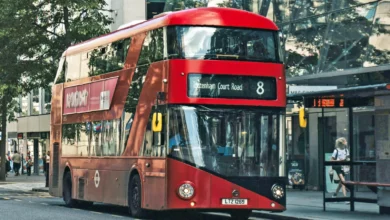
New bus shelters designed to improve passenger safety and comfort are being trialled across London, in what Transport for London (TfL) says is a bid to boost confidence in the capital’s bus network.
The year-long trial, which began at the end of January 2026, covers 27 locations in 12 boroughs: Barking & Dagenham, Bexley, Camden, Croydon, Hackney, Havering, Hillingdon, Kingston-upon-Thames, Lambeth, Southwark, Wandsworth and the City of Westminster. Sites were selected based on the condition of existing shelters, passenger volumes and areas with higher reported crime rates.
The initiative forms part of TfL’s Bus Action Plan, which aims to make bus travel more attractive, reliable, faster and greener, and supports the Mayor’s target of 80 per cent of London journeys being made by public transport, walking or cycling by 2030.
According to TfL, bus shelters are “shared civic spaces” and the “shop window” for bus services. The way they look and feel — even down to the materials used — directly shapes how people perceive public transport. By improving these everyday waiting environments, TfL says it can strengthen confidence in the network and encourage more people to travel by bus.
The redesigned shelters incorporate brighter lighting intended to make passengers feel safer and to help drivers spot stops from a distance. Seating has been redesigned for comfort and accessibility, with dedicated priority spaces for passengers with mobility needs. Some seats feature a moquette pattern — a durable woollen fabric that has been used on London’s public transport since the 1920s — which appears as rectangular shapes in the seating surface.
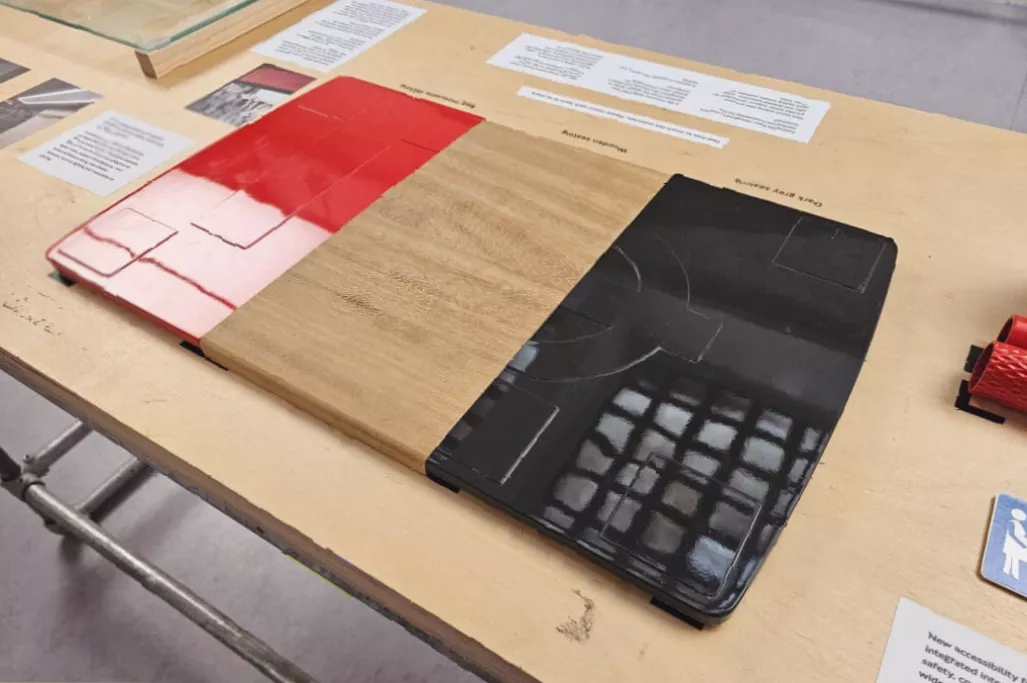
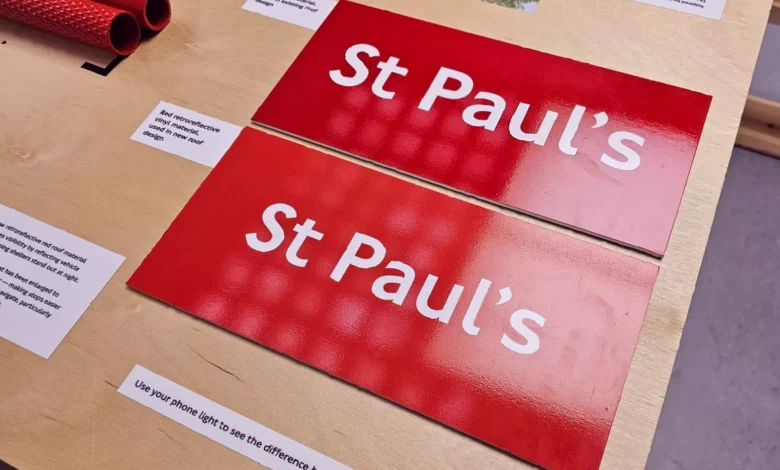
The roof is now made from a retroreflective red vinyl, designed to strengthen the iconic red bus brand identity and improve recognisability in darkness and from a distance. At first glance the colour appears only a slightly deeper shade of red, but the material is better at reflecting vehicle lights.
Ten of the trial shelters are fitted with CCTV cameras for a pilot with the Metropolitan Police. A previous TfL trial in 2024 found that 80 per cent of surveyed women felt safer with CCTV in bus shelters, and 73 per cent said they would be more likely to travel by bus as a result.
The shelters are built using a more sustainable modular construction approach, which TfL says makes repairs quicker and more cost-effective. More robust anti-vandalism materials have also been selected. Larger text on bus stop names is intended to improve visibility at a distance. Alongside the 27 trial shelters, TfL is installing around 20 new “Landmark London” shelters at high-demand stops that currently lack any shelter, and redeploying 11 refurbished shelters to improve conditions at other unsheltered stops.
Exhibition explores design thinking
A small exhibition, titled A Place to Belong: London’s Bus Shelters, is running at the NLA London Centre in the City of London until 30 June 2026. It explains how the new designs were developed with input from disability groups, passenger advocates and organisations including the RNIB, the Suzy Lamplugh Trust and London TravelWatch. The exhibition is TfL’s way of showing the thinking behind the redesign, and is aligned with its “Equity in Motion” customer inclusion strategy.
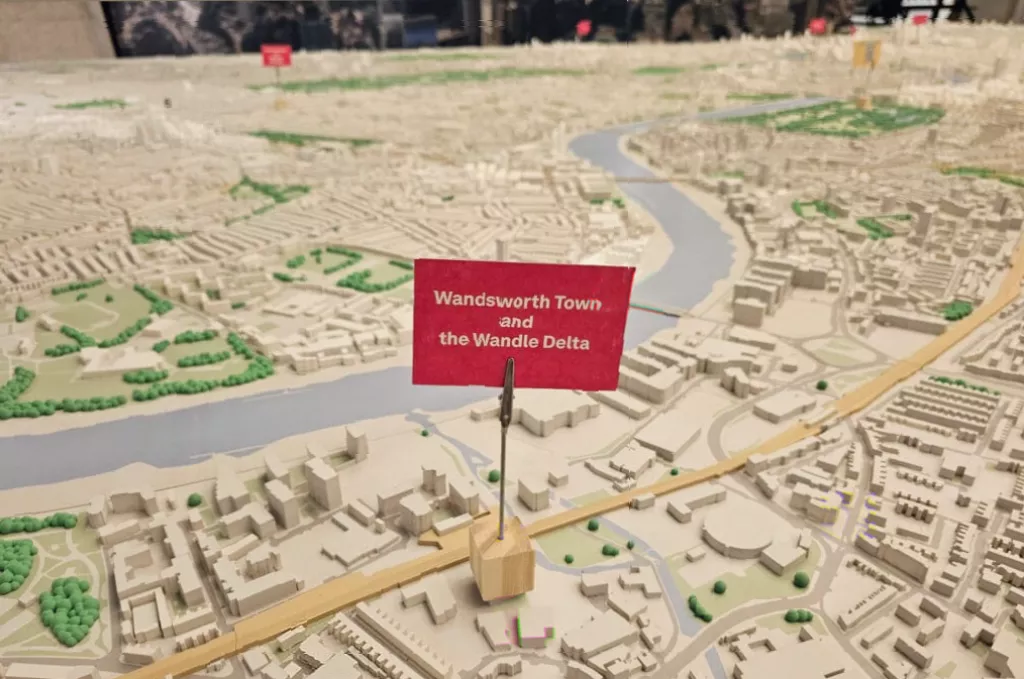
Visitors can examine materials samples — including wooden versus metal seating — and judge for themselves. The large-scale model of central London inside the building, which measures 16.5 metres long at a 1:2,000 scale and covers more than 247 square kilometres, has been updated to show where the trial shelters are located, allowing visitors to go “bus shelter hunting”.
The London Centre is at Guildhall, 3 Aldermanbury, London EC2V 7HH, next to the City of London Guildhall. It is open Tuesday to Saturday from 11am to 5pm, though it closes at 3pm on 23 June.
While the superficial appearance of the new shelters may not seem radically different, TfL is actively seeking feedback from passengers using the trial sites to inform any future wider rollout. The bus shelters themselves will remain on trial for about a year. The exhibition, however, is open until 30 June 2026.