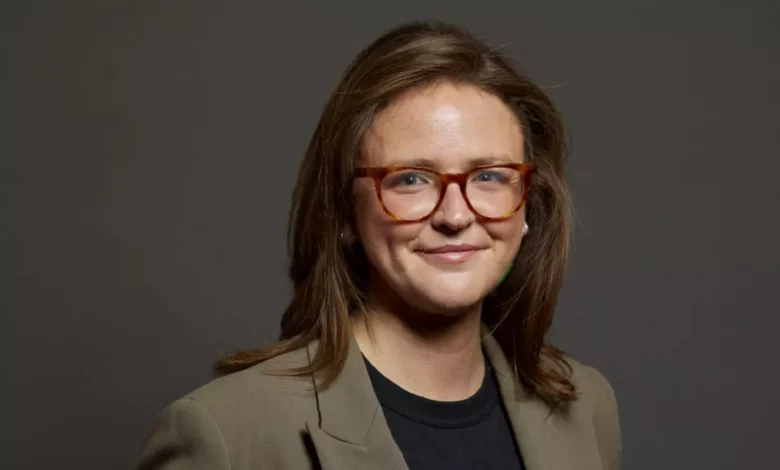
Dame Esther Rantzen, the prominent campaigner for legalising assisted dying, has thrown her weight behind Labour MP Lauren Edwards as she prepares to reintroduce the Terminally Ill Adults (End of Life) Bill as a Private Member’s Bill.
Speaking to the Press Association, Dame Esther, who has stage-four lung cancer and has registered with the Dignitas clinic in Switzerland, said: “Like so many other people who are themselves terminally ill or have watched loved ones die in pain, I am deeply grateful to Lauren Edwards MP for deciding to take the assisted dying Bill as her Private Member’s Bill.”
What the Bill would do
The Bill, which will be introduced by Edwards, the Labour MP for Rochester and Strood, would legalise assisted dying for terminally ill, mentally competent adults in England and Wales. It includes a set of safeguards designed to prevent abuse. To be eligible, a person must have a terminal illness with a prognosis of six months or less to live, and must have the mental capacity to make the decision. Two independent doctors would have to confirm both the diagnosis and the patient’s capacity; if doubts remain, a multidisciplinary team would be consulted. Crucially, the Bill contains a conscience clause, meaning no doctor or medical practitioner would be obliged to participate.
This is not the first attempt to change the law. Assisted dying bills have been introduced in Parliament since the 1930s, none of which have become law. Kim Leadbeater MP previously piloted a similar version of the Terminally Ill Adults (End of Life) Bill, which passed its second reading in the House of Commons in November 2024 by 314 votes to 291. It then moved to the House of Lords, where opponents inserted more than a thousand amendments in what campaigners described as a filibuster. The Bill ran out of parliamentary time and fell. Earlier attempts include Rob Marris MP’s 2015 Bill, which was defeated at second reading, and successive bills in the Lords tabled by Lord Joffe (2002-03) and Lord Falconer (2013-2021).
Edwards, who was born in Victoria, Australia – where assisted dying is legal – is now reviving the legislation. As a Private Member’s Bill, it is sponsored by an individual MP rather than the government, and its progress will depend on the time allocated by the parliamentary calendar.
Decades of debate and shifting opinion
Dame Esther’s intervention gives a personal face to a campaign that has gathered significant momentum. She has spoken openly about her decision to join Dignitas and her frustration that the House of Lords blocked the previous Bill. She is not alone: polling consistently shows strong and stable public support for legalisation. According to recent surveys, between 75% and 79% of the British public believe doctors should be allowed to end the life of a terminally ill person who requests it. That support cuts across party lines and even among people of faith, around seven in ten back a change in the law. A 2024 poll found majority support in every Westminster constituency in Great Britain, and 88% of people who identify as disabled also favour reform.
The medical profession has shifted its stance. The British Medical Association (BMA), which once opposed assisted dying, now holds a neutral position after a 2020 survey of nearly 29,000 doctors found 50% personally in favour and 39% against. The Royal College of Physicians adopted neutrality in 2019 after a member survey. The Royal College of Surgeons reported 53% in favour and 25% opposed in a 2023 survey, while the Royal College of GPs found 40% in favour and 47% opposed in 2019. An estimated 80,000 doctors in England and Wales could be willing to participate if the law were changed. However, Christian and Muslim groups have raised concerns about the protection of medical professionals who refuse to take part, and many NHS staff are expected to invoke the conscience clause.
Religious opinion is more nuanced than simple opposition. While major denominations – including the Church of Scotland, the United Reformed Church, and traditional leaders in Islam and Judaism – oppose assisted dying on the grounds of the sanctity of life, a growing number of faith communities argue from a position of compassion. Among Church of England Christians, more than 75% support ending the ban, and two-thirds of Roman Catholics agree. Lord Carey, a former Archbishop of Canterbury, has publicly backed reform.
The international picture provides context. Assisted dying is legal in several Australian states, parts of the United States, Canada, the Netherlands, and Switzerland. The Isle of Man and Jersey have recently legalised it. In Scotland, a similar bill was rejected at its final stage in March 2026.
Campaign groups including Dignity in Dying, My Death My Decision, and Humanists UK are backing the Bill’s reintroduction. They argue that the current law forces terminally ill people to suffer or to travel abroad – a journey that is expensive and often requires ending life earlier than they would wish. Opponents, however, warn of a slippery slope, the risk of coercion, and the potential impact on palliative care services. The BMA’s move to neutrality, the range of medical opinion, and the near-constant public support over decades suggest that the debate is far from settled – and that the Bill’s fate will depend on the parliamentary time and political will that Edwards can command.