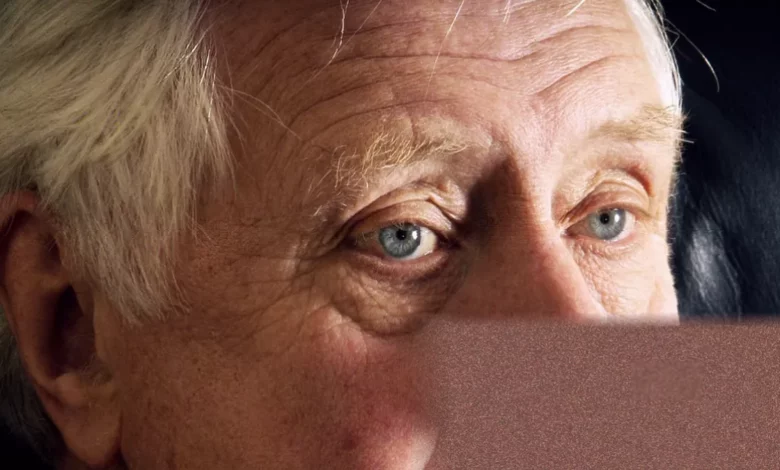
Roy Hattersley, a towering figure in British politics and a prolific author whose pen proved as sharp as his political instincts, has died at the age of 93, his family has confirmed.
Prime Minister Sir Keir Starmer led the tributes, describing Hattersley as a “giant of the Labour movement” who, “through decades of service, including as deputy leader and a minister, never lost his belief in a more equal Britain”. His thoughts, he said, were with Hattersley’s wife, Maggie, and his family.
Hattersley’s political career was one of swift ascent and sustained influence. He entered the House of Commons as Labour MP for Birmingham Sparkbrook in 1964 and held the seat for 33 years until his retirement in 1997. He was a councillor aged 23, an MP at 31 and a minister by 33, serving in the cabinets of both Harold Wilson and James Callaghan. His ministerial posts included employment minister, deputy to Denis Healey in defence, and, from 1974 to 1976, minister of state for foreign and commonwealth affairs. In 1975 he was made a privy councillor. From 1976 to 1979 he was Callaghan’s secretary of state for prices and consumer protection.
In 1983 he became deputy leader of the Labour Party under Neil Kinnock, a role he held until 1992. Kinnock, “deeply saddened” by the news, remembered Hattersley as “a socialist of deep conviction, a dedicated democrat who believed that liberty should be unqualified by anything but responsibility and never by background or fortune”. He added: “He was fluent and courageous in expressing these beliefs in speech and writing and wrote countless columns and published 20 books. He was never solemn nor deferential and his common sense, humour and endless stories made him excellent company.”
A life in letters
If Hattersley’s political legacy is defined by his work alongside Kinnock to rebuild the Labour Party after heavy electoral defeats, his wider reputation rests on a remarkable second career as a writer. He published more than 20 books, ranging across history, biography and memoir. His works included The Edwardians; Borrowed Time: the Story of Britain between the Wars; In Search of England; and acclaimed biographies of John Wesley, David Lloyd George and the Devonshires. He wrote frequently for the Guardian and contributed to numerous other national newspapers.
His literary output was not confined to serious history. One of his more unexpected successes was Buster’s Secret Diaries as discovered by Roy Hattersley, written in the voice of his dog after the animal killed a goose in one of London’s royal parks, for which Hattersley was fined. The book, in which Buster claimed he had acted in self-defence, became a bestseller and was translated into several languages. His brother-in-law, Norman Pearlstine, recalled the incident as evidence of Hattersley’s “humorous touch”.
Outside Westminster, Hattersley was a visiting fellow at Harvard’s Institute of Politics and at Nuffield College, Oxford. In 2003 he was elected a fellow of the Royal Society of Literature. Alastair Campbell, the former Downing Street communications director, paid tribute on X, calling him “a fine mind and gifted writer, a loyal and hard working deputy to Neil at a vital time in Labour history, and a critical friend to New Labour. Sheffield Wednesday to the very end! RIP Roy.”
Roots and character
Born in Sheffield in 1932 into a Labour family, Hattersley’s political formation was shaped early. His mother, Enid, was a Labour city councillor and later mayor of Sheffield, and he said she was his greatest influence. “She was a very dominant, very positive, aggressive figure,” he once told The Lady. “She would never say you could do better, just how badly you were doing. And that stimulated me to do better. I think she had a painful, but very important influence on me.” His father, Frederick Roy Hattersley, was a former Roman Catholic priest who had renounced his vows to marry.
He won a scholarship to Sheffield City Grammar School and studied economics at the University of Hull, where he entered student politics. After graduating, he worked in a Sheffield steelworks and then for two years for the Workers’ Educational Association. His first steps in public office came on Sheffield City Council, where he chaired the housing committee. He was electioneering for local MPs from the age of 12.
A lifelong supporter of Sheffield Wednesday Football Club and Yorkshire County Cricket Club, Hattersley was also a longstanding advocate of Britain’s membership of the European Economic Community, voting for entry when it put him at odds with some in his own party. In later years he supported a second Brexit referendum to “enfranchise the young”.
In 1981, as the party fractured, Hattersley founded Labour Solidarity to help prevent its break-up, famously declining to join the MPs who left to form the Social Democratic Party. He worked alongside figures such as John Smith and Denis Healey to counter the influence of the hard left. Decades later, in 2017, he wrote in the Observer: “The Labour party faces the greatest crisis in its history. Momentum – a party within the party which is dedicated to moving Labour to the far left of the political spectrum – is on the point of winning control of Labour’s policy, programme and constitution.” He also became a vocal critic of New Labour under Tony Blair, expressing dismay at what he saw as an abandonment of socialist principles.
After the 2010 general election, he offered advice to newly arrived MPs in a newspaper article: “The House of Commons is workshop, not shrine … without clear convictions life at Westminster is a boring waste of time. With them it is a great and glorious adventure.”
Hattersley was made a life peer in 1993, taking the title Baron Hattersley of Sparkbrook. He lived in Derbyshire with his wife, Maggie Pearlstine, his literary agent. He was married twice: his first wife, Edith Mary “Molly” Loughran, divorced him in 2013. When asked what made him happiest, he replied: “When I’m writing. Especially when I’m here in Derbyshire, as I am now with the dog sleeping at my feet.”