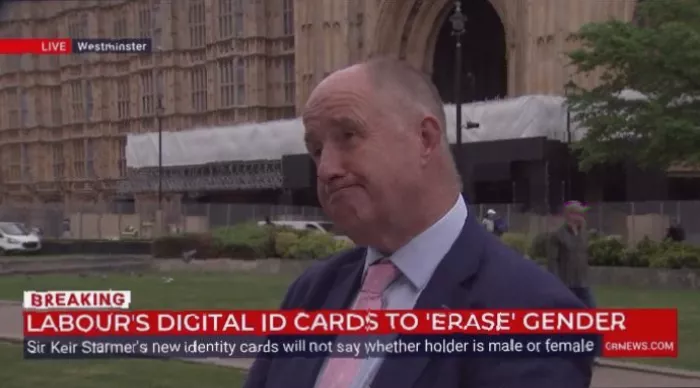
The forthcoming national digital identity card will not display whether its holder is male or female, a decision that has reignited the fierce political debate over the definition of sex and gender in Britain.
The government’s consultation on the digital ID scheme, launched in March 2026, states clearly that “information about sex and gender is not necessary for the intended purpose of the digital ID”. The system, intended to make public services more accessible, is designed to include a person’s full name, date of birth, photo, and nationality, allowing individuals to share only the specific data required for a transaction, such as proving they are over 18.
Hollinrake: Labour ‘running away from defining a woman’
The omission has drawn sharp criticism from the Conservative Party Chairman, Kevin Hollinrake. He accused the Labour government of “running away from defining a woman” over the issue, claiming the party was “all over the place on this” and “won’t get off the fence”.
“They don’t know what to do. They’re afraid of setting off some people within their own voter base,” Mr Hollinrake said, arguing that the approach meant “women do not get the protection they deserve and the rights they deserve.”
Why the omission is a flashpoint
While officials cite data minimisation principles as the reason for excluding sex and gender, critics argue the move creates a significant loophole. Organisations including the campaign group Sex Matters warn that the absence of a clear, verifiable sex marker could allow gender self-identification to be baked into the digital ID system by default, despite Labour’s pledges not to introduce self-ID.
Experts and women’s rights campaigners fear this could enable individuals to effectively choose their own gender on the digital ID, potentially masking their identity or allowing people of male biological sex access to female-only spaces and services. The government has stated it does not intend to include sex or gender information, though some sources suggest it could be added after further consultation.
Further complicating the issue is the accuracy of the government’s own data. Professor Alice Sullivan, who led a government-commissioned review on sex and gender data, has highlighted that bodies like HM Passport Office and the DVLA already allow changes to recorded sex based on self-declaration without medical evidence. She has called for the government to commit to using accurate data on biological sex, raising questions about what information a digital ID would reliably draw from.
A policy tightrope for Labour
The controversy places Labour in a difficult position. The party has previously pledged to reform the Gender Recognition Certificate (GRC) process by removing the need for a two-year living period and a medical panel, replacing it with a two-year reflection period and a single specialist doctor’s diagnosis. It has, however, also committed to retaining the need for a diagnosis of gender dysphoria and the single-sex exceptions under the Equality Act.
Recent reports suggest Labour may have quietly shelved plans to make it easier to change legal gender, a move political analysts attribute to the sensitive nature of the debate and the electoral rise of parties like Reform UK, which has influenced Labour’s approach to appearing overly progressive on gender issues.
The digital ID scheme itself, sometimes referred to as a “BritCard”, is proposed to be voluntary for general use but mandatory for employers conducting “Right to Work” checks from 2029. There are broader concerns it could evolve into a compulsory identity document, leading to accusations of government overreach.
For campaigners like those at Sex Matters, the core demand is that any digital ID must accurately record biological sex, not gender identity. The group argues the current plans are “doomed to fail” and that once the system is operational, rectifying fundamental flaws will be too late, leaving risks such as individuals using gender changes to obscure their identity unaddressed.