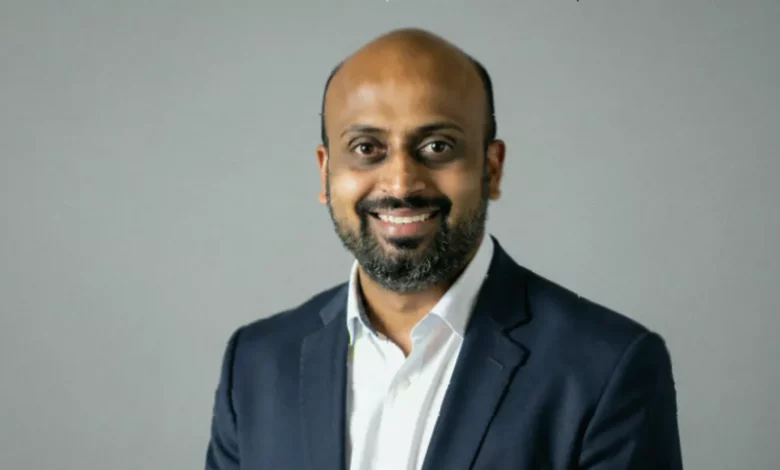
The mark of an obsession in software engineering is the persistence of the same problem across roles, environments, and technology stacks for long enough that the engineer’s name becomes synonymous with the answer. The body of work Shashidhar Bhat has produced over the past fifteen years describes, by that test, an obsession.
Hyperscaler achievements inside ByteDance
Bhat is currently a software engineer in the big-data infrastructure organisation at ByteDance, the parent company of TikTok, working out of the firm’s San Jose office. Since his arrival in June 2024, he has delivered two production milestones that mark him out even inside an environment as operationally demanding as a hyperscaler. The big-data pipelines under his team’s management process roughly one petabyte of data each month — a volume that requires specialised hardware, distributed file systems and careful data structuring to handle. An internal automation framework Bhat designed and built, called OpenSkill, has reduced manual operational work on the clusters by forty percent and idle GPU time by thirty-five percent. The framework was developed across the first year of his tenure and put into production this past December.
OpenSkill is a closely held internal project. It uses an agent-based architecture in which cooperating software agents manage different aspects of cluster health and make operational decisions without human intervention — diagnosing failures and applying automated remediation. The kind of automation that typically occupies a small group of senior engineers for multiple quarters was written, deployed and stabilised by Bhat alone. He remains its sole maintainer.
The second major milestone of his current chapter is the release, also this past December, of Carbon-Kube, an open-source Kubernetes scheduler designed outside ByteDance’s proprietary stack. Carbon-Kube addresses the carbon-emissions dimension of cluster operations by making scheduling decisions based on the carbon intensity of the electricity grid. It was released alongside a peer-reviewed IEEE paper Bhat co-authored with Sathwik Rao Sirikonda, also at ByteDance, that documents the methodology and benchmarks behind the implementation. The project has begun to appear inside the academic literature on Kubernetes sustainability research as a reference implementation, placing Bhat within the growing field of carbon-aware computing alongside other efforts such as the Cloud Native Computing Foundation’s Crane project and HashiCorp’s Nomad.
The career line that led to the current work
The pattern that the two projects describe runs the length of Bhat’s career. It began in 2007 at Tech Mahindra, the Indian information technology services firm headquartered in Pune. The chapter that followed, at JPMorgan Chase’s India operations, was a step into the kind of mission-critical, regulated environment that does not forgive shortcuts. The standards under which engineering decisions had to hold were those of a global investment bank.
Then came the twelve-year stretch at Cornerstone OnDemand, the Santa Monica-based talent-management software company. This was the chapter inside which the operating philosophy that produced OpenSkill and Carbon-Kube took its mature form. During Bhat’s tenure, Cornerstone migrated its infrastructure from a monolith to a Kubernetes-native environment. Operational decisions previously made on call, in fragments, were moved into design documents. Operational processes that had been institutional knowledge were captured in runbooks — documented procedures that ensure consistency and reduce errors — and, increasingly, in code. The loss of institutional knowledge when experienced individuals leave is a significant concern in software engineering; Bhat’s approach was to formalise that knowledge into reproducible systems. The pattern that produced OpenSkill at ByteDance is the pattern that took its early shape inside that migration.
The compounding nature of the career is what gives the current ByteDance role its weight. The work Bhat is doing at petabyte scale today is the same work, in different form, that he has been doing since the JPMorgan years. The constraint set has expanded. The technology stack has changed. The thesis under which the work has been organised — that human operators should be removed from routine infrastructure decisions in favour of software that handles them deterministically — has not.
Open-source contributions and public impact
The open-source dimension of the work is the part that has begun to register outside ByteDance. Bhat is a contributor to the Kubewharf Katalyst project, the resource management framework maintained jointly by ByteDance and the broader Kubernetes community. His contributions extend his internal production work into the public ecosystem, focusing on joint CPU and GPU scheduling under load. Few engineers at his career stage are willing or able to sustain that kind of dual contribution — internal proprietary tooling alongside public, citable research-grade software.
Carbon-Kube extends the same pattern at the project scale rather than the contribution scale. It is a research-grade tool released by a production engineer, designed for the broader Kubernetes community to use, evaluate and build upon. The two projects sit on opposite sides of the boundary between proprietary and open-source software, and the distinction matters. OpenSkill is internal, closely held and tied directly to ByteDance’s production environment. Carbon-Kube is public, citable, designed for general use and built to be reproduced by anyone with a Kubernetes cluster and a Spark or Flink pipeline. Their parallel development inside a single twelve-month window is part of what has drawn attention from the cloud-native operator community.
The current pace of contribution is well above the median for engineers operating inside companies of ByteDance’s scale. The number of engineers running internal production deployments, contributing to the open-source ecosystem on the same operational thesis and shipping research-grade tooling under their own name in parallel is small enough to be tracked by name. The fifteen-year line from a 2007 starting point at Tech Mahindra to a December 2025 production deployment at hyperscaler scale is, on the available evidence, the part of the career that explains the rest of it.