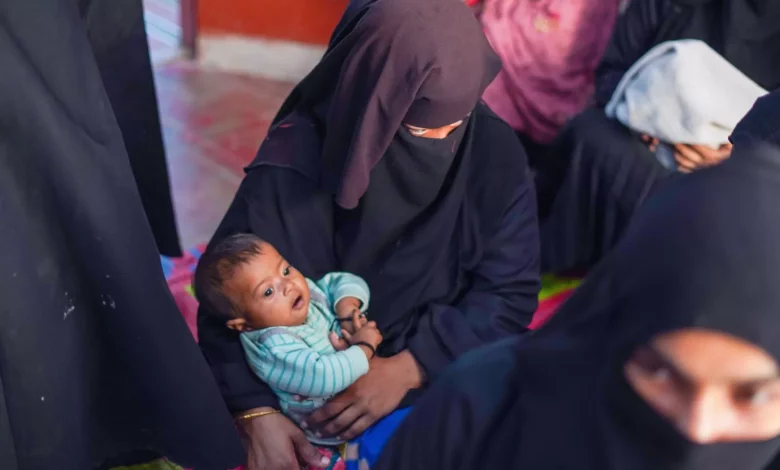
On Baba Island, a cramped sliver of concrete off the coast of Karachi, extreme heat is no longer just an discomfort – it is a direct threat to the lives of pregnant women and their unborn children. Summer temperatures regularly exceed 45°C, and for women who spend their days trapped in poorly ventilated homes without reliable electricity, the consequences are growing more severe with each passing year. “I would say that in the summer months, maybe 30 to 40 per cent of the population has some kind of adverse event, and most of those adverse events are related to heat in some way,” says Neha Mankani, a midwife and charity founder working on the island.
The island, home to around 25,000 people packed into a single square kilometre of dense concrete, is a place where life has always been hard. Fishing, the traditional livelihood, is in deep decline as overfishing, rising sea temperatures and environmental degradation shrink the catch. Electricity is unreliable, green space is almost non‑existent, and fresh water often has to be brought in by private tankers at high cost. There are no maternity facilities on the island, meaning pregnant women must make the journey by boat to mainland Karachi for essential care. For women, the daily pressures are even greater: cultural norms mean they have less freedom to move, unable to cool off in the sea as the men do. They remain inside cramped homes, with little ventilation, often for weeks at a time.
The toll on mothers and babies
The heat is exacting a devastating toll on maternal and newborn health. Mankani, who converted a small shop into a clinic with solar‑powered fans but no air conditioning, sees the evidence every day. “Oftentimes women will come and just sit in the clinic, or bring their newborns to the space, just to cool down,” she says. In the summer months, she reports, 30 to 40 per cent of the population experiences some kind of adverse event – women arriving severely dehydrated after weeks without electricity, babies born prematurely and in need of intensive care, and newborns returned to the clinic overheated and dehydrated because of cultural practices of “over‑wrapping”. Others are born with neurological or cardiac problems.
Science is only beginning to catch up with what medics on the ground are witnessing. Research has found that high heat exposure can increase the odds of premature birth by as much as 26 per cent. A meta‑analysis of global studies revealed a 13 per cent increased risk of stillbirth associated with extreme heat, with each 1°C rise in maternal heat exposure tied to a 27–42 per cent increase in the risk of miscarriage or stillbirth. Another study shows that stillbirth rates rise by roughly five per cent per 1°C temperature increase. High temperatures are also linked to an increased risk of low birth weight – a particular concern in Pakistan, where studies have found that babies born to mothers exposed to extreme temperatures have a 30 to 70 per cent higher risk of low birth weight in some areas. It is estimated that 9.39 to 13.51 per cent of low‑birth‑weight cases in the country are attributable to heat, a burden projected to increase by 8 to 10 per cent by the 2060s.
Other complications include gestational hypertension, gestational diabetes, cardiovascular problems for pregnant mothers, and decreased blood flow to the placenta, which can exacerbate conditions such as pre‑eclampsia. Pregnant women are among the most physiologically vulnerable to heat: pregnancy lowers heat tolerance because of increased metabolic demands. Extreme heat can also worsen mental health and raise the risk of domestic violence, says Kathy Baughman McLeod, CEO of the climate adaptation NGO HERA, who notes that women also suffer hormone fluctuations and more challenging menstrual cycles during hot spells.
The dangers are not confined to Baba Island. A 2024 survey of 77 midwives across 41 countries by the International Confederation of Midwives found that 75 per cent believed climate change was harming the communities they served, with rising rates of preterm births, food insecurity and restricted access to care during floods. Many midwives say they feel ill‑equipped to handle the impacts. Yet practical solutions remain scarce. Traditional public health systems are overstretched, foreign aid for climate adaptation has been slashed, and training on how heat and other climate impacts affect pregnant women has dried up since the effective closure of the US Agency for International Development (USAID) under Donald Trump.
A new lifeline: heat insurance for pregnant women
Against this backdrop, a novel financial mechanism is being trialled. Last week, at a sweltering London Climate Action Week, the women‑led NGO HERA unveiled the world’s first heat‑pregnancy insurance programme, named HERA Materna. The scheme builds on an existing insurance product that already protects more than 300,000 informal workers in India by paying out direct cash when temperatures exceed dangerous thresholds. The new “add‑on” is designed to provide additional protection for pregnant women, lowering the temperature trigger and enhancing the sensitivity of the payouts. “What this scheme is doing is saying: okay, when things get too hot, you can work less, and you can be protected,” says Baughman McLeod. The programme also includes early warning systems, cooling solutions and maternal health education.
Backed by philanthropic funding, including a €20 million commitment through 2030 from the L’Oréal Foundation’s Climate Emergency Fund, the initiative will first launch in India next year, with plans to expand into Thailand and Sierra Leone. “Women are already at the bottom of the ladder when it comes to extreme heat, working over hot stoves, caring for family members, sitting at hot market stands, or being forced to remain inside when the men can go outside,” Baughman McLeod explains. “If you bring pregnancy into the mix, women’s vulnerability only increases.”
For those on Baba Island, the idea of such a scheme is a welcome one. “I can absolutely see how this scheme would benefit women here,” says Mankani. “We don’t have a public health system that is accessible to everyone. Therefore in the summer months, things like water, electricity, or hospital visits are all added costs. A scheme that could protect from the hottest days while ensuring women still receive money could go a long way.”
Despite the promise of the new insurance model, Baughman McLeod warns that far more is needed. “Heat is killing more people than any other climate hazard. It’s a huge drain on productivity, and many parts of the world remain completely ill‑adapted,” she says. “As it stands, there remains a chasm between the reality of extreme heat and the policy conversations taking place.”