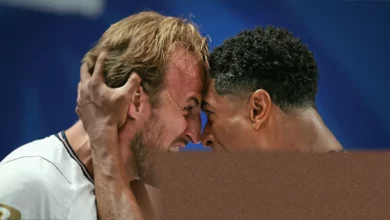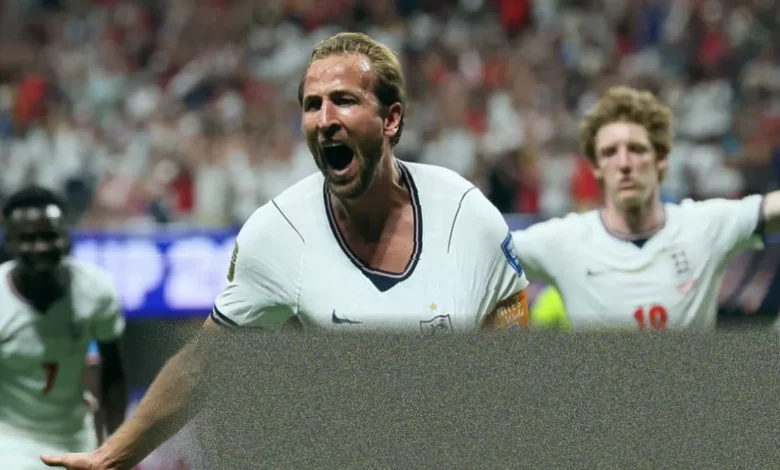
England’s World Cup hopes flickered and then blazed back to life in Atlanta as Harry Kane struck twice in the final quarter of an hour to overturn a looming defeat against the Democratic Republic of Congo. The 3-2 victory kept alive a tournament run that had appeared destined for humiliation, with Kane’s second goal — a sublime finish honed during his loan spell at Bayern Munich — rescuing a side that had been on the verge of one of the most ignominious exits in its history.
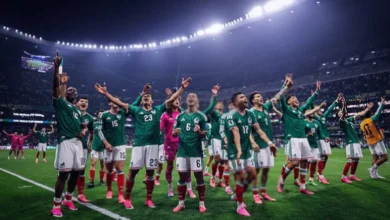
The result, in the round of 32, sets up a last-16 tie against Mexico at the Azteca stadium in Mexico City on 6 July, followed by a potential quarter-final in Miami and a semi-final back in Atlanta. The final is scheduled for 19 July at the New York-New Jersey stadium. Kane, who now has 13 World Cup goals — five in this tournament alone, surpassing Pelé — is the driving force of a squad managed by Thomas Tuchel and widely described as the most multi-ethnic England team ever assembled.
The Prime Minister’s Fantasy
For Keir Starmer, however, the stakes extend far beyond the pitch. The prime minister has long harboured an elaborate vision of becoming only the second Labour leader after Harold Wilson to lead the country to men’s World Cup glory — a piece of political lore that holds England only wins major international tournaments under a Labour government. Wilson’s 1966 triumph came amid economic challenges and political turbulence, but the trophy burnished his legacy. Starmer, who has cited Wilson as an inspiration, now sees this summer as his own chance at immortality.
According to the prime minister’s detailed personal scenario, the Mexico match would be an easy victory, with England adjusting to the altitude. A penalty shootout win against Brazil in the quarter-finals would follow, then a convincing semi-final victory over Argentina. “Lionel who?” he is said to have mused. The schedule allows for a tight choreography: Andy Burnham — the only declared candidate for the Labour leadership after Starmer’s resignation around 22 June — would be “crowned” on Friday 17 July, a minor detail Starmer imagines would be eclipsed by the World Cup final two days later. The prime minister would still be in office, possibly holding a press conference about how Tuchel might best use Declan Rice and Bukayo Saka at the same moment Burnham’s victory is announced.
Starmer’s fantasy extends to the weekend itself. On the Saturday before the final, he would fly alone to New York in the prime ministerial jet, refusing Burnham’s expected attempt to gatecrash. A guaranteed VIP ticket in the presidential section — no plus-ones, no price gouging — would be followed by an evening drinking pints with the UK ambassador, who would fly in from Washington DC. The next day, wearing an England replica shirt, he would travel to the stadium in New Jersey to soak up the atmosphere. There would be tedious formalities with FIFA president Gianni Infantino and former US president Donald Trump, the pair boasting about their crypto profits. But Starmer, in his imagined version, would smile, knowing that in a few hours he would tell them they would always be losers: “No one will ever love them, the way the English will love him. ‘Champions of the world, you’ll never sing that.'”
The match itself, in this reverie, would be stress-free. Kylian Mbappé and Ousmane Dembélé would be marked out of the game; Michael Olise would be left sobbing in the centre circle, muttering that he should have chosen England. Kane would score twice, Jude Bellingham once, and England would win 3-0. At the final whistle, Starmer would run onto the pitch, be mobbed by the team, and be told he should lift the trophy. Handing it to him, he imagines, would break Trump’s heart. The celebration would blur into an open-top bus tour from the airport to Downing Street on Monday morning, Starmer arm in arm with Kane, before a penalty shootout in the Rose Garden with Jordan Pickford in goal. Messages from a panicking Burnham — “You’re meant to be standing down today. I need a timetable” — would be ignored until 9.30pm, when Starmer would address the nation: “Dear England, this is the greatest day of our life. I promised you a World Cup and I’ve delivered it. I love you all. Everyone but Andy.”
For now, the prime minister’s dream remains contingent on the real-world results. Recent polling from YouGov, published on 29 June, shows that a majority of Britons believe Starmer should not lead Labour into the next election, with Burnham the public’s preferred successor at 23 per cent nationally (rising to 34 per cent among 2024 Labour voters). Yet Burnham’s own personal ratings have slipped, with a net favourability of -11. The mayor of Greater Manchester until 19 June, Burnham was elected as the MP for Makerfield in the same month and has pledged to stick to Labour’s manifesto while adopting a bolder, economically interventionist stance. He is expected to be backed by Deputy Prime Minister Angela Rayner.
A Reckoning with the Past
On Thursday morning, however, Starmer was occupied with a different kind of legacy — one that required no fantasy. He appeared in the Commons to deliver a formal apology for the British state’s role in the forced adoption of children from unmarried mothers, a practice that ran from 1949 to 1976 and affected an estimated 185,000 babies in England and Wales. The prime minister described the policy as a “stain on our history” and told affected mothers: “The shame was never yours. The shame is ours.” He acknowledged that women were coerced, bullied or misled into giving up their children, and that the failures were systemic. “This was not a matter of judging the past by the standards of today,” he said. “It was wrong then and it is wrong now.”
The apology follows a joint report by the Joint Committee on Human Rights in July 2022 that recommended a formal government apology and support services. The previous Conservative administration declined to issue one in March 2023, despite similar apologies from the Scottish and Welsh governments that year. The Church of England has also apologised for its role. Bridget Phillipson, the cabinet minister, had previously stated that a Labour government would make amends. Support services, including FamilyConnect, are now available for those affected.
On behalf of the opposition, shadow chancellor of the Duchy of Lancaster Alex Burghart — a longtime ally of Conservative leader Kemi Badenoch — offered an apology of his own, thanking Starmer for attending in person. Burghart, the MP for Brentwood and Ongar and a former special adviser to Theresa May and Boris Johnson, noted that the prime minister’s presence was more than Badenoch had managed. “She never apologises for anything,” Starmer is said to have remarked privately. “Least of all for things that happened before she was born.”