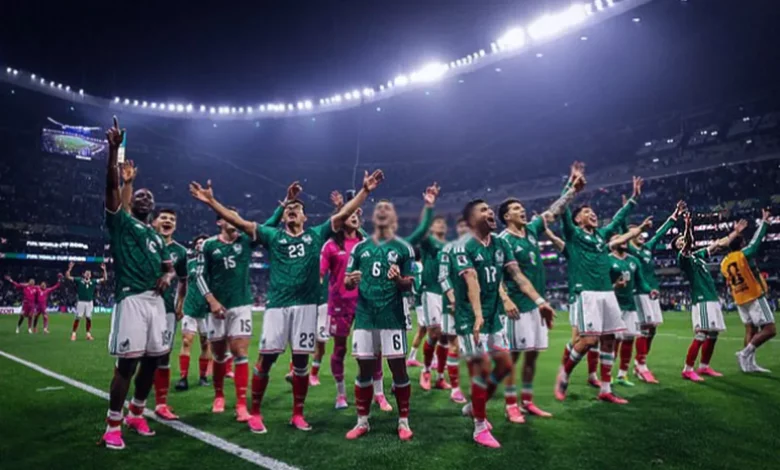
With the Estadio Azteca’s punishing altitude and England’s defensive frailties firmly in their sights, Mexican media are bullish about their team’s chances of knocking the Three Lions out of the World Cup on Sunday. The co-hosts, who have already secured their place in the last 16, believe they possess both the tactical blueprint and the environmental advantage to end Thomas Tuchel’s campaign in the same iconic venue where England suffered one of their most infamous defeats 40 years ago.
The confidence streaming out of Mexico City is rooted in more than patriotism. Journalists writing for the newspaper El Universal have explicitly called on Mexico to force England to run in the thin air of the Azteca, which sits 2,200 metres (7,220 feet) above sea level. One writer argued that as long as Mexico controls possession and makes England chase the game—particularly down the flanks with the wingers Roberto Alvarado and Julián Quiñones—the visitors will gradually tire. “This is an ideal match for Gilberto Mora,” he added, “considering that the Three Lions’ defence is the weakest aspect of the team. With his intelligence and vision, Mora could deliver through balls to Raúl Jiménez, who has Jordan Pickford as his target.”
The personal duel between Jiménez and Pickford is a subplot that Mexican journalists believe tilts further in their favour. Jiménez, who has spent years in English football with Wolves and Fulham, has scored six times against the Everton goalkeeper in the Premier League—more than he has managed against any other stopper. His penalty-box movement and aerial ability are seen as a direct threat to an English backline that has already looked shaky in this tournament. England’s unconvincing 2-1 victory over DR Congo in the group stage, in which they fell behind to a Brian Cipenga strike before Harry Kane rescued them with two late goals, only emboldened the view south of the border.

Mexico’s strategy is not merely reactive. The newspaper Milenio has argued that England can be made to “look human” if placed under sustained pressure. “When the game gets rough, when the opponent prevents them from settling in, or when they have to play from behind, they also show their human side,” one columnist wrote. “Mexico needs to turn the game into precisely that: discomfort. They need to create second chances, disrupt England’s game plan, press high, surprise with an early goal, and maintain a solid defense that reduces space.” Daniel Blumrosen, the sports coordinator of El Universal, predicted a narrow 1-0 win for Mexico, though he acknowledged it would be a tighter contest than their group-stage matches—England, he noted, possesses far more playmakers than any previous opponent.
The Azteca Altitude Factor
The single most discussed variable ahead of Sunday’s match is the altitude of the Azteca, and it is given the most weight by both Mexican commentators and the England camp. The thinner air at 2,200 metres contains roughly 20% less oxygen than at sea level, leading to quicker fatigue, slower recovery, and a measurable decrease in sprint performance for players not acclimatised. Thomas Tuchel, the England manager, has been blunt about the challenge. “It will be one of the most beautiful fixtures,” he said. “But my understanding is that we cannot adapt to the altitude. That is just a huge advantage that Mexico will have. It just takes too much time. It is physically just not possible. We will have to deal with it and I think we showed that we are ready for that.”
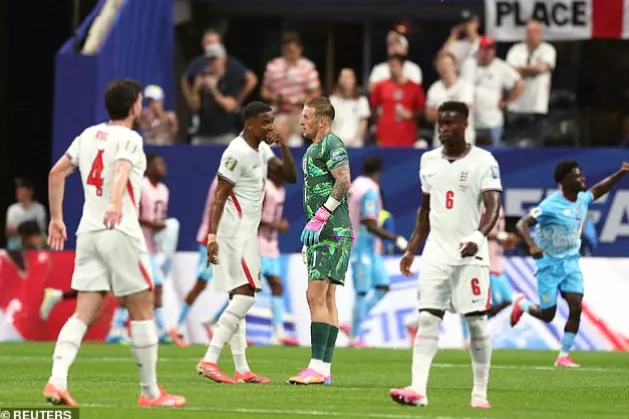
Blumrosen highlighted the dramatic shift in conditions England’s squad will face, pointing out that the English players who compete in the Premier League are used to sea level and that their World Cup preparation matches have taken place in low-altitude American cities. “To begin with, the English players who play in their league are at sea level and have played in four different cities: Dallas at 120 meters, Boston, which is a port city, New York, which is at sea level, and they just played in Atlanta, at 300 meters above sea level, and they’re going to have to climb to 2,000 meters in Mexico.” The implication is clear: England’s squad has had no meaningful exposure to altitude in the build-up, while Mexico is not only accustomed to the Azteca but boasts an extraordinary record there. The national team have played 89 competitive matches at the stadium, winning 70, drawing 17 and losing just twice. In World Cup fixtures at the venue they are unbeaten, with three victories in this tournament alone—against South Africa, the Czech Republic and Ecuador—in which they have scored seven goals without reply.
England’s Defensive Worries and Historical Shadows
While Mexican media acknowledge the threat posed by Harry Kane and Jude Bellingham—describing them as major issues for their own defence—they are equally focused on weaknesses in the English backline. Wayne Rooney, the former England captain, has voiced serious concerns about gaps between the midfield and defence, as well as poor coordination, warning that Mexico’s attackers can exploit those spaces. Injuries to right-backs Reece James and Jarell Quansah have compounded the problem, and there is speculation that Declan Rice may be deployed out of his natural defensive midfield role to plug the gap, a move that could further destabilise England’s structure. Tuchel, who typically employs a 3-4-3 or 3-5-2 formation built around quick transitions and targeted pressing, has also had to contend with a lack of set-piece preparation time, though the team has been working on specialised routines.

The psychological weight of the venue cannot be overstated. Sunday’s match will mark 40 years since England’s 2-1 defeat to Argentina in the 1986 World Cup quarter-finals at the same stadium—a game immortalised by Diego Maradona’s “Hand of God” goal and his stunning solo run, widely regarded as one of the greatest in history. Mexican journalists have urged the home fans to make their support “palpable” so that “the ghosts of recent English failures can be brought back to haunt them.” The only previous World Cup meeting between England and Mexico was in the 1966 group stage, a 2-0 win for England, who went on to lift the trophy at Wembley. That match, however, took place at sea level.
Blumrosen summed up the mood in Mexico City when he declared that “the stadium and the fans, the altitude and the current level of the Mexican national team” all combine to give El Tri a decisive edge. For England, the task is not simply to overcome a talented opponent, but to do so in an environment that makes adaptation physically impossible in just four days—a reality Tuchel has already accepted, and one that Mexican media intend to exploit to the fullest.