A Metropolitan Police detective cracked an attempted murder case while still on the Police Now graduate programme, using a combination of dogged investigative work and an unexpected personal connection to overcome a victim’s deep reluctance to cooperate.
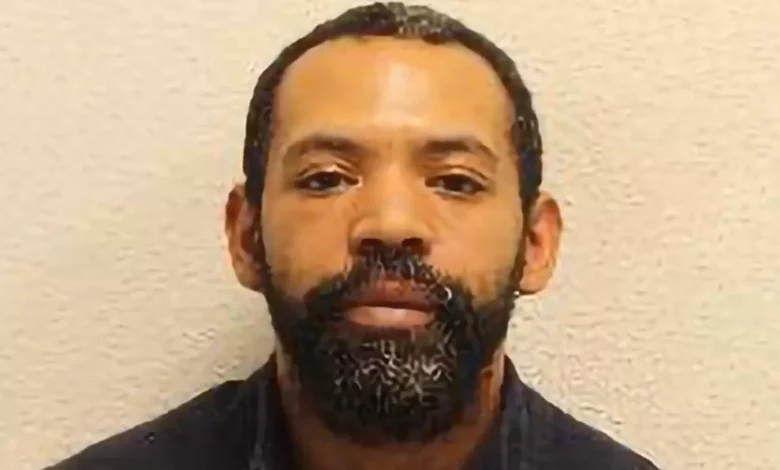
The officer, who cannot be named because of his current role in counter-terror policing, took charge of the case against Brandon Ruck while still completing his graduate training. Ruck was found guilty of attempted murder after stabbing a former friend 16 times at a property in Lewisham, south-east London, last year. The detective, who studied a criminal investigation course at a university in the Midlands before joining the Met through the Police Now scheme, described the case as one of the largest he had handled alone. “It’s scary when you haven’t dealt with something like this before,” he said, adding that his “age and newness” helped him approach it “with very open eyes.”
The attack and the victim’s injuries
The attack left the victim, a man in his 30s, with what the detective described as “extreme, significant injuries.” He suffered a stab wound to his face that went through his cheekbone and damaged nerves. Medics have said there is a “high chance” of future complications, including potential loss of movement in his tongue or difficulty swallowing in later life. Ruck, who had been a friend of the victim and knew him through playing football, let himself into the victim’s home overnight because he was due to carry out painting and decorating the next day. He used two kitchen knives to inflict the 16 wounds. The detective noted the pair had a “minor altercation” about a year before the incident, though the precise motive for the attack has not been formally established.

The crucial role of building trust
The prosecution’s case depended heavily on the victim’s willingness to work with police — but he was initially reluctant. “The victim had a few troubles with the police in the past, so he wasn’t overly keen to speak to us about what had happened,” the detective explained. Recognising the obstacle, the officer — who is also in his 30s — used their shared age to break down the barrier. “I knew I was a similar age to him, so I just thought I would speak to him like a normal person,” he said. Over time, trust grew through a mutual love of sport. That relationship proved decisive: it was only because the victim felt comfortable enough to confide in the detective that the existence of a crucial piece of evidence came to light — a 30-second voicemail recording.
During the attack, the victim had called a friend and thrown his phone just before Ruck began stabbing him. The phone continued recording, capturing the entire assault in audio. “The victim was screaming for help and for the defendant to get off him. The victim also repeatedly shouts ‘please’, ‘help’ and ‘what is wrong with you?’,” the detective recalled. The recording was so harrowing that the detective admitted he had to remove his headphones after just ten seconds the first time he listened. “It’s traumatic to listen to,” he said. By the time the case reached court, he estimated he had heard the voicemail about 400 times, yet it still shocked him. “For members of the jury who don’t do this job every day, I can’t imagine how that would be.” He described the recording as “probably the most key piece of evidence we had,” alongside the medical report detailing the victim’s wounds. The jury convicted Ruck of attempted murder.

The detective added that building trust was the foundation of the entire investigation. “Building trust was a key part of this case,” he said. “Eventually they decided on the verdict – guilty for attempted murder.” Ruck is scheduled to be sentenced on 14 July. Reflecting on his own career path, the detective said he had not dreamed of such a role as a child, but the Police Now programme appealed to him while he was still a university student. “Ever since I started out I realised it’s where I’m meant to be,” he said.