Asian markets slide as US and Iran exchange fire
Asian stocks have fallen sharply after Iran and the United States engaged in their most intense round of military exchanges since a ceasefire was agreed in April. The escalation began when the US launched strikes against Iran after President Donald Trump blamed Tehran for downing a US Army Apache helicopter near the Strait of Hormuz. Two pilots aboard the helicopter were safely rescued by a US military sea drone, according to reports. Iran responded with retaliatory drone and missile attacks targeting military bases in Kuwait, Bahrain and Jordan. Jordan said it had shot down five Iranian missiles.
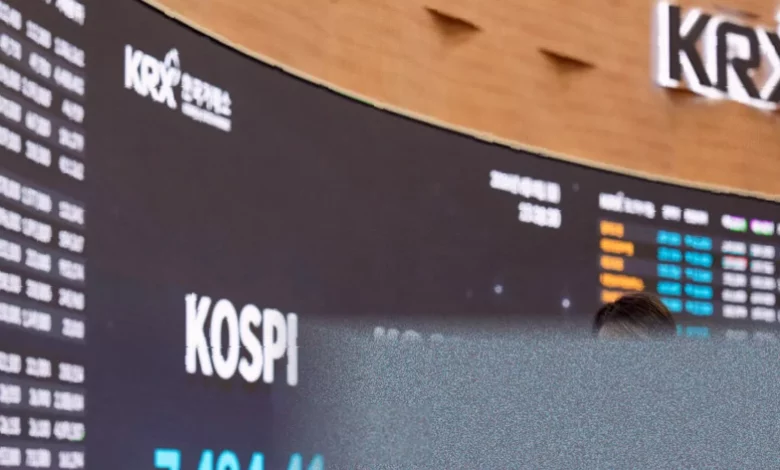
Japan’s Nikkei index dropped 2%, while South Korea’s tech-heavy Kospi slumped by about 6% – although it remains up more than 70% over the year to date. China’s CSI 300 lost 1%, Hong Kong’s Hang Seng fell 1.1% and Singapore’s Straits Times slipped 1%. The MSCI Asia Pacific Index dropped 0.8%.
Oil prices have proved more resilient. Brent crude, the international benchmark, edged down 0.2% to $91.28 a barrel, while West Texas Intermediate remained flat at $88. Jim Reid, an analyst at Deutsche Bank, said investors remain preoccupied with the Middle East conflict but “markets are also swinging between 1999-style AI exuberance and 2000-type tech crash fears.” He noted that Brent briefly fell below $90 for the first time since 17 April before partially rebounding after Trump vowed retaliation, and that the Philadelphia Semiconductor Index fell as much as 8.62% intra-day before recovering to a 1.93% loss at the close.
European stock markets were initially poised for a muted start, with futures for the FTSE 100 pointing to a 0.1% fall and EuroStoxx 50 futures down 0.1%. By midday the FTSE 100 had ticked up 0.1%, the German Dax and French Cac 40 were also up about 0.1%, and the Stoxx Europe 600 rose 0.07%. On the FTSE 100, Metlen Energy & Metals was the best performer, up 3.6%, followed by Primark owner Associated British Foods (up 2.2%) and Tesco (up 1.8%). The biggest fallers were Endeavour Mining, Relx and Experian, each down about 2.3%.
Elsewhere, gold dropped 0.5% to about $4,240 an ounce, and crypto markets experienced significant liquidations, with Bitcoin prices dipping. S&P 500 and Nasdaq 100 futures edged lower after a volatile session on Wall Street, where the Nasdaq 100 fell 1.1% as investors rotated out of tech shares.
China’s producer prices surge on energy cost pass-through
New figures out of China show its factory gate prices rose at the fastest rate in four years in May, a development that economists attribute largely to the conflict in the Middle East. The producer price index (PPI) rose 3.9% in May from a year earlier, according to data from the National Bureau of Statistics, above the 3.8% forecast in a Reuters poll and a 2.8% increase in April. It marked the third consecutive monthly rise and the highest growth rate since July 2022.
Economists at Pantheon Macroeconomics said the rebound is “largely a cost push story, not stronger demand.” Kelvin Lam, senior China economist at the consultancy, explained that “reflation is expected to continue in the near term due to the lasting impact of the war in Iran on imported energy costs, and of course the fading drag from negative carry-over effect from last year, which most people forget.” He added that while oil and gas futures markets are no longer pricing in a further escalation in the Middle East, “uncertainty surrounding the peace talks and the effective reopening of the Strait of Hormuz appears likely to linger in the near term.”
Despite the acceleration in the annual rate, monthly momentum slowed to just 0.5% month-on-month from 1.7% a month earlier. Lam said this “probably reflects two things. First, global energy markets are no longer expecting a broadening of the conflict as before, with a $150 per barrel scenario now looking increasingly unlikely, and prices have already fallen back from their highs. Second, China is relatively immune from an inflation pass-through point of view, with subdued domestic demand making it more difficult for producers to raise factory gate prices.”
The data comes as markets also look ahead to a key US inflation reading for May due later today, with expectations that headline CPI will rise to 4.2%, the highest since April 2023. Nicholas Hyett, an analyst at Hargreaves Lansdown, said that “following on from strong jobs data would put more pressure on the Fed to think about raising interest rates.” Susannah Streeter, of Wealth Club, noted that “the big concern is that elevated wholesale energy costs are spreading and settling into the broader economy. The latest attacks in the Middle East indicate that the conflict is entrenched and increasingly hard to solve.”
WH Smith plunges as profit warning compounds Middle East woes
The market is not impressed with WH Smith’s latest update – shares slumped by 16% this morning and are down about 21% so far in the year to date. The high street retailer said it wants to raise about £100m as the conflict in the Middle East starts to affect its profit, placing up to 26 million shares – about 20% of its existing share capital – alongside a separate offer for retail investors in the UK.
WH Smith also cut its pre-tax forecast for the year to a range of £75m to £90m, down from £90m to £105m, warning that the travel industry has been hit by lower passenger numbers and weaker consumer demand. It is the second time it has downgraded its profit outlook this year. To top it off, the company anticipates a £150m writedown related to the review of its InMotion business in North America, its store exit programme and the restructuring of its business in the rest of the world.
Richard Hunter, head of markets at Interactive Investor, described the situation as “going from bad to worse” for the retailer. He said the capital raise “comes at a time which will severely test investors’ patience and loyalty to the cause,” adding that “if the previous ‘annus horribilis’ for the group, where an overstated profit forecast led to a sharp decline in the share price and with the CEO unfortunately falling on his sword as a result seemed uncomfortable, matters have now taken a turn in what could be an existential time for the company.” Executive chair Leo Quinn said the business has a strong core but needs “much greater capital discipline and a laser focus on returns,” noting that “in recent years, the outcomes from certain acquired businesses and contract obligations have been very disappointing.”
In contrast, the Fuller, Smith & Turner pub and hotel chain saw its shares rise about 7% after reporting higher-than-expected revenue and profit of £398m and £29.5m respectively. Executive chair Simon Emeny said advanced bookings for the World Cup have been strong and demand for staycations – particularly in the Cotswolds – is robust, adding that like-for-like sales for the first ten weeks of the new financial year have risen 4.4%.