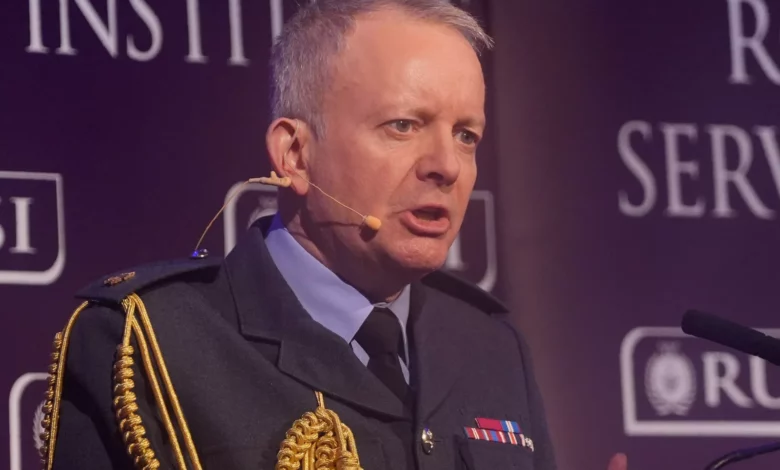
The UK faces its most dangerous period in decades, the Chief of Defence Staff has warned, as he called for a fundamental overhaul of military thinking to meet the challenge of a more aggressive Russia and the prospect of prolonged conflict.
Air Chief Marshal Sir Richard Knighton said the current threat level was greater than at any time since the Cold War and that the nation must be prepared to make “different choices and different priorities”. Speaking on BBC Radio 4’s Today programme, he described the moment as “the most dangerous time I have known in my working life” and “the most dangerous period that I have known” in his 35-year career. His remarks come after a defence official noted in February 2024 that the UK was closer to large-scale conflict than at any recent point, with crises in the Middle East and Ukraine compounding the danger.
Sir Richard stressed that the UK can no longer afford to plan only for short, limited wars. “Over the last two decades we have been preparing for shorter wars and for conflicts that are confined and limited,” he said. “What we need to ready ourselves for is potentially much greater, longer conflicts, as we’ve seen in Ukraine.” He warned that drones and autonomous systems are “going to become increasingly important in the future of warfare” and that the UK must invest more in these areas to enhance its capability. In a call for a “whole-of-society” approach, he said it was vital for “people who are not soldiers, sailors or aviators to nevertheless invest their skills – and money – in innovation and problem solving on the nation’s behalf”.
Experts have raised concerns that Britain is not prepared for sustained hostilities, with manufacturing capabilities needing years to match Russia’s scale of production. There is “little evidence that the UK has a plan to fight a war lasting more than a few weeks”, according to assessments, with limited medical capacity and slow reserve regeneration pipelines adding to the vulnerability.
Delayed defence plan under scrutiny
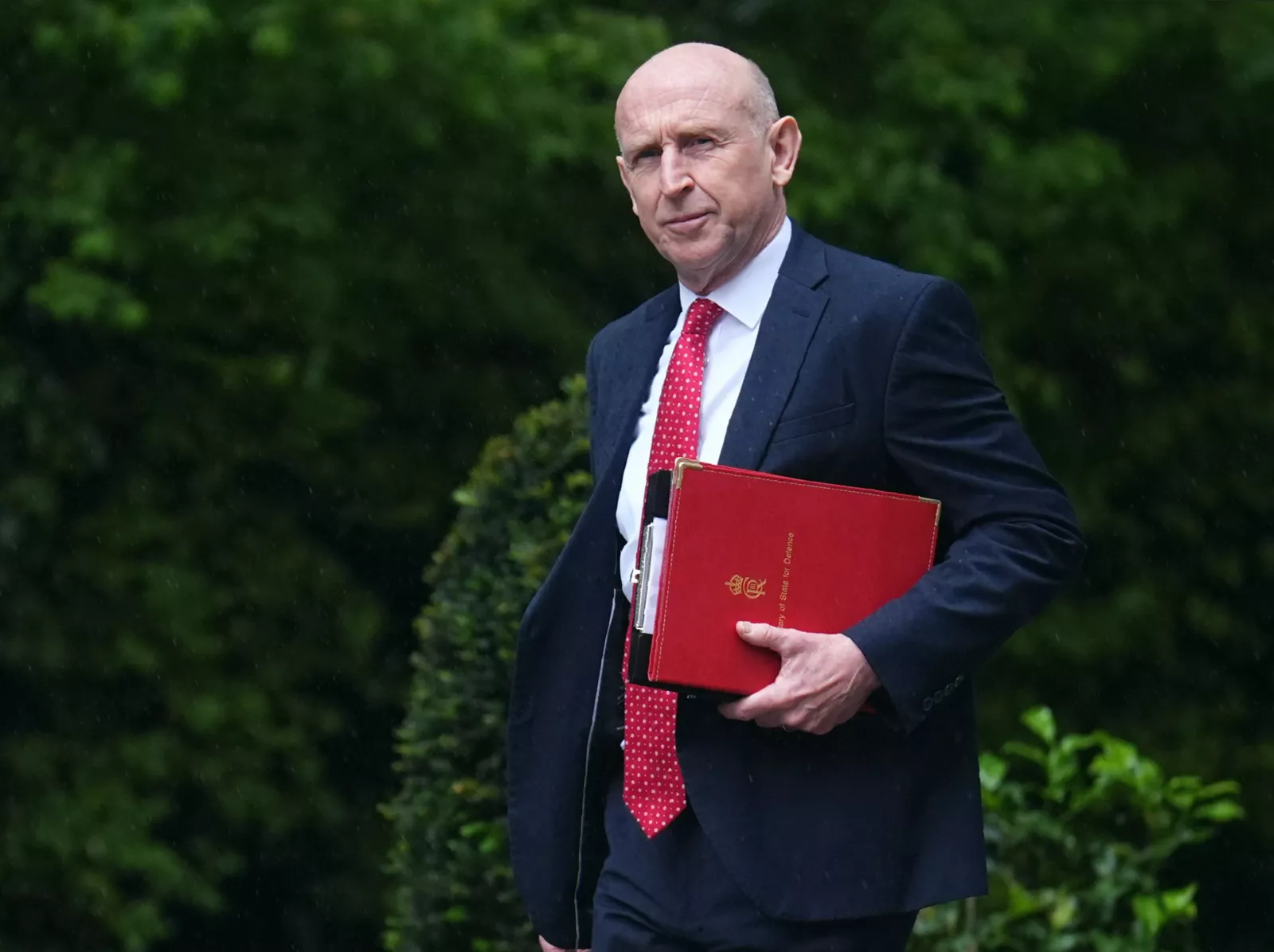
The warning comes as the government faces mounting criticism over repeated delays to its Defence Investment Plan (DIP), which is meant to set out how money will be spent on the armed forces. Originally slated for publication in autumn 2025, the DIP has been pushed back several times. Defence Secretary John Healey told MPs on Monday that the Prime Minister hopes to launch the delayed policy details before the Nato summit in Ankara, Turkey, which begins on 7 July. Healey said the plan could be published before that event, marking a new deadline for a document that some in Westminster had expected this week – exactly a year on from the Strategic Defence Review (SDR) that called for its creation.
The delay is widely attributed to a wrangle between the Treasury and the Ministry of Defence, with reports of a potential £28 billion funding gap over the next four years acting as a key sticking point. The Commons Defence Committee chairman, Tan Dhesi, has said Britain’s military and defence industry “need to know where we stand and where we are going”. Lord Robertson of Port Ellen, the former Nato secretary-general who led the 2025 SDR, accused the Treasury of “vandalism” for its inaction on defence and noted a gap between Prime Minister Keir Starmer’s rhetoric and action. Starmer has pledged the largest sustained increase in defence spending since the Cold War, aiming for 2.5 per cent of GDP by 2027 and an ambition of 3 per cent in the next Parliament – the UK currently spends 2.4 per cent. Nato allies agreed at a summit in The Hague to raise defence and security spending to 5 per cent of GDP by 2035, with 3.5 per cent on core defence.
The SDR, published in June 2025, announced a “Nato first” plan and emphasised increased UK responsibility for European security. It called for the DIP as a roadmap for investment, but the repeated delays have eroded confidence. Healey’s promise of publication before the Ankara summit – where Nato leaders will discuss defence and deterrence planning, spending targets and further assistance to Ukraine – has done little to silence critics who say the government is failing to match words with urgent action.
Russia’s ‘probing, challenging, testing’ of UK defences
Sir Richard singled out Russia as the primary source of the heightened threat, describing Moscow as “probing, challenging, testing our defences” through a range of activities that include cyber attacks, attempts to smuggle technology, reckless sabotage and assassination attempts. “They are definitely raising the stakes and risks crossing a line,” he said, adding that Russia is “an aggressive, expansionist and revisionist” power whose actions verge on the threshold of war. The Chief of Defence Staff warned that the UK’s economy, society and armed forces are especially vulnerable because of digital connectivity, and that Russia is a persistent threat online, at sea and in space.

The scale of cyber aggression is stark. The Ministry of Defence has reported more than 90,000 “sub-threshold” cyber attacks on UK military networks in the past two years alone. In response, the UK is investing heavily in its own cyber capabilities. A new Cyber and Electromagnetic (CyberEM) Command is being established to put the country at the forefront of cyber operations, integrating offensive and defensive cyber tools with electromagnetic spectrum warfare and information capabilities. The command will aim to degrade enemy command and control, jam signals and intercept communications, while the UK also develops a “Digital Targeting Web” to link weapon systems for faster battlefield decisions.
Beyond cyber, concerns have been raised about Russia’s development of new and destabilising weapon systems, including nuclear-armed torpedoes, nuclear-powered cruise missiles and the potential for nuclear weapons in space. Sir Richard’s assessment echoes previous intelligence that Russian tactics – from reckless sabotage on British soil to attempted assassination plots – are designed to probe the limits of Western deterrence. Moscow’s behaviour, he said, means the risks are now higher than any stage since the Cold War, and the UK must enhance the capability and readiness of its armed forces alongside allies “to deter our adversaries from doing something daft”. The government has adopted a “whole-of-society” approach under a new Home Defence Programme, aiming to involve industry, universities, businesses and the public in national security and resilience, but the Chief of Defence Staff made clear that time is not on Britain’s side.