Vaccine doses for Bundibugyo virus ‘six to nine months away’ as Ebola outbreak spreads
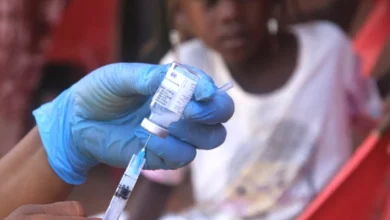
Doses of the most promising potential vaccine against the Bundibugyo virus that is driving an Ebola outbreak in central Africa will not be available for six to nine months, the World Health Organization has said, as the number of suspected cases in the Democratic Republic of the Congo and Uganda rose to nearly 600. Dr Vasee Moorthy, who leads the WHO’s research and development blueprint, said the candidate vaccine uses the same basis as existing Ebola vaccines that target the more common Zaire strain, but that no doses are currently available for clinical trials. “The information that we have is this is likely to take six to nine months,” he told a press briefing.
An alternative vaccine, developed using the Oxford University platform that was also used for the AstraZeneca Covid-19 jab, could be ready for clinical trials in two to three months, Moorthy said. He cautioned, however, that there is “a lot of uncertainty” because data from animal tests on its efficacy are not yet available. The Bundibugyo virus, a species of Orthoebolavirus, has no licensed vaccines or specific therapeutics approved anywhere in the world, unlike the Zaire strain. Early supportive care is currently considered the only lifesaving option for patients.
Outbreak escalates across two countries
The WHO declared the outbreak a Public Health Emergency of International Concern on 16 May, just one day after laboratory analysis confirmed Bundibugyo virus disease in eight out of thirteen blood samples from suspected cases in Ituri Province, DRC. The first known suspected case — a health worker who reported symptoms on 24 April — died in the city of Bunia. Officials believe the disease may have begun spreading “a couple of months ago” and was potentially amplified by a “super-spreader event”, possibly a funeral, in early May.
As of the latest figures, the DRC has reported 30 laboratory-confirmed cases and more than 500 suspected cases, with 130 suspected deaths. At least four deaths have been confirmed among laboratory-confirmed cases. The outbreak has affected at least three health zones in Ituri Province — Bunia, Rwampara and Mongbwalu — and unusual clusters of community deaths with symptoms compatible with the virus have also been reported in parts of North Kivu Province. One case has been confirmed in Goma, North Kivu’s capital.
Uganda confirmed its first imported case on 15 May — a Congolese man who died in Kampala — and a second imported case with no apparent link to the first the following day. As of 17 May, two laboratory-confirmed cases including one death had been recorded in Kampala. Modelling from Imperial College London suggests the true number of cases in the affected region could already exceed 1,000. Dr Tedros Adhanom Ghebreyesus, the WHO director-general, said the organisation assesses the risk of the epidemic as high at the national and regional levels but low at the global level.
Diagnostic and detection hurdles in a conflict zone
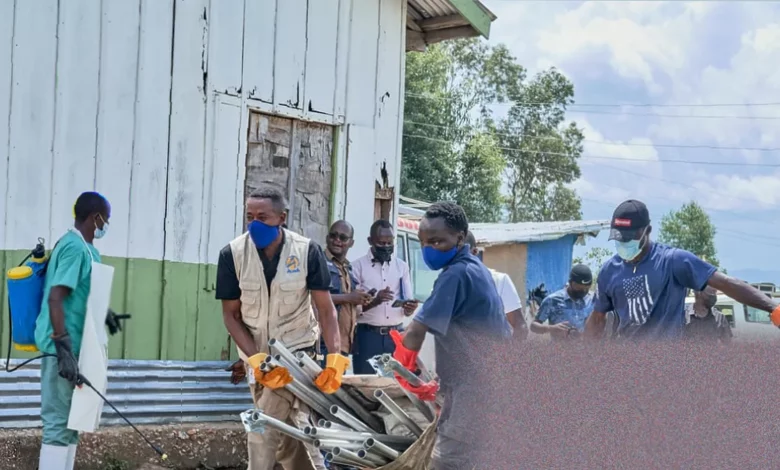
The difficulties of identifying and confirming Ebola cases in the affected region are severe, and have been described by health officials as a central obstacle to containing the outbreak. The security situation in Ituri Province, where more than 100,000 people have been displaced in recent months because of armed conflict, has complicated detection efforts. Tedros said health facilities could not provide care or conduct disease surveillance if health workers were fleeing violence. Medical facilities have been targeted by armed groups, and deep mistrust of government authorities and outside health workers has hampered contact tracing and isolation efforts. The conflict in Ituri, involving ethnic groups such as the Hema and Lendu, has been ongoing since 1999 and regularly disrupts humanitarian operations.
Diagnostic delays have also been caused by the similarity of early symptoms to other illnesses endemic to the region. Early signs of Bundibugyo virus disease — fever, fatigue, muscle pain, headache and sore throat — are non-specific and can easily be mistaken for malaria or typhoid, which are common in eastern Congo. Officials said initial field tests for the Zaire strain of Ebola came back negative, further delaying the identification of the Bundibugyo virus. The incubation period for the disease ranges from two to 21 days, and individuals are usually not infectious until symptoms appear, making early detection critical. The virus does not spread through the air but through direct contact with blood, secretions or other bodily fluids of infected individuals or contaminated surfaces. Fruit bats are suspected to be the natural reservoir.
Logistical and infrastructure limitations have compounded the problem. Access issues, including frequently cancelled flights, have complicated efforts to get tests and other essential supplies to Ituri Province. Health officials also reported at least four deaths among healthcare workers, raising concerns about healthcare-associated transmission and gaps in infection prevention and control measures. The region is a commercial and migratory hub bordering South Sudan and Uganda, increasing the risk of cross-border spread. Neighbouring countries are considered at high risk because of population mobility, trade and travel linkages. Chikwe Ihekweazu, the WHO emergencies lead, said: “Our absolute priority now is to identify all the existing chains of transmission. That will then enable us to really define the scale of the outbreak and be able to provide care.”
WHO pushes back on criticism from Washington
Tedros responded to criticism from US secretary of state Marco Rubio, who said the WHO had declared the outbreak “a little late”. Tedros suggested the remark may have been based on a lack of understanding of how international health regulations work. “Maybe on what the secretary said, it could be from a lack of understanding of how IHR works, and the responsibilities of WHO and other entities. We don’t replace the country’s work, we only support them,” he said. The exchange comes after the Trump administration withdrew the United States from the WHO earlier this year, with the withdrawal taking effect on 22 January 2026. The decision was attributed to the WHO’s handling of the Covid-19 pandemic and a perceived lack of reforms. Despite the withdrawal, the US has committed approximately $13 million in initial funding to support the opening of about 50 clinics to treat Ebola in the DRC. The Africa Centres for Disease Control and Prevention is closely monitoring the outbreak and supporting a coordinated regional response, while the European Centre for Disease Prevention and Control is liaising with partners.