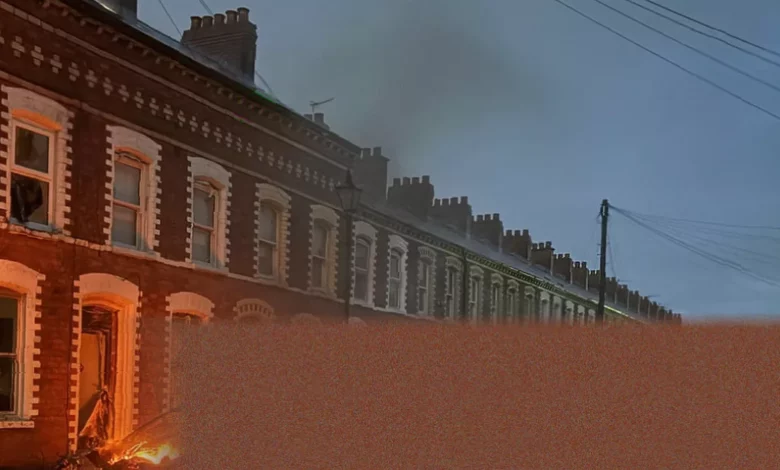
Elon Musk, the billionaire owner of X, has once again used his platform to amplify racist fury and directly incite violence on British streets, according to evidence from the recent unrest in Belfast. Mr Musk addressed a rally organised by Stephen Yaxley-Lennon – the activist known as Tommy Robinson – via video link last year, telling the crowd: “You either fight back or you die.” He reposted that exact line on Tuesday as racist mobs torched cars and chased families from their homes in Northern Ireland. Prime Minister Sir Keir Starmer condemned the remarks as “dangerous and inflammatory”, while Liberal Democrat leader Ed Davey accused Mr Musk of “aiding and abetting” extremism in the UK.
How Musk and X fuel the far-right machine
The mechanism that turns online rage into real-world violence is well documented but poorly countered. Social media algorithms – especially those on X since Mr Musk took ownership and laid off content moderation staff – are designed to create echo chambers, reinforcing extremist views and isolating users from opposing perspectives. Far-right actors exploit these algorithms to identify and target vulnerable individuals, capitalising on feelings of insecurity, isolation and anxiety. The result is a digital ecosystem where moderate conservative opinion has been crowded out by radical nationalism and, on immigration, a far-right worldview twisted with paranoia and racist hysteria.
Platforms like X, Facebook and Telegram have become breeding grounds for far-right ideologies. Extremists use them to spread misinformation, recruit adherents and encourage violence. In the days before the Belfast riots, widely shared posts and AI-generated images circulated online, falsely depicting the stabbing attack by a Sudanese refugee as part of a wider threat to white Britons by foreign “invaders”. Tommy Robinson shared a list of protest locations, claiming “the whole of the United Kingdom is hitting the streets tonight” following “yet another invader attack on our people.” The term “radicalisation” has itself been questioned as an analytical frame; some researchers argue that concepts like “mainstreaming” and “sociotechnical theories of media effects” better capture how far-right ideas spread online. But regardless of the label, the outcome is the same: a contagious violent strain of politics that is normalised on social media and then spills onto the streets.
Yaxley-Lennon: from fringe to Moscow
Stephen Yaxley-Lennon styles himself as a patriot, but his racially charged ultranationalism is hostile to traditions of British pluralism and tolerance. He founded the English Defence League and has a long history of engaging with far-right movements. Last week he travelled to Moscow, where he met Errol Musk – Elon Musk’s father – and declared: “Russia is not the enemy of Britain.” Mr Yaxley-Lennon has previously expressed support for Vladimir Putin, and made a similar trip to Russia in 2020, stating a desire to “cooperate to preserve Christian values and identity.” His admiration for “the beauty of a civilised society” in Russia stands in stark contrast to the characterisation most British people would give of Putin’s repressive authoritarian regime, which murders dissidents and invaded a neighbouring democracy.
Mr Yaxley-Lennon does not represent mainstream opinion, but his divisive politics are expanding from the fringe, facilitated by social media algorithms and, in the case of Mr Musk, one especially powerful and ideologically fixated oligarch. Following the Southport knife attacks last year, Mr Musk commented on X that “civil war is inevitable” and promoted claims that fuelled further controversy. The Home Office has seen an increase in referrals for far-right extremists to deradicalisation programmes. Neil Basu, Britain’s most senior counterterrorism officer, described the far-right terror threat as “small, but my fastest-growing problem.”
Mainstream politicians as conduits
Nigel Farage of Reform UK and Rupert Lowe of Restore Britain act as conduits for far-right idiom into mainstream debate, channelling the language of the fringe into parliament and onto BBC bulletins. Mr Lowe, a former Reform UK MP, launched Restore Britain as a party further to the right, advocating mass deportations and attracting members with avowed racist and nationalist views. He has claimed that attacks like the one in Belfast would not happen without immigration. Mr Farage called for a response of “pure cold rage” to footage of a murder, a remark that Kemi Badenoch criticised for “reinforcing difference” and stoking race tensions.
Ms Badenoch, the Conservative leader, condemns violent manifestations of anti-immigrant politics but fails to recognise that her own party has abetted the rhetorical vilification that turns minority communities into targets for mob rage. She has been accused of connecting Asian migrants with grooming gangs while ignoring the disproportionate number of white Britons involved in exploiting young girls. She has also blamed immigrants for eroding public services without referencing austerity cuts. Ms Badenoch has proposed extending the wait time for indefinite leave to remain from five to ten years, and announced plans to remove undocumented immigrants, citing US Immigration and Customs Enforcement (ICE) tactics as inspiration – raising concerns about potential civil rights abuses. She competes for attention in online spaces and in analogue right-leaning media, where politics is a feedback loop of radicalisation. When the economic conditions that incubate extremism are hard to fix, politicians are drawn to collude in the fiction that migration is the root cause and to excuse racism as a normal expression of social discontent.
Government inaction in the face of digital capture
This process has met far too little resistance from Sir Keir Starmer’s government. The prime minister has issued insipid warnings to social media companies to behave responsibly. He condemns racist violence and urges calm on the streets. But he does not properly address the mechanism – the ideological capture of a digital information space – that is undermining social cohesion and sabotaging democracy at a systemic level. In April 2026, Mr Starmer met with leaders of major social media companies to press for progress on child safety online, emphasising that “looking the other way is not an option.” Yet the government has not matched that rhetoric with action on the far-right radicalisation that is now spilling onto the streets of Belfast and beyond.
The Belfast riots themselves followed a stabbing attack allegedly perpetrated by a Sudanese refugee. Masked protesters blocked roads, torched cars and buildings, and evacuated residents. The violence has been described as a “racist pogrom” and “mob-led racist thuggery.” Northern Ireland has a history of racist violence, with incidents resulting in murder dating back over a century. Until recently, racism was not widely acknowledged as a social problem, partly due to low immigration numbers and a preoccupation with sectarian conflict. But as immigration has increased, so has suspicion directed towards minority groups. Racially motivated hate crimes in Northern Ireland have now surpassed sectarian hate crimes. Paramilitary groups, though diminished, continue to exert influence and have been involved in racially motivated attacks. The region remains the whitest and least diverse part of the UK and Ireland.
The outbreak of racist violence in Northern Ireland this week is connected to the politics of migration, but not in the way that the mob and those who incited it claim. The ostensible trigger was a brutal assault, partially captured on video. A man of Sudanese origin has been charged with attempted murder. Far-right agitators summoned vengeful crowds. Their success is a direct consequence of a digital ecosystem that facilitates the spread of extremist ideas and a political establishment that has failed to confront it. A contagious violent strain of far-right politics has been normalised online and is now spreading onto the streets. It needs to be beaten on both fronts.