A British man aboard a cruise ship struck by a hantavirus outbreak is showing signs of improvement after being airlifted to a hospital in Johannesburg, a South African health ministry spokesperson has said.
“The British patient is clinically improving but still ill,” Foster Mohale told Reuters on Monday. “This means his condition is improving, gradually so.” The man was medically evacuated to South Africa on April 27 after developing a fever, shortness of breath and signs of pneumonia. He had disembarked from the MV Hondius at Ascension Island in the Atlantic Ocean. The vessel, a Dutch expedition cruise ship, had set off from Ushuaia, Argentina, on April 1 carrying 147 passengers and crew from 23 nationalities, according to Argentine authorities, who confirmed that no one showed symptoms at departure.
Global repatriation efforts underway
As nations scrambled to bring passengers home, a French woman tested positive for hantavirus and her condition worsened overnight in hospital, French Health Minister Stéphanie Rist said on Monday. She was among five French passengers repatriated to Paris from the MV Hondius and developed symptoms during the flight, Rist told public broadcaster France-Inter.
Seventeen American passengers were flown to Omaha, Nebraska, where one tested positive for the virus but is not showing symptoms, and another has mild symptoms, US health officials said late Sunday. The flight landed in the early hours of Monday and stopped near awaiting buses and police vehicles. “One passenger will be transported to the Nebraska Biocontainment Unit upon arrival, while other passengers will go to the National Quarantine Unit for assessment and monitoring,” said Kayla Thomas, a spokesperson for Nebraska Medicine, the hospital helping to care for the passengers. The University of Nebraska Medical Center operates a federally funded quarantine facility that was used early in the COVID-19 pandemic and previously for Ebola patients.
Other countries have organised their own repatriation flights. Australia is sending a plane, expected to arrive on Monday, to evacuate its citizens and those from New Zealand and unspecified Asian countries, said Spanish Health Minister Mónica García, who added that this would probably be the last flight to leave Tenerife. Dutch Foreign Minister Tom Berendsen said a second Dutch flight on Monday would bring back more passengers from the Netherlands and other nations. “The evacuation operation is based on concern for the passengers. But also concern for public health, and we try to do that in the best way,” Berendsen said. Twenty British passengers have arrived in the UK and begun a 45-day isolation period at Arrowe Park Hospital on the Wirral, UK health officials confirmed.
The World Health Organization has recommended active monitoring and follow-up for repatriated passengers. “This means daily health checks, either at home or in a specialized facility,” said Maria van Kerkhove, the organisation’s top epidemiologist. WHO Director-General Tedros Adhanom Ghebreyesus has stressed that the general public should not be alarmed. “This is not another COVID. And the risk to the public is low. So they shouldn’t be scared, and they shouldn’t panic,” he said on Sunday.
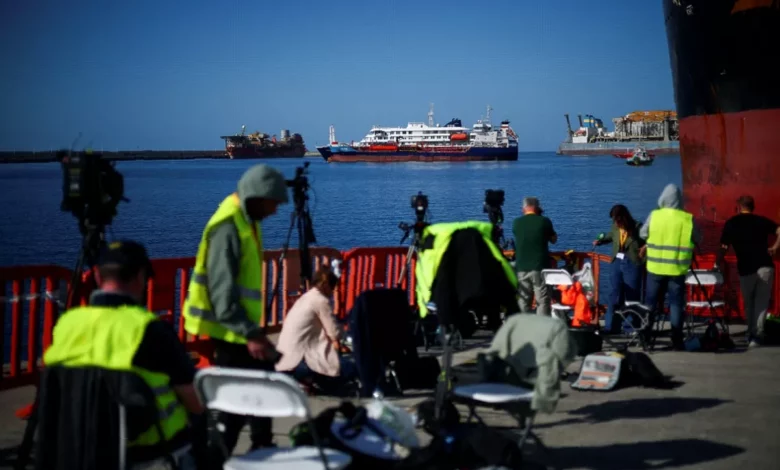
Three people have died since the start of the outbreak — a Dutch couple and a German national. The MV Hondius arrived at the port of Granadilla in Tenerife on May 10, where passengers began disembarking and repatriation flights commenced. Spanish health authorities have said the ship will be inspected for rodents and disinfected.
Understanding hantavirus and the Andes strain
Hantaviruses are rodent-borne viruses that can infect people and cause severe illness. The strain identified on the ship is the Andes hantavirus, which typically circulates in Argentina and Chile. Unlike most hantaviruses, which spread only through contact with infected rodents or their urine, droppings or saliva, the Andes virus may be able to spread between people in rare cases — usually through close, sustained contact. This makes outbreaks in close-quarters settings such as cruise ships particularly concerning.
The incubation period ranges from one to eight weeks after exposure, meaning passengers may have been infected before boarding. Symptoms can initially resemble flu: fever, chills, muscle aches and headache. “Early in the illness, you really may not be able to tell the difference between hantavirus and having the flu,” said Dr Sonja Bartolome of UT Southwestern Medical Center in Dallas. As the infection progresses, patients may develop tightness in the chest as the lungs fill with fluid — a hallmark of hantavirus pulmonary syndrome (HPS). The other syndrome caused by hantavirus, haemorrhagic fever with renal syndrome (HFRS), typically appears within a week or two and primarily affects the kidneys and blood vessels.
Death rates vary by strain. According to the US Centers for Disease Control and Prevention, HPS is fatal in nearly 40 per cent of cases, while HFRS has a mortality rate ranging from 1 per cent to 15 per cent. The World Health Organization confirmed on May 6 that the Andes virus was responsible for the outbreak, and as of May 8 reported eight cases — six confirmed and two suspected — including the three deaths.
The ship’s doctor was reported to be in intensive care, and the WHO has recommended a 42-day quarantine for repatriated passengers, with daily health checks to monitor for any delayed onset of symptoms. Health authorities have consistently emphasised that the risk to the general public remains low.