Meta has been accused of orchestrating a campaign of “coercive surveillance” against a former senior employee and whistleblower, Sarah Wynn-Williams, in an escalating legal battle that pits the tech giant’s corporate secrecy against First Amendment protections.
The accusation forms the centrepiece of a 57-page complaint filed on Thursday in a US district court in California, in which Wynn-Williams alleges that Meta has engaged in systematic monitoring, photographing and documentation of her movements across the United Kingdom — even when she has said nothing about the company or her tell-all memoir, Careless People.
Wynn-Williams, who served as director of global public policy at Facebook between 2011 and 2017, published her memoir in March 2025. The book contains detailed allegations of a toxic internal culture at the social-media company, including accounts of sexual harassment and gender-based discriminatory practices. Specific claims in the book include Meta’s alleged cooperation with Chinese censorship tools, concerns about Mark Zuckerberg’s personal investment in the Chinese market, and accusations of sexual harassment by senior executives including Sheryl Sandberg and Joel Kaplan. One passage recounts Sandberg allegedly telling Wynn-Williams, “You should have got into the bed.” The memoir also raises concerns about Meta’s indifference to harms inflicted on young people and the company’s alleged role in the Rohingya genocide.
The Lawsuit
Thursday’s legal filing seeks to vacate an interim arbitration order that Meta obtained to prevent Wynn-Williams from promoting her book. The company argued that the promotion violated a severance agreement she signed after being fired in August 2017, which included both arbitration and non-disparagement clauses. The complaint, supported by a 285-page declaration from Wynn-Williams, contends that the severance agreement is unenforceable because it was signed under financial duress.
According to the filing, when Facebook terminated Wynn-Williams, the company knew that her dismissal would strip her of “critical employment benefits” that were “cornerstones of her financial stability.” It claims she “had no choice” but to accept the severance package to retain those benefits and obtain a substantial cash payment. The complaint argues that Meta is exploiting “overbroad and vague terms” to threaten her with sanctions and describes the arbitration ruling as an “unconstitutional prior restraint” on her First Amendment rights.
Alleged Surveillance Campaign
Much of the complaint centres on what Wynn-Williams’s legal team describes as a chilling surveillance operation conducted by Meta across the UK. According to Meta’s own arbitration submissions, cited in the complaint, the company’s representatives have attended Wynn-Williams’s public appearances, “assembled photographs and written records of her movements, and traveled the length of the United Kingdom to do so – including making the long journey to rural Wales for the Hay festival – all to document that at each event, Ms Wynn-Williams said nothing about Meta or her book.”
The most striking example occurred in late May 2025, when Wynn-Williams appeared at the Hay literary festival in Wales alongside journalist Carole Cadwalladr and academic Tim Wu. On legal advice, she did not speak. Despite her silence, Meta wrote to the merits arbitrator on 12 June requesting that additional sanctions be imposed based on her mere presence at the event. The company has also asked the arbitrator to force Wynn-Williams to disclose a full list of her planned public appearances in advance.
Mike Harpley, nonfiction publisher at Macmillan and Wynn-Williams’s UK editor, said the court filing “details how Meta has enforced its legal order against Sarah Wynn-Williams with a chilling campaign of surveillance. Careless People raises crucial issues for society and Meta’s actions prevent necessary public conversation in the UK and beyond.”
The surveillance allegations extend beyond the Hay festival. Meta’s submissions indicate that its representatives have regularly documented Wynn-Williams’s movements, travelling across the country to observe her at events where she did not discuss Meta or her book. The complaint argues that this behaviour amounts to “coercive surveillance” designed to intimidate not only Wynn-Williams but also any other potential whistleblower who might consider speaking out.
It claims Meta is “pursuing” Wynn-Williams “not only because she refused to bow to the greed and power of Meta, Mr Zuckerberg, and other executives, but also to strike fear into the heart of anyone else who dares to consider speaking the truth about Meta’s unlawful and abusive practices in the public interest.”
Ravi Naik, legal director of AWO Legal and Wynn-Williams’s UK lawyer, said Meta had used a private arbitrator to “silence” the whistleblower. “No judge, no trial and no finding that she said anything untrue. Just a secret proceeding between an arbitrator and one of the most powerful corporations in the world.” He added of Thursday’s complaint: “This is the first time Sarah has been able to explain to the world what has happened to her. The court filings record the facts of what Sarah has been subjected to and lay bare the extent to which Meta has gone to silence her.”
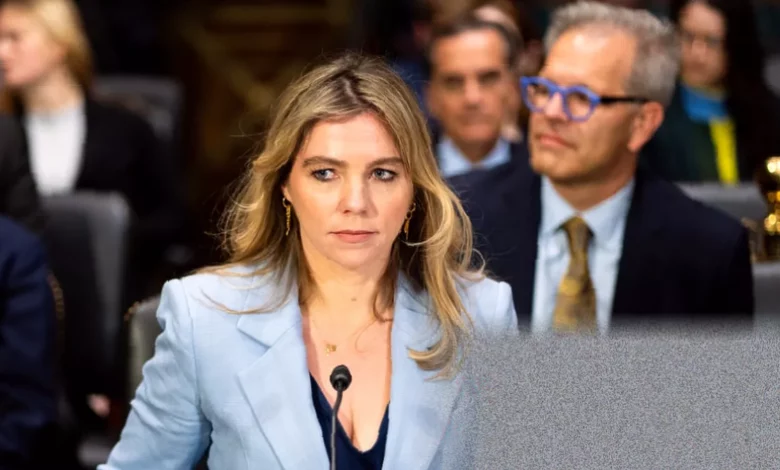
Wynn-Williams has previously testified before the US Senate Judiciary Subcommittee on Crime and Counterterrorism in April 2025, alleging that Meta executives undermined US national security and betrayed American values in their pursuit of business in China. Senator Chuck Grassley has scrutinised Meta’s severance agreement with Wynn-Williams, suggesting it may violate SEC regulations by restricting her ability to report illegal conduct.
Meta’s Response
Meta has denied the allegations and dismissed the lawsuit as a publicity stunt. In a statement, the company said: “This former employee is trying to use the legal process to sell books, which an arbitrator already ruled broke the agreement she signed with the company when she accepted a large financial settlement years ago.”
The company has described Careless People as a “mix of out-of-date and previously reported claims about the company and false accusations about our executives.” Meta has also claimed that Wynn-Williams was fired for “poor performance and toxic behavior” and that her harassment allegations are unfounded.
The legal battle has inadvertently boosted sales of the memoir. After her silent appearance at Hay festival, sales of Careless People rose 304.5% week on week, and more than 150,000 copies have been sold across all formats in the UK since publication, according to Pan Macmillan. The book reached number one on the New York Times bestseller list, a phenomenon often referred to as the Streisand effect.
Wynn-Williams is represented in the US by Selendy Gay PLLC and Katz Banks Kumin LLP, with Naik acting as her UK counsel. Naik noted that he too is prevented from promoting the book under the terms of the arbitration ruling.
Meta has a history of using arbitration and non-disclosure agreements to handle employee disputes and prevent public disclosures. Previous whistleblowers include Frances Haugen in 2021, who raised concerns about Instagram’s impact on teen mental health and Facebook’s internal policies, and Arturo Béjar in 2023, who warned about harms to minors. Attaullah Baig, a former WhatsApp head of cybersecurity, also sued Meta alleging retaliation after reporting security flaws. The company has faced previous lawsuits alleging gender and racial discrimination, including claims that Facebook’s ad-targeting system allowed discriminatory job ads excluding women and older workers.
Wynn-Williams’s case is the latest in a series of legal challenges that test the limits of corporate secrecy clauses and arbitration agreements, particularly against the backdrop of whistleblower protections and the public interest in free expression.