Nissan has halted development of a fully electric version of its best-selling Qashqai model at the Sunderland plant, according to reports, as the Japanese carmaker grapples with mounting losses and a sweeping global restructuring.
The decision to cease work on the EV variant was taken early last year, sources said, with the project now unlikely to reach production before the start of the next decade – if at all. It marks a sharp reversal from Nissan’s 2023 commitment to build an all-electric Qashqai at its North East facility, a pledge that was seen as central to the company’s long-term electrification strategy in Europe.
Nissan confirmed its dedication to manufacturing new electric models at Sunderland that year, a year after unveiling plans for the Qashqai EV and after announcing that all new cars it sells in Europe would be electric by 2030. But the company now says it has been forced to reassess its approach in the face of what it calls “significant volatility” in European EV demand.
A Nissan spokesperson said: “In recent years, the European market has experienced significant volatility in EV consumer demand, reflected in both actual and proposed adjustments to EV targets and support programmes across the UK and EU. Nissan has monitored this closely to ensure ongoing customer demand is met with a balanced electrified offering as part of its Electrification with Choice strategy.”
The Qashqai, which Nissan pioneered as a crossover 16 years ago, remains the company’s biggest seller in Europe, accounting for around 45% of its total European sales in 2025. The current model uses Nissan’s e-POWER hybrid technology – a petrol engine that generates electricity for an electric motor, offering an EV-like driving experience without plug-in charging. A third generation of e-POWER was set to arrive in the Qashqai from September 2025.
Nissan has suffered a second consecutive year of losses. The carmaker recorded a net loss of approximately $3.4bn for the fiscal year ending March 2026, following a ¥670.9bn ($4.5bn) net loss for fiscal 2024. The company has been forced to implement a wide-ranging global restructuring plan, dubbed RE:Nissan, which includes around 20,000 job cuts worldwide and the closure of seven plants globally. In Europe, Nissan disclosed last month that it is preparing to cut hundreds of positions and will merge two existing product lines at its Sunderland facility into one.
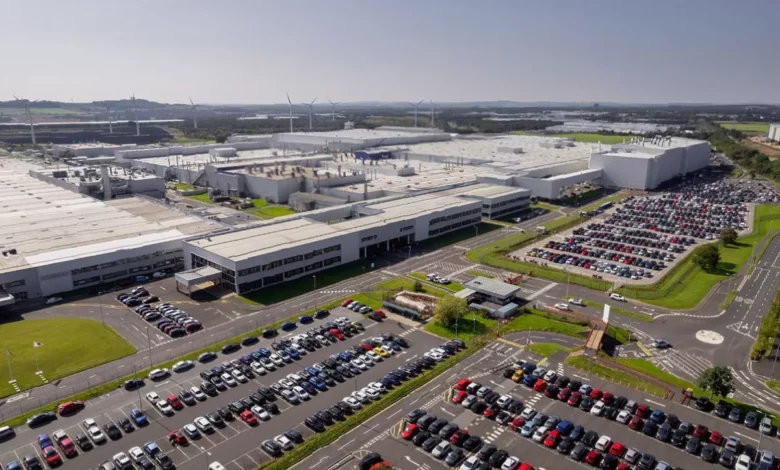
The Sunderland plant, which is the largest car factory in the UK and Nissan’s biggest in the country, has been running well below its maximum capacity. It produced 273,000 cars in 2025 – a 3% drop from the previous year – against a theoretical capacity of around 600,000, meaning it is operating at roughly 50% utilisation. Nissan has consolidated production onto a single line at the site to assess opportunities for full utilisation. The plant employs around 6,000 people directly and supports tens of thousands more through its supply chain, making it the largest private-sector employer in the North East. Nissan has recently described the site as “central” to its operations, and the Washington plant in the US has been spared the worst of the cuts.
The slowdown in EV demand has also affected Nissan’s subsidiary Jatco UK, which is 75% owned by the carmaker. In April it emerged that Jatco had been forced to seek alternative work after it became clear it would no longer supply Nissan with the three-in-one electrified powertrains it was originally built to produce. The £50m plant – Nissan’s fourth overseas facility of its kind – had been scheduled to start production this year. A Nissan spokesperson said at the time: “Under the global RE:Nissan recovery plan, Nissan, together with partners, has conducted a comprehensive review of key initiatives, introducing further measures to ensure a strong recovery. As part of this the decision has been taken not to localise production of 3-in-1 electrified powertrain to the UK.” The Jatco plant had received government support through the Automotive Transformation Fund.
Chery partnership offers potential lifeline for Sunderland
In a move that could help fill the spare production capacity at Sunderland, Nissan reached a non-binding memorandum of understanding earlier this month with Chinese automotive manufacturer Chery, which owns the Omoda and Jaecoo brands. Under the proposed arrangement, the Sunderland facility would remain in Nissan’s ownership and staff would continue to be employed by the Japanese manufacturer, while Chery would use the plant’s available production capacity to assemble its passenger vehicles. If the deal proceeds, Chery vehicles could begin rolling off the Sunderland production line during the 2027 financial year.
Massimiliano Messina, chairperson of Nissan, said: “This is an important step forward for our operations. We are looking forward to working with Chery International UK in the coming months to finalise a position that is optimal for both companies.”
The potential partnership has been welcomed by unions. Steve Bush, Unite national officer, said: “This is very good news for Nissan’s Sunderland workers and the UK’s automotive industry in general at a time of uncertainly for the sector. Chinese vehicles are increasingly visible on British roads so it makes sense for UK workers to build them here as well.”
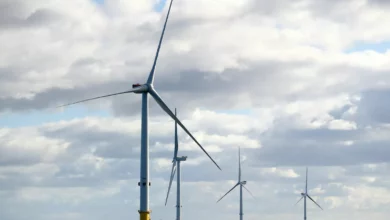
Nissan is understood to be in talks with the UK government about financial support for the Sunderland plant’s future roadmap. The site is part of Nissan’s EV36Zero vision, which aims to create an integrated EV manufacturing and battery production ecosystem powered by renewable energy – wind turbines and solar panels already supply a portion of the plant’s electricity. The halt in the Qashqai EV project casts doubt on the full realisation of that vision, though Nissan continues to invest at the site, including £30m for the latest Qashqai upgrade.
The company insists it remains committed to electrification, albeit through a strategy it calls “Electrification with Choice”. Nissan has launched new all-electric models in Europe, including the Micra and LEAF, and plans to introduce an entry-level A-segment EV later this year, followed by the Juke EV in early 2027. The carmaker is also developing solid-state battery technology, aiming for its introduction by fiscal year 2028.
A Nissan spokesperson said: “Nissan has a strong EV product offensive in Europe with the recent all-EV launches of new Micra and LEAF, to be followed by an entry A-segment EV later this year and Juke EV in early 2027. This builds on an existing electrified portfolio, including Juke HEV and market leading Qashqai e-POWER hybrid, providing customers with a balanced range of drivetrain options. Nissan remains committed to expanding its electrified offering – including future developments for Qashqai – to deliver genuine electrification with choice but does not have anything further to announce at this time.”