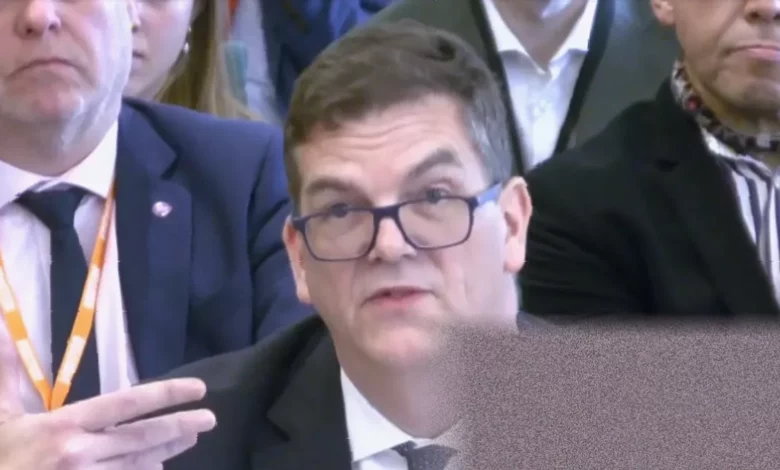
Olly Robbins, the former Foreign Office chief who lost his job over the Peter Mandelson vetting scandal, is in discussions with the team of Andy Burnham about taking on a security-related role in a potential Burnham-led government, according to sources familiar with the talks. The conversations, described as “early exploratory” with senior advisers to the newly elected Makerfield MP, have led insiders to suggest Robbins could be appointed national security adviser – a dramatic and controversial return to the top of government less than three months after he was dismissed by Sir Keir Starmer.
Potential role in a Burnham Downing Street
The national security adviser is a senior Cabinet Office official who serves as the principal adviser to the prime minister on national security, intelligence, defence and elements of foreign policy, coordinating cross-government efforts and supporting the National Security Council. The current holder, Jonathan Powell, who has been in post since November 2024, has received praise for his handling of international issues including Trump tariffs and the Iran conflict, but faced criticism over the Chagos Islands deal. Sources said Robbins, a former deputy national security adviser under David Cameron and the UK’s chief Brexit negotiator under Theresa May, would be a “heavyweight” replacement. One source close to Burnham’s team described Robbins as an “outstanding operator”.
Some Labour MPs have expressed concern that Burnham’s prospective Downing Street operation is currently “underpowered” on foreign and defence issues, a gap that a figure of Robbins’ experience could fill. Burnham, widely expected to become Labour leader and prime minister in July, is reported to be planning to establish a “Number 10 in the North”, moving part of his operation to Manchester as part of a broader agenda to decentralise power. James Purnell, the former cabinet minister, is expected to serve as Burnham’s chief of staff. Robbins himself has a long civil service career spanning more than two decades: he joined HM Treasury in 1996, served as principal private secretary to Tony Blair and Gordon Brown, was second permanent secretary at the Home Office, and held the role of permanent secretary at the Department for Exiting the European Union before leaving the civil service in 2019 to work in private strategic advisory roles at Goldman Sachs and Hakluyt. He returned as permanent under-secretary at the Foreign, Commonwealth and Development Office in January 2025, succeeding Sir Philip Barton.
The Mandelson vetting scandal that led to his dismissal
Robbins was sacked by Starmer in April after it emerged that officials at the Foreign Office, under his leadership, had overruled a recommendation from UK Security Vetting (UKSV) to deny security clearance to Peter Mandelson for the role of British ambassador to the US. Mandelson was later dismissed from that post after details emerged of his relationship with the convicted child sex offender Jeffrey Epstein. The decision to override UKSV’s advice – which was based, it was later revealed, on Mandelson’s associations with “senior figures in China, Russia and Israel” – raised serious questions about the process, the mitigations put in place and the defence Robbins mounted for both himself and the system.
UKSV, a body within the Cabinet Office, provides vetting services whose recommendations are advisory; individual departments make the final decision, and many accept UKSV’s advice. The Foreign Office, however, is a “DV-by-default” department where officials make their own decisions, taking UKSV advice into account alongside other factors. In the Mandelson case, the department’s decision to overturn the advice became a key point of contention. The Foreign Office also refused to hand over a summary of Mandelson’s security vetting to the official tasked with compiling documents for a Commons motion that forced the release of material linked to the appointment. Robbins appeared before the Foreign Affairs Select Committee at the end of April, where he testified that he had been under “constant pressure” to get Mandelson into post as quickly as possible after starting at the Foreign Office. He joked that he now had “plenty of time on his hands” following his dismissal.
Despite his sacking, there was strong support for Robbins within Whitehall. Senior civil servants are said to believe he was in effect dismissed for doing what No 10 wanted – swiftly passing Mandelson through vetting – and argue the focus should instead have been on the prime minister’s initial decision to appoint Mandelson. Allies have said Robbins was not given a proper chance to explain his handling of the saga. He is understood to have been considering legal action against the government for damage to his reputation. The removal of Robbins triggered a briefing war, and his dismissal came after both Starmer and the Foreign Secretary, Yvette Cooper, lost confidence in him. Cooper, when asked about the speculation on a visit to Poland, said: “You wouldn’t expect me to comment on individuals or individual appointments. I said at the time, Olly Robbins has a huge career in public service as a dedicated public servant.”
Implications for Starmer and a potential Burnham government
Starmer has come under intense pressure to explain the process behind Mandelson’s appointment, a decision that many Labour MPs believe exemplified poor political judgment. Some MPs described Robbins’ testimony before the select committee as a key moment in determining whether they would turn against the prime minister. The vetting scandal, which also saw Sir Philip Barton, Robbins’ predecessor, give evidence to the same committee, has become a defining controversy of Starmer’s premiership. For Robbins, the offer of a role at the heart of a Burnham-led government would represent a chance to restore his reputation at Westminster after a fall from grace that ended a career in which he was once on the shortlist in 2024 to become cabinet secretary – the civil service’s top job, which he ultimately did not secure.