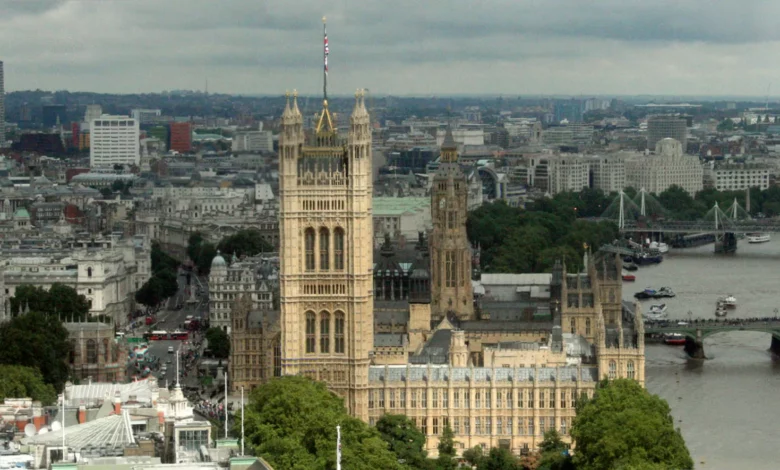
The cost of repairing the crumbling Houses of Parliament is rising by up to £420 million every single year that politicians fail to agree on a way forward, according to a stark new assessment from the National Audit Office.
Each year of delay on the Restoration and Renewal Programme adds between £320 million and £420 million to the overall bill, driven primarily by inflation but also by the fact that unrepaired damage only worsens, making future fixes more complex and expensive. The NAO has repeatedly warned that continued inaction could eventually leave the Grade I listed palace — a UNESCO World Heritage Site — uninhabitable.
Rising costs and the price of dithering
Parliament currently spends roughly £1.5 million a week on maintenance and minor repairs. That figure is forecast to climb to around £2 million a week between 2026 and 2030. The sheer volume of reactive maintenance tasks has also ballooned: the number of such jobs rose by 70 per cent between 2021 and 2024.
The overall cost of the restoration depends entirely on which option politicians eventually choose. The cheapest route — a full decant, where both the Commons and Lords vacate the Palace entirely — is estimated at between £11.1 billion and £15.6 billion. By contrast, the “Enhanced Maintenance and Improvement Plus” (EMI+) option, which allows Parliament to remain partially operational during staged works, could cost anywhere from £19.5 billion to £39.2 billion, with some projections reaching as high as £56 billion.
But delay itself carries a heavy price tag. Beyond inflation, roughly £70 million a year is wasted on developing and reassessing options that are never implemented, as well as on additional reactive maintenance that would be unnecessary if major works were already underway.
Why delays drastically inflate the repair bill
The most significant driver of the escalating costs is the interaction between inflation and a deteriorating building fabric. The Palace of Westminster is not just old — it is actively degrading. Its mechanical and electrical systems are failing. Fire safety deficiencies are chronic. High levels of asbestos are present throughout. The historic stonework is crumbling. Since 2016 alone, there have been 36 fire incidents, 12 asbestos-related incidents and 19 stonemasonry incidents recorded on the estate. Heating failures, sewerage problems and the loss of toilets due to reinforced autoclaved aerated concrete (RAAC) have become routine.
Every year that passes without a comprehensive restoration means more damage accumulates. Leaks worsen, stone erodes further, and electrical systems degrade deeper. The longer the building is left in its current state, the more extensive — and therefore more expensive — the eventual repairs become. The scaffolding propping up parts of the Palace has become so permanent that, as one observer put it, the poles themselves are in danger of becoming heritage items.
Inflation compounds this effect. The R&R Programme is a multi-decade project; even the quickest option, the full decant, is estimated to take between 19 and 24 years. The EMI+ option could stretch to between 38 and 61 years, with completion not expected until around 2086. Over such long timelines, inflationary pressures on materials, labour and specialist skills drive up costs enormously. The NAO calculated that each year of delay adds that £320 million to £420 million figure to the programme’s price tag.
Furthermore, the longer decisions are postponed, the more Parliament must spend on temporary patches and emergency fixes just to keep the building operational. These reactive maintenance costs are essentially money poured into a leaking vessel — they do nothing to address the underlying structural and systemic failures.
The funding needed to finally act
While politicians continue to debate the best approach, the independent Restoration and Renewal Programme is seeking an initial £3 billion for a seven-year “Phase One” package of enabling works. This phase is designed to halt the immediate cash drain and allow for detailed planning ahead of a final decision, expected around mid-2030. The £3 billion cap covers preparatory tasks including design and procurement, building temporary accommodation for both Houses, refurbishing the Victoria Tower, constructing a jetty on the Thames for river deliveries, and starting underground tunnel shafts.
Parliament has already passed the Parliamentary Buildings (Restoration and Renewal) Act 2019, which provides the legal framework for funding the restoration. But the act does not settle the question of how the works will be carried out — and that is where the deadlock lies.
The most cost-effective and least risky option, according to the R&R Client Board, remains a full decant: moving the Commons to the Northern Estate and the Lords to the QEII Conference Centre, then emptying the Palace entirely for a single, concentrated restoration. This approach would minimise both cost and duration while maximising safety.
Politicians, however, have been reluctant to abandon the historic building. The alternative — the EMI+ option — would see the Lords move out for 8 to 13 years while the Commons remains, potentially relocating into the Lords’ Chamber for part of the works. That staged approach pushes costs up considerably and adds a decade or more to the delivery time. Some options would take so long that a stonecarver could begin the project as an apprentice and still be working on it the day they retire.
The R&R Programme has been in planning since 2012. Parliament first voted for a full decant in 2018, but successive governments have repeatedly delayed or altered that decision. The National Audit Office has been critical of the programme’s governance, highlighting a lack of accountability and unclear oversight. Meanwhile, the project is expected to generate significant economic benefits — supporting between 1,500 and 4,000 jobs per year, creating around 1,000 apprenticeships and traineeships, and revitalising traditional crafts — but those benefits cannot materialise until a decision is made.
In the meantime, the Palace continues to decay. Mice have been spotted scurrying behind politicians during television interviews. The heating fails. Sewers back up. Asbestos remains undisturbed. And the cost of doing nothing rises by more than £400 million each year.