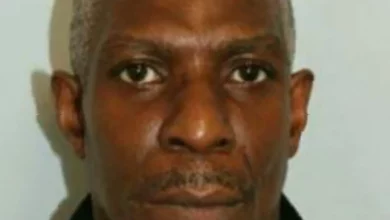
Shaun Lloyd has been recalled to prison for the fifth time under an abolished sentence, reigniting the bitter legacy of a punishment that continues to imprison thousands long after its official end. The 38-year-old handed himself in at Cardiff Bay police station last week after an anonymous phone call triggered his indefinite return to custody – despite him having committed no new offence.
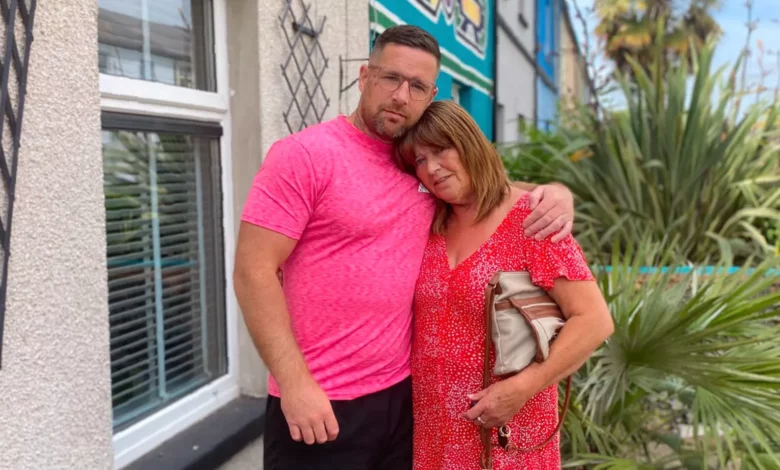
At the station, Lloyd and his mother, Shirley Debono, explained to officers that because of his Imprisonment for Public Protection (IPP) sentence he could now serve years behind bars for a breach that amounted to failing to immediately report a police visit to his probation officer. “It’s really hard for myself to be here and hand myself in,” he told them. “Someone’s made an anonymous phone call and because I’m an IPP I’m recalled like that – no investigation, nothing.” After hugging his loved ones, he turned to his mother, waved and said: “I’ll be back.”
The anonymous caller alleged Lloyd had strangled his mother. Debono, who co-founded the campaign group IPP Committee in Action and has fought for two decades against the injustice of indefinite sentences, said she was flabbergasted when police arrived to check on her. “I said I don’t think so, I would have marks on me,” she told a news outlet. Despite not being arrested, questioned or charged over the allegation, Lloyd was recalled for failing to report the incident immediately. He had intended to tell his probation officer at a scheduled appointment two days later, but when he arrived he saw officers waiting for him. He panicked and spent the weekend at large before surrendering.
The recall has devastated the family, separating Lloyd from his two children, aged seven and ten. It also comes as he faces a serious health scare; he has been referred for an urgent scan for suspected throat cancer, for which there is a family history.
An Indefinite Sentence That Never Ends
Lloyd was 18 when he snatched a mobile phone and a wallet from two people on the street in 2005. His co-defendant was sentenced to one year in a young offender institution. Lloyd received an IPP sentence with a minimum tariff of two and a half years. He has since served almost 14 years in total across multiple periods of detention and recall – a stark illustration of how an indeterminate punishment intended for dangerous offenders has been applied to relatively minor crimes.
IPP sentences were introduced in England and Wales in 2005 under the Criminal Justice Act 2003. They consisted of a minimum term (the tariff) and an indefinite period of detention until the Parole Board deemed the prisoner no longer a risk to the public. The regime was abolished in 2012 by the Legal Aid, Sentencing and Punishment of Offenders Act, but the abolition was not retrospective. As of October 2024, 2,614 people remained subject to IPP sentences in prison – 1,180 of them unreleased and a further 1,616 recalled to custody.
The open-ended nature of the sentence has been described as a “national scandal” and a “grave injustice.” Lord Brown, a former justice of the Supreme Court, called it “the greatest single stain on our criminal justice system.” David Blunkett, the home secretary who oversaw the introduction of IPPs, has admitted it is his “biggest regret.” The UN’s special rapporteur on torture has termed the sentences “psychological torture.”
For those released on licence, the system becomes a vicious merry-go-round. Unlike most offenders, who serve a fixed 56 days on recall, IPP prisoners return to square one: back inside with no release date until the Parole Board approves it. They serve an average of 28 months each time they are recalled, regardless of whether they have committed a new offence. Statistics show that 75% of IPP prisoners recalled between October and December 2025 were for breaches of licence conditions – such as missing a probation appointment – rather than for new crimes. Lloyd’s previous recalls occurred in 2016, 2018 and 2020, each resulting in roughly a year of further imprisonment. His first release came in 2014 after he had served eight years, more than three times his minimum tariff.
The constant threat of recall has a severe impact on mental health. IPP sentences have been linked to 96 suicides in prison. A thematic inspection by HM Inspectorate of Probation in December 2023 found that while most recall decisions were taken in line with policy, there was insufficient support for individuals on release, particularly for those struggling with substance misuse and mental health issues. The report made 11 recommendations, including that the Ministry of Justice ensure IPP sentence holders have access to appropriate help. A Ministry of Justice spokesperson said: “There is no evidence that IPP offenders are being recalled unnecessarily, as confirmed by the Chief Inspector in his independent review of IPP recalls in December 2023.” The spokesperson added that recall “remains an essential measure to protect the public, and there is a higher threshold for IPP offenders.”
Lloyd, who developed a drug addiction in prison, relapsed after his first release and was recalled. This latest cycle seemed to have turned: he was released on 27 February, spent two months at an approved premises in Cardiff, returned home wearing an ankle tag, and secured an apprenticeship in railway track maintenance. In a letter of support, his apprenticeship manager praised his “enthusiasm, reliability and commitment,” adding: “He deserves the chance to continue on this positive path.” Just weeks later, the anonymous call changed everything.
United Nations Investigation and Campaign for Justice
Lloyd’s case is part of a major complaint submitted to the United Nations Working Group on Arbitrary Detention last year, arguing that the continued use of IPP sentences in the UK constitutes arbitrary detention and a violation of international human rights law. The UN’s response is due to be published in the coming weeks. The UK government had 60 days to respond to the complaint.
Separately, Lloyd has applied to the Criminal Cases Review Commission (CCRC), arguing his sentencing judge failed to take into account his young age. In April this year, the Court of Appeal quashed the indeterminate sentences of six IPP prisoners because of their immaturity when they committed the crime – three of those cases followed CCRC referrals. The CCRC is currently reviewing more than 150 similar cases and has launched a project specifically investigating IPP sentences imposed on young people.
Campaigners and legal experts continue to call for a full resentencing exercise for all IPP prisoners, arguing it is the only way to resolve the injustice. Under current reforms, the Victims and Prisoners Act 2024 has reduced the qualifying period for licence termination from ten years to three, and from November 2024, IPP offenders released at least five years ago (four if under 18 at conviction) and not recalled in the last two years will have their licences automatically terminated. But critics say this does nothing for those still inside or repeatedly recalled.
Debono has appealed directly to Justice Secretary David Lammy, urging him to use a special power called the Risk Assessed Recall Review to secure her son’s urgent re-release without waiting for a parole hearing that could take up to two years. Lammy has previously described the IPP sentence as a “grave injustice” and said its implementation was “tragically flawed,” calling it a “cruel and inhumane sentence.”
“This is cruel,” Debono said. “All these recalls are affecting his mental health. It’s torture. The torture continues.” She added: “I can’t cope with this. I have been living with this since my early 40s. I’m 66 now and still doing this fighting for him. Shaun has been living with this since he was 18. Is it ever going to end?”