US supreme court backs Trump administration ending protected status for Haitians and Syrians

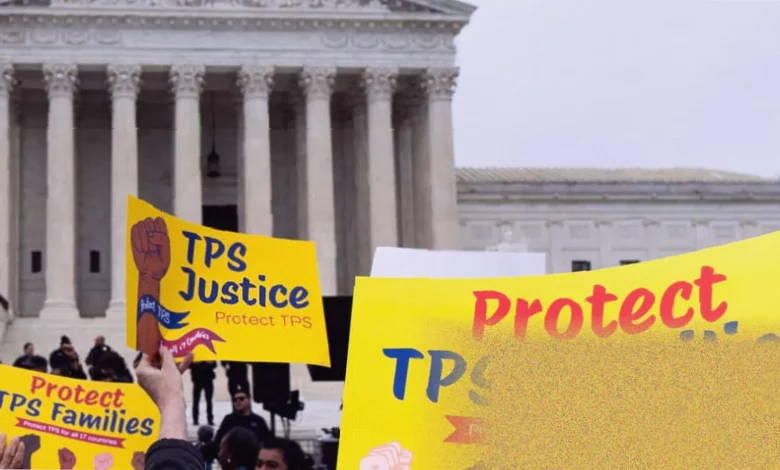
The US Supreme Court has ruled 6-3 in favour of the Trump administration’s bid to strip Temporary Protected Status (TPS) from hundreds of thousands of Haitian and Syrian nationals, a decision that leaves them vulnerable to deportation even if they have pending applications for other forms of immigration status. The ruling, powered by the court’s conservative majority, overturns injunctions from federal judges in New York and Washington DC that had previously blocked the administration’s actions affecting more than 350,000 people from Haiti and approximately 6,100 from Syria.
The legal rationale
Writing for the majority, conservative Justice Samuel Alito held that federal law “plainly bars” courts from reviewing decisions by the Department of Homeland Security (DHS) concerning TPS. This interpretation significantly curtails the ability of immigrants and advocacy groups to challenge future terminations in court. Alito also rejected arguments that the administration’s decision to end TPS for Haiti was racially motivated. He acknowledged statements made by President Donald Trump and former DHS Secretary Kristi Noem but said they were insufficient to prove racial discrimination, suggesting instead that the administration’s stance reflected a broader opposition to the TPS programme itself.
What is Temporary Protected Status?
TPS was created by Congress in 1990 as part of the Immigration Act of that year. It grants temporary legal status and work authorisation to nationals of countries that the DHS has designated as unsafe due to armed conflict, natural disasters or other extraordinary conditions. Haiti first received TPS in 2010 following a devastating earthquake; Syria was granted the designation in 2012 after the outbreak of its civil war. The State Department currently warns against travel to both countries, citing widespread violence, crime, terrorism and kidnapping. For Haiti, the advisory notes a national state of emergency in effect since March 2024, as well as risks of unrest and limited healthcare. For Syria, it warns of ongoing armed conflict.
The ruling has implications far beyond the two nations directly affected. When Donald Trump returned to office in January 2025, nearly 1.3 million people across the United States held TPS. The administration had previously sought to end the designation for 13 other countries. Last October, the Supreme Court allowed the administration to strip TPS from more than 300,000 Venezuelans under its emergency docket. Analysts have warned that Thursday’s decision could open the door to the biggest de-documentation move in US history, as the president may now feel emboldened to terminate TPS for any nation — regardless of the risks immigrants would face if forced to return.
The dissent and allegations of bias
The court’s three liberal justices – Elena Kagan, Sonia Sotomayor and Ketanji Brown Jackson – dissented. Justice Kagan, writing the dissent, argued that the statute allows for judicial review of whether the DHS secretary “adhered to the procedures it mandates – which is what the plaintiffs dispute here”. She also highlighted evidence of racial bias in the administration’s decision-making, pointing to statements by President Trump that, she said, “the majority (and for that matter, his own lawyers) cannot even bear to repeat”.
Trump has a well-documented history of derogatory remarks about Haiti and its people. In 2018 he reportedly called Haiti and African nations “shithole countries” and questioned why the US should accept immigrants from them. He has also described Haiti as a “hellhole”. During his 2024 re-election campaign he amplified false claims that Haitian immigrants in Springfield, Ohio, were abducting and eating household pets, a story promoted by his running mate, now Vice-President JD Vance. The White House declined to repeat the president’s language in court, but in a statement after the ruling, spokeswoman Abigail Jackson said the decision affirmed Trump’s belief that TPS “was never intended to be a pathway to permanent status or legal residency”.
Reactions and consequences
Viles Dorsainvil, a Haitian TPS holder and co-founder of the Haitian Support Center in Springfield, said the ruling places thousands of families in immediate fear. “Haiti is not safe, and everyone knows it,” he said. “The court’s ruling does not change the reality on the ground or the contributions we make here in the United States.” Lawyers for the Haitian plaintiffs, Geoff Pipoly and Andy Tauber, said in a statement that “immigrants are one of America’s greatest strengths. The responsibility to save these lives is now with Congress.” Ahilan Arulanantham, who represents the Syrian plaintiffs, expressed dismay: “Today the supreme court allowed the government to ignore a bedrock humanitarian protection that Congress, in bipartisan fashion, established three decades ago to ensure that vulnerable refugees would not be subject to partisan whims.”
David Bier, director of immigration studies at the libertarian Cato Institute, warned that the ruling undermines the economic benefits immigrants bring. “It will be harder for the US to compete on the global stage or keep up with a growing fiscal crisis if policymakers continue down a path that targets legal immigration pathways,” he said.
In a separate immigration-related decision on Thursday, also written by Alito and decided 6-3, the Supreme Court sided with the Trump administration over its “metering” policy, which allows border officials to turn away asylum seekers when crossings are deemed too overburdened to handle additional claims. The administration has indicated it may seek to revive the policy, which was dropped under President Joe Biden.