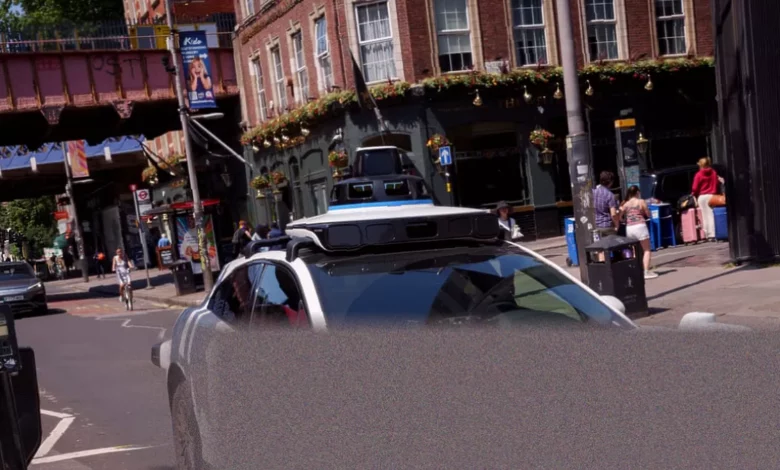
Robotaxis are already navigating London’s streets, despite early hiccups that have seen them stuck in cul-de-sacs, waking residents in Shoreditch and even driving into a crime scene after a double stabbing in Harlesden. Silicon Valley company Waymo, a subsidiary of Google parent Alphabet, has been testing self-driving Jaguar SUVs in the capital this summer, with trained drivers still behind the wheel ready to take control. The company and British rival Wayve hope to launch fully driverless minicabs in the city later this year, pending approval from the British government and Transport for London.
London trials hit the streets
Waymo already operates ride-hailing services in ten US cities, but London presents a unique challenge: narrow streets and a densely populated centre will test the technology to its limits. Wayve, a homegrown competitor, is also racing to deploy its own autonomous vehicles. For now, both companies rely on safety drivers, but those human minders are expected to be removed once regulators give the green light. The start of commercial services this year would mark a significant step for the UK, which has been exploring a regulatory framework for self-driving vehicles since at least February 2024, when the Department for Transport began consulting on rules that could allow them on British roads by 2026.
A lifeline for disabled people
Beyond the technical trials and regulatory wrangling, a less-discussed dimension of the robotaxi revolution is its potential to transform the lives of disabled people. Gabriel Stewart, a freelance writer with a visual impairment, has highlighted how his poor vision means he will never be able to drive – a reality that has shut him out of jobs and made him dependent on others for transport, particularly outside cities where trains and taxis are scarce. For millions, the arrival of autonomous vehicles offers a route to independence that feels otherwise unattainable.
The scale of the need is stark. According to 2022 analysis by the Royal National Institute of Blind People (RNIB), only 42% of people with difficulty seeing and 54% of those with other disabilities were in employment in the UK. Transportation barriers are a major factor, limiting access to healthcare, social life and work. With roughly one in four people in the UK living with a disability, the widespread adoption of self-driving cars could become a powerful vehicle for social inclusion – if the technology is developed with their needs at its centre.
Stewart argues that the opportunity is too great to be squandered. He has called on the government to establish an accessibility advisory panel with representation from across the disability spectrum, ensuring disabled people are integral to the conversation as robotaxis roll out. Without that input, he warns, the promise of independence could be undermined by a system designed without its most important users in mind.
Privacy, jobs and safety concerns
Alongside the optimism sit serious societal complications. The sensors inside autonomous vehicles will record detailed information about journeys, interactions with other vehicles and encounters with pedestrians. Critics fear that tech firms could exploit this data to sell products and services to users, turning every ride into a surveillance opportunity. Proper regulation, not an outright rejection of the technology, is needed to guard against privacy abuses.
Job displacement is another pressing issue. A 2025 report from rideshare data company Gridwise found that hourly pay for taxi drivers fell in every city where autonomous vehicles were operating between July 2024 and July 2025. The sharpest drops were in Austin, Texas (-5.3%) and San Francisco (-6.9%), compared with a 1% rise in hourly pay for rideshare drivers nationally. Trade unions are already pressing the government for protections and assurances as the transition towards autonomous passenger services accelerates.
On safety, the picture is more reassuring than the headline-grabbing mishaps might suggest. Recent analysis by the nonprofit news site LA Reported examined nearly 38 million driverless miles in Los Angeles between March 2024 and December 2025. It found only 28 Waymo crashes that resulted in injuries, and in just one of those was the robotaxi judged at fault. By contrast, human drivers covering the same distance would have been involved in roughly 60 such crashes – meaning Waymo vehicles were involved in 64% fewer injury crashes. High-profile incidents – such as a Waymo vehicle driving through a police standoff in downtown Los Angeles in December, or the recall of 3,800 robotaxis after an empty car entered a flooded road in Texas and was swept into a creek – naturally dominate public attention. But the underlying data suggests that, as the technology matures, it could significantly reduce the toll of road injuries and deaths.
None of this washes away the moral and societal complications of letting tech companies dominate our streets. Surveillance, data exploitation and job losses demand robust government oversight. Yet the benefits for disabled people – and for everyone else if the safety record holds – are too significant to ignore. The government has already signalled its willingness to act, consulting on regulation and liability frameworks. Now it must ensure that disabled voices are heard, and that the rules written today will shape a future in which robotaxis are not just a novelty for the few, but a genuine tool for independence for the many.