UK social media ban draws focus to hybrid learning as pupil recalls misery at former school

Ellie Ball used to find the seven-minute drive to her local state school an ordeal. Today, the 16-year-old willingly endures a one-hour commute by train and tube to attend school – a journey she makes because, for the first time in years, she loves learning. And now she is planning to study astrolaw – space law – at university.
The transformation began two years ago, when Ellie was struggling to attend school at all. Now she attends London Park School (LPS) Hybrid, a private school that offers a unique blend of remote and in-person learning. Four days a week she takes lessons from home via a screen; one day a week she travels alone to the school’s London base for face-to-face classes. “I don’t like the journey,” she said. “But I do it happily because I absolutely love going to school now.”
The model that made this possible is deliberately structured to meet students where traditional schooling has failed them. LPS Hybrid, part of the Dukes Education family of schools, was founded in 2024 for students aged 11 to 16. Termly fees are £5,625. The curriculum mirrors that of the group’s LPS Mayfair school, combining live online lessons with in-school sessions for practical subjects such as sport, art and science. Small class sizes and a flexible, caring ethos are central to the approach. Students who complete the programme can transition seamlessly to the LPS Sixth Form to take A-levels, which the school is about to open.
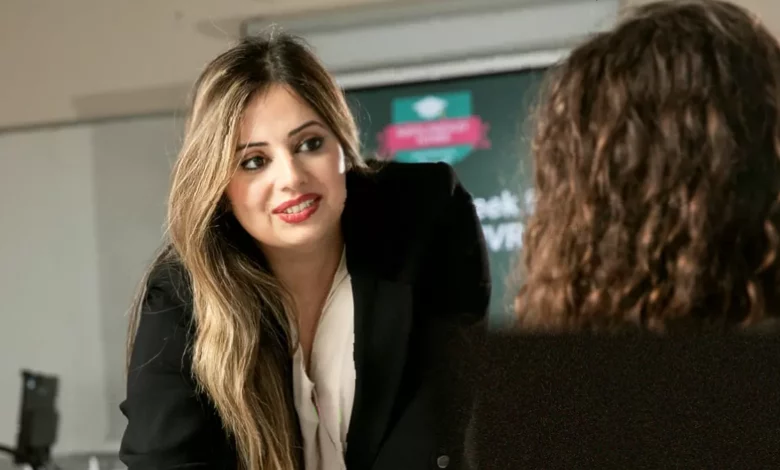
For Ellie, the structure of the hybrid week was the key. Her previous mainstream school did not use screens and she was miserable there. “Screens aren’t bad; it’s the way they’re used that’s bad,” she said. “Hybrid school uses screens but without them, I would not currently be in education – much less loving school, planning four A-levels and university.” The school’s co-directors explain that their use of technology is deliberately simple. “What we do on a screen is very simple: through screens, humans who know each other, talk to each other,” said Jamie Whiteside. Ambreen Baig, the other co-director, argued that “telling today’s young people to avoid screens is like telling previous generations to avoid books”. Instead of limiting access, she sees her role as teaching students to use screens safely. “The jobs of tomorrow demand digital literacy and technological confidence, and our hybrid learners very early on develop their skills in using screens safely,” she said.
The school’s model also emphasises independence and social skills – often the very areas parents worry about when they hear “screen time”. Ahlam De Chausay, 16, who has been at LPS Hybrid for five years, now speaks confidently at open mornings, answering questions from sceptical prospective parents. “They assume us students must be isolated and unable to communicate as a result of hours learning through screens,” she said. “But hybrid learning has helped me become more confident and social because I’ve been able to develop the necessary skills at my own pace. Also, because we have a lot of independent study periods built into the day and break times where we have to prove to the teachers that we’ve found things to do away from the screen, I’m more independent, too.”
National recognition and the wider debate on screens
This week, LPS Hybrid was named a finalist in the World’s Best School Prize in the Overcoming Adversity category – a shortlist that also includes a Polish school helping Ukrainian refugees, an American school serving the children of poor migrant workers, and a school in the Amazon that has become an educational hub for about 4,000 young people. The school has also been shortlisted for a Tes Schools Award in the Pupil Mental Health Initiative of the Year category.
Vikas Pota, founder of T4 Education, which runs the World’s Best School prizes, said the school deserved its place. “In this country, we are seeing a crisis around student wellbeing, leading to absenteeism and poor education outcomes,” he said. “There is a pressing need to recognise that students learn differently, and those with special educational needs often aren’t well served in mainstream schools.” England’s schools are facing mounting pressures, with more than 170,000 children severely absent last year, missing at least half of their lessons. Children with a suspected mental health disorder are seven times more likely to be absent for more than 15 days than those without, according to official statistics. Pota argued that “if mainstream schooling isn’t catering to those diverse needs, it’s failing hundreds of thousands of students”. He said the significance of LPS Hybrid lies not in its use of technology but in what that technology allows it to do: “Through its hybrid online and in-person model, this school is changing learning outcomes in a really innovative way. We have to recognise that technology, when used responsibly, does offer solutions to enduring challenges that our schools face.”
The national conversation about children’s relationship with technology has become increasingly fraught. The UK government announced on 15 June 2026 that it plans to ban social media for children under 16, with implementation expected by spring 2027. The ban, modelled on Australia’s approach, would cover platforms such as Snapchat, TikTok, YouTube, Instagram, Facebook and X, but not messaging services like WhatsApp and Signal. Additional “world-leading” restrictions would apply to features such as livestreaming and communication with strangers for under-16s, and by default for 16- and 17-year-olds, extending to gaming sites. The government says the aim is to protect children, give them back their childhoods and reduce scrolling. The announcement followed a consultation that showed 9 in 10 parents backed a ban for under-16s.
But critics have warned that a ban could push children into less regulated spaces and limit access to educational content. Ellie’s father echoed those concerns, saying the ban “would potentially stop kids in the future from accessing all of the online GCSE provision that many kids like Ellie find invaluable”. He added: “Our younger daughter also uses social media to engage with the outside world, she’s massively into books and theatre so follows all of her favourite authors and artists. Without it she would be really lost.”
A spokesperson for the Department for Science, Innovation and Technology, which is bringing in the ban using powers from the Children’s Wellbeing and Schools Act 2026, said it was not looking to ban “dedicated educational platforms, which support schoolwork and learning”. The government is simultaneously developing a Media Literacy Action Plan and has committed to new digital literacy curriculum changes from 2028, though past efforts have faced inconsistent implementation.
For the students at LPS Hybrid, the debate feels disconnected from their experience. “My mainstream school didn’t use screens and I was miserable there,” Ellie said. “Screens aren’t bad; it’s the way they’re used that’s bad.” Her father pointed out that a blanket ban could inadvertently harm the very students who rely on online provision to stay in education. The school’s model, which uses screens for live, structured interaction with known teachers and peers, bears little resemblance to the unstructured social media environments that concern parents and policymakers. As Jamie Whiteside put it: “What we do on a screen is very simple: through screens, humans who know each other, talk to each other.”