Eight bodies were found in advanced decomposition at an NHS trust mortuary because there was not enough freezer space to store them, according to a damning report by the Human Tissue Authority (HTA).
Mortuary conditions
Inspectors from the HTA visited Nottingham University Hospitals NHS Trust in March and discovered that a lack of long-term freezer storage had become so acute that staff had adopted the routine practice of placing deteriorating bodies in hermetically sealed bags and keeping them in a refrigerated “isolation” area. The regulator said this practice had a “detrimental effect on the condition and dignity of the deceased”.
During a body audit, inspectors identified eight bodies that were showing advanced deterioration because they had not been transferred to a freezer within a sufficient timeframe. Staff were advised to organise a transfer to the remaining freezer spaces at the trust’s City Hospital site before the inspection team left.
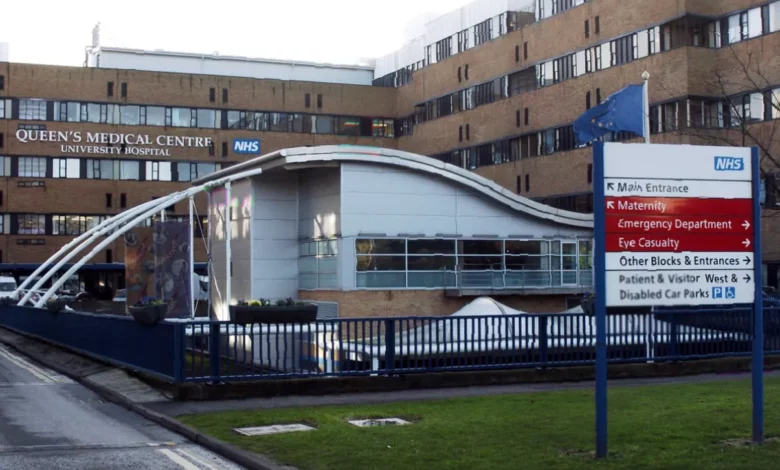
The March report found three “critical”, six “major” and one “minor” shortfall at the Queen’s Medical Centre, which is run by the trust. Among the most serious concerns was a lack of systematic checks on identification wristbands. The HTA said that for bodies held in frozen storage, those in sealed bags, or those already in an advanced state of deterioration, no ongoing condition checks were being undertaken. Where checks did occur, they were not conducted according to a defined schedule and records were kept on an ad hoc basis.
Inspectors highlighted that identification wristbands were not always checked when transferring bodies in sealed bags into the care of funeral services. “As a result, identification is verified solely against accompanying documentation rather than by confirming the wristband on the deceased,” the report said. “This increases the risk of the wrong body being released to funeral services.”
Separate problems relating to the bodies of babies were also identified. Inspectors observed that some perinatal post-mortem examinations were not being conducted within the mortuary’s post-mortem suite but were instead transferred to a non-mortuary laboratory area that does not meet HTA standards. Support staff working in that area had not received documented training or competency assessments in mortuary processes, although the trust submitted sufficient evidence to address that shortfall before the report was finalised.
Systemic failures behind the scandal
The mortuary crisis is the latest chapter in a wider scandal at Nottingham University Hospitals NHS Trust, where an independent review led by former senior midwife Donna Ockenden found that more than 500 mothers and babies suffered harm, potentially avoidable harm, or died due to “deeply embedded systemic failures”. The review examined 2,500 cases between 2012 and 2025 and concluded that 444 women and 76 newborn babies suffered “potentially avoidable” outcomes. Of those, 162 deaths — 156 children and six mothers — were found to have potentially been avoidable with better care, including 94 stillbirths, 62 neonatal deaths and six maternal deaths.
Ockenden’s report described a “bullying and toxic culture” that had persisted at the trust for many years, with “powerful leaders infected the unit” and women not being listened to. It detailed dangerously poor and sometimes “cruel” care, routine understaffing, a failure to learn lessons from patient safety incidents, and bullying by “intimidating cliques” of staff. There were examples of an early gestation baby being disposed of as clinical waste, dehumanising language by clinicians, and poor mortuary care including failure to comply with legal requirements. In one case, the wrong baby was released to a funeral director; in another, a stillborn baby girl was left in a fridge when she should have been taken to the mortuary.
The problems in mortuary care first came to light after Jack and Sarah Hawkins discovered that their stillborn daughter Harriet, who died in 2016, had been allowed to decompose so badly that her body had to be triple-bagged for her funeral. An external review of their case found 13 failures by maternity staff and concluded the death was “almost certainly preventable”. The family’s legal case settled for £2.8 million, believed to be the largest payout for a stillbirth clinical negligence case.
The HTA’s March inspection also uncovered a critical and long-running failure to report incidents to the regulator. A review of the trust’s internal systems revealed that 73 incidents over the past ten years had not been reported to the HTA. The trust operates its mortuary services under an HTA licence and still holds it, but the regulator said it must fulfil every aspect of the licence.
Previous HTA inspections in 2015 and earlier this year had already identified shortfalls in governance and quality systems, including issues with risk assessment and audit scope. In 2020, the Care Quality Commission found maternity units at the trust’s Queen’s Medical Centre and City Hospital to be “inadequate”, citing concerns over staffing, leadership and a culture that did not learn lessons. By September 2023, maternity services had improved to “requires improvement”, but concerns remained over staffing levels and staff fear of reprisal.
Nottinghamshire Police have taken criminal action as part of Operation Perth, their investigation into maternity services at the trust. This week, two men aged 55 and 59 were arrested on suspicion of misconduct in a public office in connection with operating practices in the mortuary service. The police investigation uncovered breaches of the Human Tissue Act. Last year, the force also launched a corporate manslaughter case as part of a wider criminal investigation into maternity failings at the trust.
In February 2025, the trust pleaded guilty to six charges of failing to provide safe care and treatment to three mothers and their babies, resulting in fines totalling £1,667,944.
Trust response
Trust chief executive Anthony May said he took “responsibility and accountability” for the failings. “That happened on my watch,” he said. “I’m very sorry. I’m really disappointed. The dignity and respect of people in death matters just as much as it does during their lives.”
May said the issue first came to his attention after one of the maternity families found something in a subject access request about the way the trust had cared for their daughter. He said the trust immediately commissioned a review with the family and a separate review into the state of mortuary services, and worked closely with the police and the regulator.
He confirmed that an action plan had been submitted to the regulator and would have independent oversight. “That action plan will have independent oversight, so that we’ve got the right governance and assurance in place. We took a lot of actions at the time. Those actions are still under way, and we’re absolutely determined to put this right, because local people deserve better, and these services need to be of a higher quality.”
The HTA said it found “serious shortfalls” at the trust and took “prompt regulatory action, including issuing formal directions”. It has also required all NHS trusts to review mortuary records from 2015 to 2026 as part of a sector-wide assurance exercise.