Social Housing and Homelessness in the UK Explained
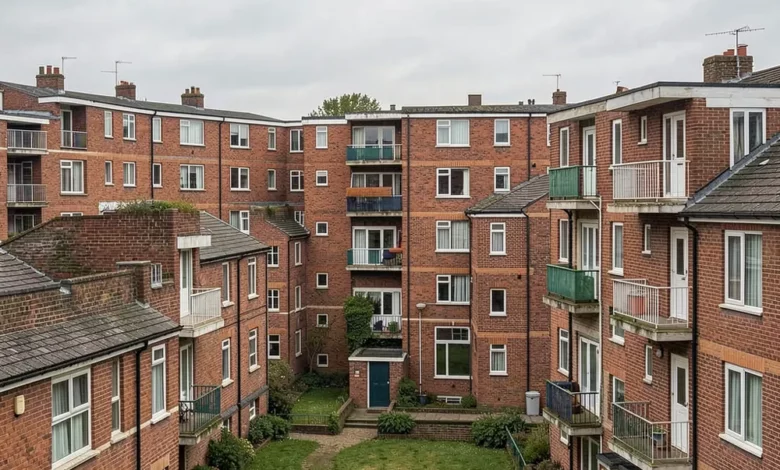
Social housing and homelessness sit at opposite ends of the same story. One is the safety net built over a century to give people a secure, affordable home when the market cannot; the other is what happens when that net, and the wider housing system, fails. In 2026 both are under more strain than at almost any point in living memory: more than 1.3 million households wait on social housing lists, over 134,000 households — including more than 176,000 children — live in temporary accommodation, and the stock of social homes has shrunk from nearly a third of all households to around 17 per cent. This guide explains how social housing works, who it is for and how it is allocated, what the law actually says about homelessness, and what is being done in a year of significant reform. It is written to make a complex and often distressing system understandable, for anyone trying to navigate it or simply to grasp why it matters.
What is social housing?
Social housing is accommodation let at below-market rents to people whose needs are not met by the open market, allocated according to need rather than ability to pay. It is the modern descendant of council housing, and it exists precisely because the private market, left to itself, does not provide enough affordable, secure homes for everyone who needs one. Around 17 per cent of households in England — roughly four million homes — are socially rented, making it the smallest of the three main tenures after owner occupation and private renting, though it was once far larger.
There are two main types of provider. Local authorities — councils — own and manage a share of the stock directly, the classic “council house”. Housing associations, which are independent, not-for-profit bodies regulated by the state, now own and manage the larger share, having taken on much council stock through transfers over the past few decades. Both are known formally as registered providers of social housing, and both are overseen by the Regulator of Social Housing, which sets standards for the condition of homes and the treatment of tenants. For the people who live in them, the practical difference between a council and a housing association landlord is usually small; the rights and rent levels are broadly similar.
Within social housing there is also a distinction in rent levels that matters a great deal to affordability. “Social rent” is the lowest, set by a government formula at roughly half of local market rents. “Affordable rent”, a newer category introduced in 2011, can be up to 80 per cent of the market rate — much higher, and for many low-income households not affordable in any meaningful sense despite the name. The shift in new building from social rent towards affordable rent has been one of the quieter but more consequential changes in housing policy, because it has eroded the supply of the genuinely low-cost homes that those in greatest need depend on. Social housing forms one of the three tenures that make up the wider UK housing market, and its decline is inseparable from the pressures on the other two.
Who can get social housing, and how is it allocated?
Social housing is allocated by local authorities according to a published allocation scheme, and the central principle is that it goes to those in the greatest need rather than on a first-come, first-served basis. To apply, a household generally joins the council’s housing register, often called the waiting list. Eligibility depends on several factors: immigration and residence status, a local connection to the area, and in many areas an income or savings cap, since social housing is intended for those who cannot afford to buy or rent privately. The exact rules vary significantly between councils, which is a frequent source of confusion, so the only reliable guide is the allocation scheme of the specific local authority.
Because demand vastly exceeds supply, most councils use a banding or points system to prioritise applicants by need. Households are placed in priority bands reflecting their circumstances: those who are homeless, living in severely overcrowded or insanitary conditions, or who need to move for serious medical or welfare reasons are placed in the highest bands, while those with a lower level of need are placed below them. Many areas operate a “choice-based lettings” system, in which available properties are advertised and eligible applicants “bid” — express interest — with the home usually going to the bidder in the highest band, or with the longest waiting time within a band.
The hard truth is that for most applicants the wait is measured in years, not months, and in the highest-pressure areas it can stretch beyond a decade. With more than 1.3 million households on waiting lists in England and a net loss of social homes year after year, being accepted onto the register is not the same as being housed. A single person with no priority need in a high-demand London borough may realistically never reach the top of the list. This gap between entitlement in principle and a home in practice is the defining experience of the social housing system as it stands, and it is why so many households who would once have been housed socially now rely on the private rented sector or temporary accommodation instead.
Why has social housing declined?
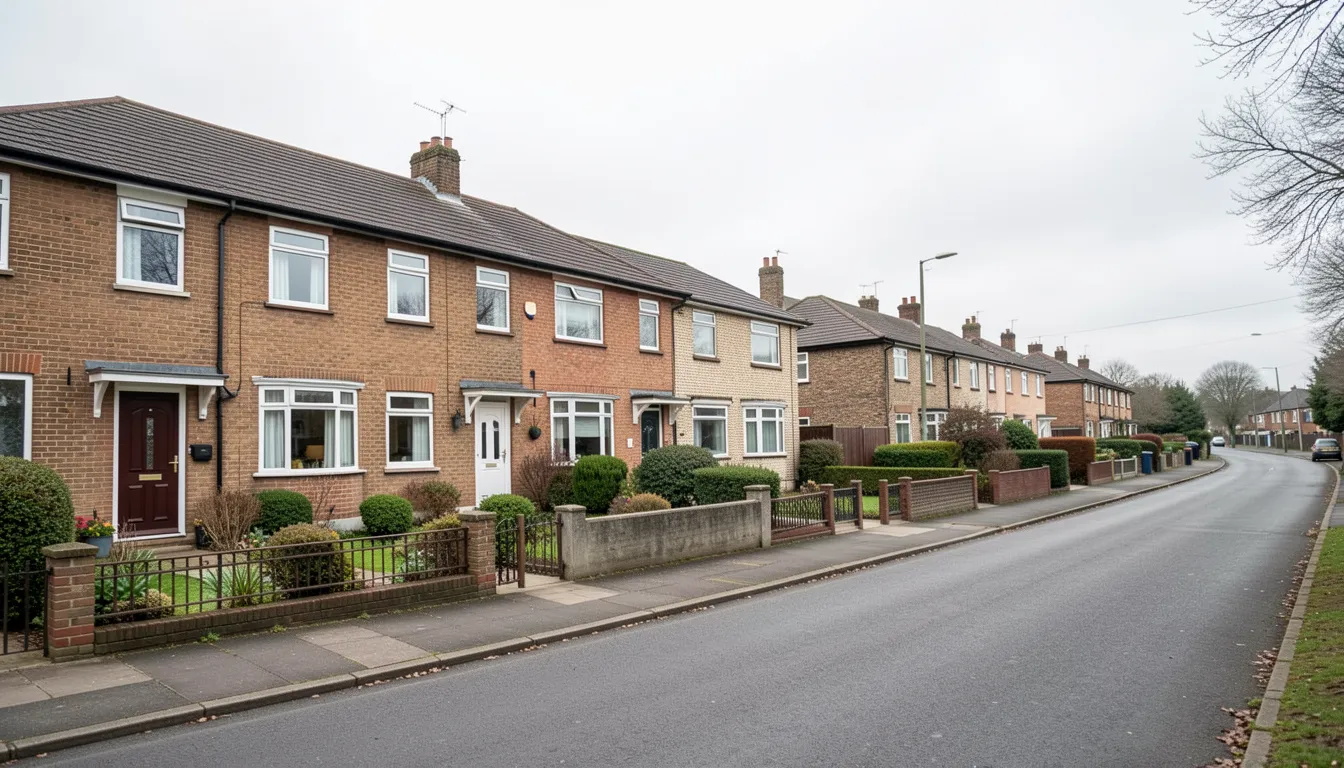
The shrinking of social housing is one of the most important structural shifts in modern British housing, and it has a clear central cause: more homes have been sold or lost than have been built to replace them, for decades. Social housing has fallen from around 31 per cent of all households to roughly 17 per cent, and the total number of social homes has dropped from a peak of about 6.8 million to around 5.2 million. Since 1991 there has been an estimated net loss of roughly 24,000 social homes every year. The safety net has not simply failed to grow with the population; it has actively contracted.
The single biggest driver was the Right to Buy, introduced in 1980, which gave council tenants the right to buy their homes at a substantial discount. For the roughly 2.8 million households who bought, it was a genuine route into ownership, and the policy generated around £62 billion in receipts. But the great majority of those homes were never replaced: between April 2012 and March 2025, there were around 133,000 council Right to Buy sales but only around 51,000 replacement homes built over the same period. Each unreplaced sale permanently removed a home from the pool available to the next family in need, and because the homes sold were often the most desirable, the stock that remained was poorer and harder to let.
Other forces compounded the loss. Government grant for building new social homes was cut sharply over the 2010s, and the policy emphasis shifted from social rent towards higher “affordable rent” and towards home ownership schemes. Councils, having lost the receipts from Right to Buy and the confidence that new homes would not simply be sold off, largely stopped building at scale; the hundreds of thousands of council homes a year built in the mid-twentieth century became a few thousand. The result is a system trying to meet twenty-first-century need with a stock that has been shrinking for forty years, which is the backdrop to every other problem in this article.
How is Right to Buy being reformed in 2026?
After four decades in which Right to Buy steadily depleted the social housing stock, the government has moved to rein it in. The Social Housing Bill, introduced in 2026 and progressing through Parliament, contains the most significant overhaul of the scheme since it began. The reforms do not abolish Right to Buy in England — unlike Wales, which ended it in 2019, and Scotland, which did so in 2016 — but they substantially restrict it, reflecting a deliberate shift in priority from maximising individual ownership towards protecting the long-term supply of social homes.
The key changes are a tighter set of rules designed to keep homes in the social sector for longer. The minimum time a tenant must have lived in social housing before qualifying rises from three years to ten. Discounts, which previously reached as high as 70 per cent of a property’s value in some cases, are cut dramatically: they now start at 5 per cent and rise by 1 per cent a year up to a maximum of 15 per cent, or a cash cap, whichever is lower. Newly built social homes are exempted from Right to Buy entirely for 35 years, so that councils building new stock can be confident it will not be sold off shortly afterwards. Rural properties are excluded, and councils can now keep 100 per cent of the receipts from any sales to fund replacements. The table below sets out the shift.
| Feature | Before reform | After 2026 reform |
|---|---|---|
| Minimum tenancy to qualify | 3 years | 10 years |
| Maximum discount | Up to 70% in some areas | 5% rising to a 15% cap |
| New-build homes | Could be bought after 3 years | Exempt for 35 years |
| Rural homes | Generally included | Excluded |
| Receipts kept by council | Limited | 100%, usable for replacements |
Whether these changes reverse the long decline depends on building as much as on restricting sales, and here the government has committed substantial money: a £39 billion Social and Affordable Homes Programme running from 2026 to 2036, described as the biggest funding boost for social and affordable housing in a generation. Supporters argue the combination of slower losses and major investment could finally turn the tide; sceptics note that previous building pledges have repeatedly fallen short, and that the scale of the existing shortfall is enormous. The direction of travel, set through how UK government policy is made, is clearer than it has been for years, but the gap between commitment and delivery remains the open question.
What does the law say about homelessness?
Homelessness in England is governed by a specific legal framework, and understanding it matters because the popular image of homelessness — someone sleeping in a doorway — is only a small part of what the law recognises. The statutory definition is much broader: a person is legally homeless if they have no accommodation available that it is reasonable for them to continue to occupy. That includes people who are sofa-surfing, living in accommodation they cannot afford, fleeing domestic abuse, or facing the loss of their home within 56 days. Rough sleeping is the most visible and most acute form, but the great majority of homeless households are never on the street.
The duties of councils are set out in Part 7 of the Housing Act 1996, significantly expanded by the Homelessness Reduction Act 2017. When someone applies as homeless or threatened with homelessness, the council must assess their situation and, for all eligible applicants, take reasonable steps to prevent or relieve their homelessness — the “prevention duty” where homelessness is threatened within 56 days, and the “relief duty” where someone is already homeless. These duties apply regardless of whether a person is in “priority need”, and were intended to shift the system towards helping people earlier, before they reach crisis.
The crucial limit is that councils are not obliged to house everyone. The “main housing duty”, which requires the council to secure accommodation, applies only to applicants who are eligible, unintentionally homeless, and in priority need. Priority need covers households with dependent children, pregnant women, people who are vulnerable through age, disability, mental illness or other reasons, and those made homeless by an emergency or by domestic abuse. An applicant judged to have made themselves “intentionally” homeless, or who lacks a priority need, may be owed advice and temporary help but not a guaranteed home — which is why a single, healthy adult can do everything right and still be left without an offer of accommodation. This distinction, between those the system must house and those it need only advise, is the hinge on which many individual outcomes turn.
What is temporary accommodation, and why is it in crisis?
When a council accepts a duty to house someone but has no permanent social home available — which, given the waiting lists, is most of the time — it places them in temporary accommodation. This is housing secured under the council’s homelessness functions while a longer-term solution is found, ranging from self-contained flats and houses, through hostels, to bed and breakfast hotels and nightly-paid rooms. It is meant to be a short-term bridge. In practice, it has become a long-term holding pen: among households with children in temporary accommodation, more than a fifth have been there for over five years.
The numbers tell the story of a system under acute strain. The number of households in temporary accommodation reached around 131,000 at the start of 2025, a record, up roughly 156 per cent since 2010, and including more than 176,000 children. The cost has ballooned in parallel: councils spent around £2.84 billion on temporary accommodation in 2024-25. The most damaging trend is the rise of the worst forms: nightly-paid accommodation now houses well over a third of placements, and bed and breakfast use has climbed to around 12 per cent, far above its level fifteen years ago, despite B&Bs being both the most expensive option and the least suitable for families. The expense is so severe that temporary accommodation spending has pushed several councils towards financial crisis.
Accommodation provided under homelessness duties must by law be “suitable”, assessed case by case against factors such as the household’s health, affordability, location and physical standards, and it must not contain any of the most serious safety hazards. In reality, families are routinely placed in cramped, poor-quality rooms, sometimes far from their schools, jobs and support networks, because nothing better is available. The fundamental driver is the same shortage that runs through this whole subject: too few social homes and a private rented sector that low-income households increasingly cannot afford, leaving temporary accommodation to absorb a demand it was never designed to carry.
What causes homelessness?
One of the most persistent myths about homelessness is that it results mainly from individual failings — bad choices, addiction, an unwillingness to work. The evidence points firmly the other way. A systems-wide evaluation for the government concluded that rises in homelessness and rough sleeping are driven primarily by structural pressures rather than personal fault: a shortage of affordable homes, the unaffordability of private renting on a low income, frozen or inadequate housing benefit, and the loss of social housing. Personal crises certainly play a part in who tips over the edge, but the edge itself has been created by the housing system.
The most common immediate trigger of statutory homelessness in recent years has been the loss of a private tenancy, which is why the abolition of no-fault eviction under the Renters’ Rights Act 2025 was seen as such a significant intervention. Behind that sits a longer chain: when social housing is scarce, low-income households are pushed into a private rented sector they struggle to afford, especially where housing benefit has not kept pace with rents; a rent rise, a relationship breakdown, a lost job or a benefit problem can then be enough to tip a precarious household into homelessness. Problem debt — accumulating through rent arrears, utility bills and council tax — has also been identified as a systemic driver, not merely a symptom.
Some groups face markedly higher risk. People leaving an institution — prison, the care system, the armed forces, or Home Office asylum support — are particularly exposed at the point of transition, when accommodation arranged for them ends. Survivors of domestic abuse, refugees, lone parents, and those facing discrimination are all over-represented. Among people who sleep rough specifically, the overlap of homelessness with mental ill health, substance use, domestic abuse and contact with the criminal justice system is striking, and adverse experiences in childhood are a common thread. Recognising these patterns matters, because a system that treats homelessness as a personal failure will reach for different — and less effective — solutions than one that treats it as a predictable consequence of how housing, welfare and public services are arranged.
What about rough sleeping?
Rough sleeping is the most visible and dangerous form of homelessness, and although it accounts for a small share of the total, it carries by far the greatest risk to life. It means sleeping in the open or in places not designed for habitation — streets, doorways, parks, tents, cars, stairwells. The numbers are far smaller than for statutory homelessness, but they have risen sharply: rough sleeping has more than doubled since 2010, even as recent local figures have shown some falls, such as an 11 per cent year-on-year drop recorded in London in early 2026.
Rough sleeping is rarely about housing alone. Research consistently finds that most people who sleep rough have experienced a cluster of overlapping difficulties: surveys of rough sleepers find large majorities have faced three or more of homelessness, substance use problems, mental ill health, domestic abuse and contact with the criminal justice system. Leaving an institution — prison, care, the armed forces, or asylum support — is a common trigger. Long-term and repeat rough sleeping is becoming more entrenched, with a significant share of people sleeping rough in at least three of the previous twelve months. This is why solutions focused only on a bed, without the wraparound support that addresses the underlying causes, tend to fail.
If you are concerned about someone sleeping rough in England or Wales, you can refer them to StreetLink, a service that connects rough sleepers with local outreach teams, online or by phone; in an emergency where someone’s life is at risk, the emergency services should be contacted. The government published a cross-government National Plan to End Homelessness in December 2025, committing over £3.6 billion to homelessness and rough sleeping services across 2026-27 to 2028-29 and emphasising a shift from crisis response towards prevention. Whether that ambition is realised will depend, as ever, on whether the homes and the support are there to back it up.
What should you do if you are homeless or at risk?
If you are homeless or worried you might become homeless, the single most important step is to act early and approach your local council’s housing options team as soon as possible — ideally well before you actually lose your home. Because the prevention duty applies when homelessness is threatened within 56 days, contacting the council when you receive notice of eviction, rather than waiting until you have nowhere to go, gives them the time and legal basis to help. The council must assess your situation, and for eligible applicants take reasonable steps to prevent or relieve homelessness, drawing up a personalised housing plan.
You do not have to navigate this alone, and free expert help is available. Shelter and Citizens Advice both provide free, confidential advice on homelessness, your rights and how to deal with the council, including help if you believe a council has wrongly refused to assist you — decisions on homelessness applications can be challenged through a statutory review and, ultimately, the courts. Crisis works specifically with single people facing homelessness. These organisations can be the difference between a household getting the help it is legally entitled to and falling through the gaps, particularly for those whose situation is complex or who are told, wrongly, that nothing can be done.
It is worth understanding that the system, for all its strain, does contain real entitlements, and that knowing them changes outcomes. A household threatened with eviction has rights well before the point of crisis; the connection between losing a tenancy and homelessness is one reason the protections in renting law matter so much. The reforms now under way — to Right to Buy, to social house building, to homelessness prevention — are an attempt to address the causes rather than only the symptoms. For now, though, the gap between need and provision remains wide, which is why housing continues to be one of the most pressing issues in UK news.
Social Housing and Homelessness: Frequently Asked Questions
How do I apply for social housing?
You apply by joining your local council's housing register, often called the waiting list. Eligibility depends on factors such as your immigration and residence status, a local connection to the area, and in many areas an income or savings cap. Each council has its own published allocation scheme with different rules, so the only reliable guide is your specific local authority's policy. Social housing is allocated according to need, not on a first-come, first-served basis.
How long is the wait for social housing?
For most applicants the wait is measured in years rather than months, and in the highest-pressure areas it can exceed a decade. With more than 1.3 million households on waiting lists in England and a continuing net loss of social homes, being accepted onto the register is not the same as being housed. Households in the greatest need — such as those who are homeless or in severely overcrowded conditions — are placed in higher priority bands and rehoused sooner.
Does the council have to house me if I am homeless?
No. Councils must take reasonable steps to prevent or relieve homelessness for all eligible applicants, but they are only legally obliged to secure accommodation — the 'main housing duty' — for those who are eligible, unintentionally homeless and in priority need. Priority need covers households with children, pregnant women, people vulnerable through age, disability or illness, and those made homeless by an emergency or domestic abuse. A single, healthy adult may be owed advice but not a guaranteed home.
What counts as legally homeless in the UK?
You are legally homeless if you have no accommodation that it is reasonable for you to continue to occupy. This is much broader than rough sleeping: it includes sofa-surfing, living somewhere you cannot afford, fleeing domestic abuse, or facing the loss of your home within 56 days. The great majority of homeless households are never on the street, which is why rough sleeping, though the most visible form, is only a small part of the total.
How is Right to Buy changing in 2026?
The Social Housing Bill, going through Parliament in 2026, substantially restricts Right to Buy rather than abolishing it. The minimum tenancy to qualify rises from three to ten years, discounts are cut to start at 5 per cent and rise to a maximum of 15 per cent (down from up to 70 per cent in some cases), newly built homes are exempt for 35 years, rural homes are excluded, and councils can keep 100 per cent of sale receipts to fund replacements.
What should I do if I am about to become homeless?
Act early — contact your local council's housing options team as soon as you receive notice or realise you may lose your home, because the prevention duty applies when homelessness is threatened within 56 days. The council must assess your situation and, if you are eligible, take reasonable steps to help. Free, confidential advice is available from Shelter and Citizens Advice, and from Crisis for single people, including help to challenge a council that wrongly refuses assistance.
Related guides
- How the UK Housing Market Works
- Renting in the UK: Tenant Rights and Landlord Obligations
- UK Planning System and Housing Development Explained