Renting in the UK: Tenant Rights and Landlord Obligations
Renting in England changed more on 1 May 2026 than it had in almost forty years. On that single date, the Renters’ Rights Act 2025 abolished Section 21 “no-fault” evictions, converted every assured shorthold tenancy into an open-ended periodic tenancy, and rewrote the balance of power between the country’s 11 million private renters and 2.3 million landlords. If you rent your home, the rules that govern your tenancy today are not the rules most guides online still describe. This article sets out what those rights now are, what your landlord is obliged to do, and — just as importantly — the practical steps that turn a right on paper into money back in your account or a repair actually carried out. It is written from the perspective of a long-term private renter in Bristol, where the gap between what the law promises and what tenants experience is felt every month the rent goes out.
What rights do tenants have when renting in the UK?
Private renters in England now hold a set of legal rights that are stronger and harder for a landlord to circumvent than at any point since the Housing Act 1988. The core of these rights is security of tenure: since 1 May 2026, your landlord cannot evict you without giving a specific, legally defined reason. Alongside that sit the right to have your deposit protected, the right to a home that is safe and free from serious hazards, the right to have repairs carried out, the right to challenge an unfair rent increase, and a set of new protections against discrimination and unfair upfront demands.
These rights apply to the great majority of private renters, who now hold what is called an assured tenancy. There are exceptions: lodgers who share living space with their landlord, people in temporary or holiday accommodation, and tenants in properties let by a company at very high rents fall outside parts of the framework. But if you rent a flat or house from a private landlord or a letting agent and it is your only or main home, the protections described here almost certainly apply to you.
It helps to understand where these rights come from, because they are spread across several pieces of law rather than gathered in one place. The Housing Act 1988 created the assured tenancy system. The Housing Act 2004 introduced deposit protection and the hazard rating system councils use. The Tenant Fees Act 2019 banned most fees and capped deposits. The Homes (Fitness for Human Habitation) Act 2018 gave tenants the right to take a landlord to court over an unfit home. And the Renters’ Rights Act 2025 has now layered on top of all of these the abolition of no-fault eviction and a string of new protections. The result is a system that is genuinely more favourable to tenants than the one it replaced, but also one that still relies heavily on tenants knowing their rights and being willing to enforce them. Renting also sits within the wider UK housing market, and the pressures of that market — high prices, short supply — shape how much leverage any individual tenant really has.
How did the Renters’ Rights Act 2025 change tenancies?
The Renters’ Rights Act 2025 is the biggest reform of the private rented sector since the late 1980s, and its first and largest phase came into force on 1 May 2026. The single most important change is the abolition of Section 21 of the Housing Act 1988 — the provision that allowed a landlord to evict a tenant at the end of a fixed term without giving any reason at all. The threat of a no-fault eviction had long been the reason many tenants stayed silent about disrepair or accepted steep rent rises: complaining could mean losing your home. Removing it is the change that gives every other right its teeth.
The Act also abolished fixed-term assured shorthold tenancies. Before May 2026, most renters signed a contract for a fixed period, typically six or twelve months, after which it either renewed or rolled on. Now all assured tenancies are periodic — they roll on from one rent period to the next, month to month or week to week, with no end date. Existing tenancies converted automatically on 1 May 2026; tenants did not need to sign anything, and landlords did not need to reissue agreements, though they were required to give existing tenants an official government information sheet by 31 May 2026 explaining the changes.
For tenants, the practical effects are significant. You can now end your tenancy at any time by giving two months’ notice, which gives far more flexibility than being locked into a fixed term. Your landlord, by contrast, can only end the tenancy by using one of a defined set of legal reasons known as possession grounds, and must go through a Section 8 notice and, if you do not leave, the courts. The Act also banned “rental bidding wars” by requiring landlords to advertise a fixed rent and forbidding them from accepting offers above it, and it limited the rent a landlord can demand before a tenancy begins to a single month, ending the practice of asking for many months’ rent upfront. The table below summarises the headline changes.
| Area | Before 1 May 2026 | After 1 May 2026 |
|---|---|---|
| No-fault eviction | Landlord could use Section 21 to evict without reason | Abolished — landlord needs a legal possession ground |
| Tenancy type | Fixed-term assured shorthold tenancy (AST) | Open-ended periodic assured tenancy |
| Tenant notice to leave | Often locked in until end of fixed term | Two months’ notice at any time |
| Rent increases | Varied; rent review clauses common | Once a year only, via a Section 13 notice, challengeable |
| Bidding wars | Permitted | Banned — must let at advertised rent |
| Rent upfront | Several months sometimes demanded | Maximum one month before tenancy begins |
| Pets | Landlord could refuse outright | Cannot unreasonably refuse a request |
The Act is being rolled out in phases rather than all at once. The tenancy reforms above are already in force. Other elements are scheduled to follow: a national private rented sector database, on which all landlords and their properties must be registered, is expected to launch by region from late 2026; a Private Rented Sector Landlord Ombudsman to resolve complaints without going to court is due to become mandatory by 2028; and the Decent Homes Standard and Awaab’s Law — covering damp, mould and serious hazards — are being extended to private rentals through later regulations. The direction is clear even where the dates are not yet fixed: a sector that was lightly regulated is becoming one of the most regulated tenures in the country.
What does it cost to start a tenancy, and what can you be charged?
One of the most useful things a renter can know is exactly what a landlord or agent is and is not allowed to charge, because the Tenant Fees Act 2019 banned most of the fees that used to inflate the cost of moving in. Before that law, agents routinely charged for referencing, drawing up the contract, inventory checks, renewals and “administration” — fees that could run to several hundred pounds with little justification. Almost all of these are now prohibited. A landlord or agent who demands them is breaking the law, and a local authority can impose a financial penalty of up to £5,000 for a first offence.
What can legitimately be charged is now a short list: the rent itself, a refundable tenancy deposit capped as described below, a refundable holding deposit of no more than one week’s rent to reserve a property while checks are carried out, and a limited set of default fees such as a reasonable charge for replacing lost keys or interest on genuinely late rent. The holding deposit must normally be put towards the first rent or deposit once the tenancy goes ahead, and can only be kept by the landlord in limited circumstances, such as if the tenant provides false information or pulls out. Since 1 May 2026 a landlord also cannot demand more than one month’s rent in advance before the tenancy begins, ending the practice — which hit those without a UK guarantor hardest — of asking for six or twelve months upfront.
The other hurdle at the start is referencing. A landlord can carry out affordability and credit checks and ask for references, and many require a guarantor — usually someone who agrees to cover the rent if the tenant cannot. Affordability rules of thumb used by agents typically require an income of around 30 times the monthly rent on an annual basis, or a guarantor earning that much, which on a £1,883 Bristol flat implies an income of roughly £56,000 or a guarantor above it. This is one of the quiet barriers that the headline rent figure conceals: the deposit, the first month’s rent and the income or guarantor threshold together decide who can actually access a tenancy, long before any of the new rights come into play.
How does tenancy deposit protection work?
If you pay a deposit, your landlord must protect it in one of three government-approved schemes within 30 days of receiving it, and must give you written details — the “prescribed information” — within the same 30 days. The three schemes are the Deposit Protection Service (DPS), MyDeposits and the Tenancy Deposit Scheme (TDS). Each offers two models: a custodial scheme, where the scheme holds your money for the duration of the tenancy, and an insured scheme, where the landlord holds the money but pays the scheme to guarantee it. This requirement has applied since 2007 under the Housing Act 2004, and it is one of the most frequently breached rules in renting.
The amount a landlord can take is capped. Under the Tenant Fees Act 2019, a deposit cannot exceed five weeks’ rent where the annual rent is below £50,000, or six weeks’ rent where it is £50,000 or more. The five-week figure is calculated as the monthly rent multiplied by 12, divided by 52, multiplied by 5. On a Bristol flat at the local average of around £1,883 a month, that is a deposit of roughly £2,173 — a substantial sum to find on top of the first month’s rent. Charging more than the cap is illegal, and any excess must be refunded.
The prescribed information matters as much as the protection itself. It must tell you which scheme holds the money, the address of the property, the amount, how to get the deposit back, and how the dispute process works. If your landlord protects the deposit but fails to serve this information correctly, the consequences are serious: you can claim compensation of between one and three times the deposit through the county court, and — crucially since the abolition of Section 21 — a deposit failure can now invalidate a landlord’s attempt to regain possession through a Section 8 notice. The first practical step any renter should take is to check, a few weeks into the tenancy, that the deposit is registered. Each scheme lets you verify this on its website using the property address and deposit amount.
How do you get your deposit back at the end of a tenancy?
When a tenancy ends, the deposit must be returned within 10 days of both parties agreeing how much is due back. A landlord can only deduct money for specific, evidenced reasons: unpaid rent, damage beyond fair wear and tear, cleaning if the property is left worse than at the start, or replacing items listed on the inventory that have gone missing. The burden of proof sits with the landlord. If a dispute goes to a scheme’s adjudicator, the landlord must demonstrate that a deduction is justified; the adjudicator awards only what the evidence supports, and “fair wear and tear” — the gradual, expected deterioration of a home that is lived in — is not a valid deduction.
This is where documentation decides the outcome, and where tenants most often lose money they should have kept. The single most useful thing a renter can do is photograph every room in detail at check-in and again at check-out, with dates, and keep the move-in inventory. A few worn patches on a carpet after three years are wear and tear; a wine stain is damage — and the difference, in an adjudication, comes down to whether you can show the condition at the start. Reporting any pre-existing damage in writing in the first week, by email so there is a timestamped record, is the cheapest insurance a tenant can buy.
If you disagree with proposed deductions, the route is to raise a dispute through the deposit scheme’s free alternative dispute resolution service, not simply to argue with the landlord. The undisputed portion of the deposit must still be returned within 10 days. The scheme appoints an independent adjudicator who reviews both sides’ evidence and issues a binding decision, usually within about 28 days. Disputes generally must be raised within around three months of the tenancy ending, so acting promptly matters. If a landlord never protected the deposit at all, the scheme route is unavailable and the remedy is the county court, where you can claim both the deposit and the one-to-three-times penalty. Organisations such as Shelter and Citizens Advice provide free guidance on which route fits a given situation.
What repairs is a landlord responsible for?
A landlord’s core repairing duty comes from Section 11 of the Landlord and Tenant Act 1985, and it cannot be written out of a tenancy agreement. It requires the landlord to keep in repair the structure and exterior of the property — walls, roof, windows, external doors, drains and gutters — and to keep in working order the installations that supply water, gas, electricity, heating and sanitation, including basins, baths, toilets, pipes and the boiler. A landlord cannot use a clause in the contract to shift these obligations onto the tenant; the duty is implied into every tenancy of less than seven years by law, which covers virtually every private let. Landlords can take on additional duties by express terms in the agreement, for example to repair an oven or washing machine, but they cannot reduce the Section 11 baseline.
On top of Section 11, the Homes (Fitness for Human Habitation) Act 2018 requires a rented home to be fit to live in throughout the tenancy, and gives tenants the right to take a landlord directly to court if it is not. Councils have a separate enforcement tool in the Housing Health and Safety Rating System, revised in 2026 to cover 21 categories of hazard, from damp and excess cold to fire and electrical risks. Hazards are sorted into Category 1, which pose an imminent risk to health and which councils must act on, and Category 2, which are serious but less immediate. A tenant who cannot get a landlord to act can ask the local council’s environmental health team to inspect, and the council can compel the landlord to carry out works.
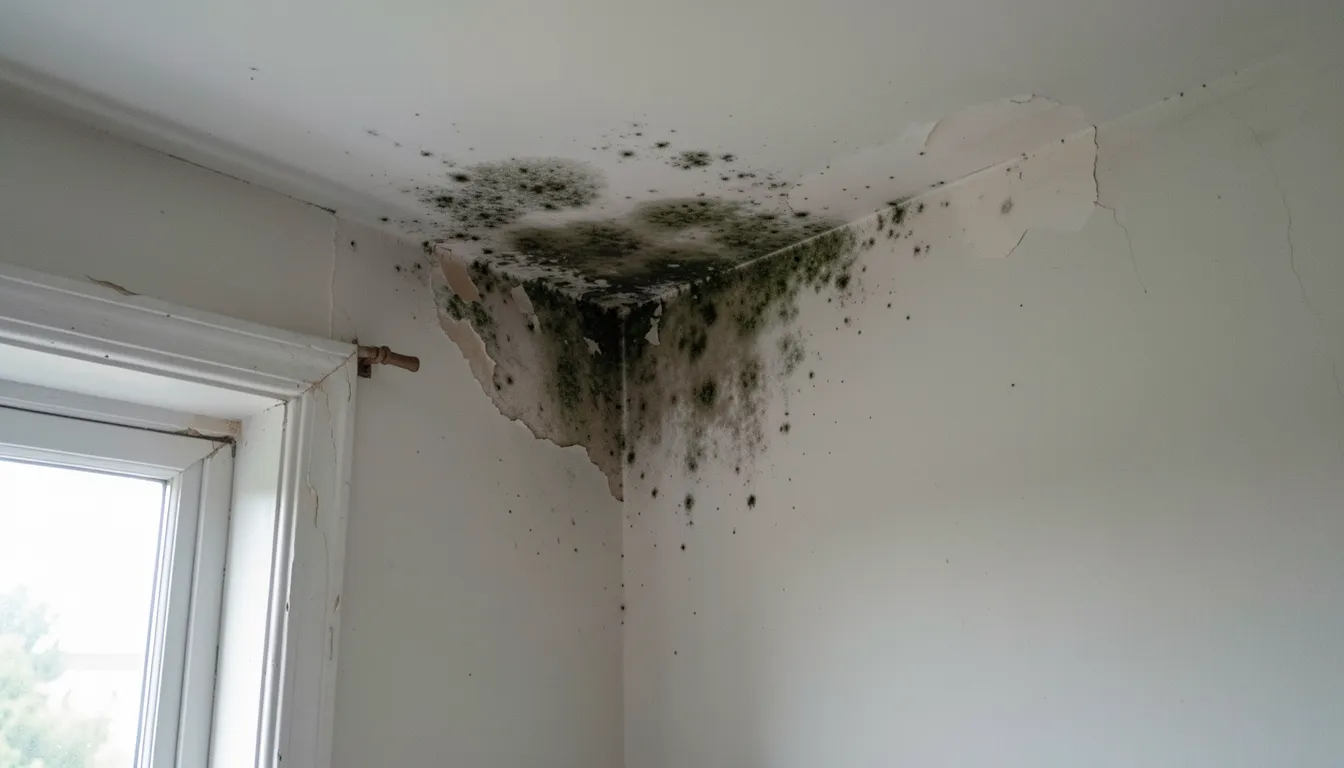
Damp and mould deserve particular attention, because they are the most common serious complaint in the rented sector and the most frequently misattributed. Landlords sometimes blame condensation on the tenant’s “lifestyle” — drying washing indoors, not opening windows — but where damp arises from a structural problem such as a leaking roof, penetrating damp or a failed damp-proof course, it is the landlord’s responsibility under Section 11. Awaab’s Law, named after a two-year-old who died from prolonged exposure to mould in social housing, already imposes fixed repair timeframes on social landlords and is being extended to the private sector. Even before those private-sector regulations are finalised, councils and courts are increasingly treating its benchmarks — investigate within 14 days, begin remedial work within 7 days of identifying a hazard — as the standard for what counts as a reasonable response.
There is no single statutory table of repair response times, but industry practice and court expectations have settled into a recognisable three-tier framework, summarised below. The point of knowing it is that “reasonable time” is judged against these expectations if a dispute ever reaches a council or court.
| Urgency | Examples | Expected response |
|---|---|---|
| Emergency | Gas leak, burst pipe, total loss of heating in winter, no water, dangerous electrics, broken external lock | Contact within hours, make safe within 24 hours |
| Urgent | Boiler breakdown outside coldest months, contained roof leak, only toilet not working, faulty smoke or CO alarm | A few days |
| Routine | Dripping tap causing no damage, minor cosmetic repairs, replacement extractor fan | Up to a few weeks |
One protection is worth emphasising because it changes the calculation entirely. Before May 2026, a tenant who reported disrepair risked a retaliatory no-fault eviction. With Section 21 gone, that threat has largely disappeared: a landlord can no longer simply end the tenancy because a tenant complained or asked the council to inspect. Reporting a problem in writing — and keeping a copy — is now both safer and more effective than it has ever been. Withholding rent, by contrast, remains risky: rent arrears are a possession ground, so a tenant who stops paying to force a repair can end up facing eviction rather than fixing the problem.
How much can a landlord increase the rent?
Since 1 May 2026, a landlord can increase the rent only once in any twelve-month period, and only by serving a formal Section 13 notice giving at least two months’ warning. Rent review clauses — terms written into older contracts that allowed automatic increases — are no longer permitted as a way around this, because the Act was designed to ensure every tenant has a route to challenge a rise. The increase must bring the rent to a level in line with what similar local properties command; a landlord cannot use an inflated increase as a backdoor eviction, pricing a tenant out rather than going through the possession process.
If you think a proposed increase is above the market rate, you can challenge it at the First-tier Tribunal (Property Chamber) before the new rent takes effect. The tribunal assesses what the property would reasonably let for and cannot set a rent higher than the landlord proposed, which removes the old risk that challenging an increase could backfire into an even higher figure. In practice, the value of this right depends on local market evidence: in a city like Bristol, where the average private rent reached £1,883 a month in May 2026 after rising 7.9 per cent in a single year — well above the South West average increase of 5.1 per cent — a tenant challenging an increase needs to show that comparable nearby homes let for less.
It is worth being realistic about the wider pressure here, because the law can only do so much against the arithmetic of the market. Nationally, average private rents reached £1,383 a month by May 2026, though annual rent inflation had slowed to 3.3 per cent from a peak of 9.1 per cent in early 2024. The standard guidance that no more than 30 per cent of income should go on rent has become detached from reality for many renters; the UK average is closer to 35 per cent, and in London it exceeds 45 per cent of take-home pay. Part of the upward pressure comes from supply: higher mortgage rates and tax changes have pushed some landlords to sell up, reducing the number of homes to rent even as demand stays high. A tenant’s legal right to challenge a rent rise is real and useful, but it sits inside a market where the broader trend has been relentlessly upward. The connection between rents, wages and prices is part of the wider story of inflation and the cost of living.
When can a landlord evict a tenant?
With Section 21 abolished, a landlord can only seek to evict a tenant by using one of the possession grounds set out in Section 8 of the Housing Act 1988, as expanded by the Renters’ Rights Act. These grounds fall into two types. Mandatory grounds, if proven, require the court to order possession; discretionary grounds give the judge a choice based on whether eviction is reasonable. The landlord must serve a Section 8 notice specifying the ground and the required notice period, and if the tenant does not leave, must apply to the court for a possession order. A landlord cannot lawfully change the locks or force a tenant out without a court order — doing so is an illegal eviction and a criminal offence.
The grounds reflect an attempt to balance genuine landlord needs against tenant security. A landlord who wants to move into the property themselves, or to sell it, can use the relevant ground but must give four months’ notice, and if selling cannot re-let the property within twelve months of serving notice. Rent arrears remain a ground, but the threshold was raised: a tenant must now be at least three months in arrears at both the time of serving notice and the hearing, with a notice period of four weeks. Antisocial behaviour and domestic abuse perpetrated by a tenant can lead to possession on shorter notice. The practical effect for an ordinary tenant who pays the rent and looks after the home is substantial: there is now no lawful route for a landlord to remove them simply because the landlord would prefer a different tenant.
This does not mean eviction has become impossible or even rare, and tenants should not assume the new system makes them untouchable. Where a landlord has a genuine ground and the evidence to support it, the grounds work as intended. And the reform has not magically solved the backlog in the courts: the time from a valid Section 8 notice to an actual possession order can still run to many months, which cuts both ways — it gives a tenant facing eviction more time, but it also frustrates landlords with a legitimate claim. Anyone served with a notice should seek advice immediately rather than simply leaving; a notice is the start of a legal process, not the end of the tenancy, and free advice from Shelter or Citizens Advice can identify whether the notice is even valid.
What other obligations do landlords have?
Beyond repairs and deposits, a landlord carries a series of safety and administrative duties that exist to protect tenants and that, if breached, can carry heavy penalties. On gas safety, a landlord must arrange an annual check of all gas appliances and flues by a Gas Safe registered engineer and give the tenant a copy of the certificate. On electrical safety, the installation must be inspected at least every five years and a report provided. Smoke alarms must be fitted on every floor and a carbon monoxide alarm in any room with a solid-fuel appliance, with alarms tested at the start of each tenancy. The property must have an Energy Performance Certificate with a rating of at least E to be let lawfully.
The Renters’ Rights Act added new obligations on top of these. A landlord cannot unreasonably refuse a tenant’s request to keep a pet, reversing the old default where pets could simply be banned. It is now unlawful to discriminate against prospective tenants because they receive benefits or have children — practices once advertised openly as “no DSS” are illegal. And as the later phases roll out, landlords will be required to register themselves and their properties on the national database and, in time, to sign up to the Private Rented Sector Ombudsman, whose decisions on complaints will be binding. Enforcement increasingly sits with local councils, which were given new investigatory powers from December 2025 and can levy substantial financial penalties for breaches.
A landlord also owes a duty of “quiet enjoyment”, meaning a tenant has the right to live in the property without unwarranted interference. A landlord must give at least 24 hours’ notice and obtain the tenant’s agreement before entering, except in a genuine emergency such as a burst pipe or fire. Repeated unannounced visits, entering without permission, or cutting off services to force a tenant out can amount to harassment, which, like illegal eviction, is a criminal offence that councils can prosecute.
Do these rights apply to everyone who rents?
The protections described in this guide apply to assured tenants, which covers the large majority of private renters, but the way you rent can change which rights you hold — and this is one of the most common sources of confusion. Understanding which category you fall into matters, because a lodger and an assured tenant living a few streets apart have very different legal positions.
If you rent a whole property, or a room in a shared house under your own agreement, from a landlord who does not live there, you are almost certainly an assured tenant with the full set of rights. If two or more of you sign a single agreement together, you usually hold a joint tenancy, where each tenant is “jointly and severally liable” — meaning that if one housemate stops paying, the others are legally responsible for the whole rent, not just their share. This is a frequent and unwelcome surprise in shared houses, and it is worth understanding before signing rather than after a housemate leaves.
A lodger is different. If you share living space — a kitchen or bathroom — with your landlord in their own home, you are a lodger with a licence rather than a tenancy, and most of the protections above, including the deposit and eviction rules, do not apply in the same way; a live-in landlord can ask a lodger to leave with reasonable notice and without a court order. Houses in multiple occupation (HMOs), where three or more people from different households share facilities, carry extra duties for the landlord, including licensing in many cases and stricter safety standards, which is a protection for tenants in shared housing. Students renting from a private landlord generally have the same assured tenancy rights as anyone else, though the Act created a specific possession ground allowing landlords of dedicated student housing to recover properties at the end of an academic year so the cycle of student lets can continue. If you are unsure which category applies to you, it is worth checking before a dispute arises, because the answer determines almost everything else.
What should you do when something goes wrong?
Most renting problems are resolved not by knowing the law in the abstract but by following a sensible order of escalation, and by having created a paper trail before the problem arose. The first principle, learned the hard way by most long-term renters, is to put everything in writing. A phone call about a broken boiler leaves no record; an email does. Keeping a single folder — digital is fine — with the tenancy agreement, the deposit prescribed information, the move-in inventory and photos, gas and electrical certificates, and every message to the landlord or agent turns a vague grievance into an evidenced case.
When a specific problem arises, the escalation path is usually the same. Report it to the landlord or agent in writing, clearly and with a reasonable deadline. If there is no adequate response, the next step depends on the issue: for disrepair or a serious hazard, contact the local council’s private housing or environmental health team, which can inspect and compel works; for a deposit dispute, use the scheme’s free adjudication service; for an unfair rent increase, apply to the First-tier Tribunal; for harassment or an attempted illegal eviction, contact the council and, if needed, the police. Throughout, free and expert advice is available from Shelter’s helpline, Citizens Advice and, for those on low incomes, possibly legal aid where there is a serious risk to health and safety.
The honest reality from the tenant’s side of the table is that rights are only as strong as a renter’s willingness and capacity to enforce them, and that enforcement takes time and persistence that not everyone has. The abolition of no-fault eviction has removed the single biggest deterrent to speaking up, which genuinely changes the balance. But a tenant who documents everything, reports promptly in writing, knows which body handles which problem, and is prepared to escalate will get far more out of the new system than one who knows the law but never uses it. For renters weighing whether to stay in the sector or try to buy, understanding both sides of that decision means understanding the trade-offs set out in the wider housing market. The pressures tenants face also trace back to how few homes get built, shaped by the planning system, and to the shrinking safety net of social housing — all of which are followed through ongoing coverage in UK news.
Renting in the UK: Frequently Asked Questions
Can my landlord evict me without a reason in 2026?
Since 1 May 2026, no. The Renters' Rights Act 2025 abolished Section 21 'no-fault' evictions. Your landlord now needs a specific, legally defined reason — a possession ground under Section 8 — to evict you, must serve the correct notice, and must go through the courts if you do not leave. A landlord who changes the locks or forces you out without a court order is committing an illegal eviction, which is a criminal offence.
How much deposit can a landlord legally take?
Your deposit is capped at five weeks' rent if your annual rent is below £50,000, or six weeks' rent if it is £50,000 or more, under the Tenant Fees Act 2019. On a home renting at around £1,883 a month, five weeks' rent is roughly £2,173. Charging more than the cap is illegal and the excess must be refunded.
How do I get my deposit back when I move out?
Your landlord must protect it in a government-approved scheme (DPS, MyDeposits or TDS) within 30 days and give you prescribed information. At the end of the tenancy the deposit must be returned within 10 days of agreeing any deductions. If you disagree with deductions, raise a dispute through the scheme's free adjudication service rather than just arguing with the landlord. Photograph every room at check-in and check-out and keep the inventory, because the burden of proof for any deduction is on the landlord.
How often can my landlord put the rent up?
Since 1 May 2026, a landlord can raise the rent only once every 12 months, and only by serving a formal Section 13 notice with at least two months' warning. The increase must reflect local market rents, and you can challenge it at the First-tier Tribunal before it takes effect. The tribunal cannot set the rent higher than the landlord proposed, so challenging carries no risk of a worse outcome.
Who is responsible for repairs and damp in a rented home?
Your landlord is responsible for the structure and exterior and for installations supplying water, gas, electricity, heating and sanitation, under Section 11 of the Landlord and Tenant Act 1985 — a duty that cannot be removed by the tenancy agreement. Report the problem in writing and keep a copy. If the landlord does not act, your local council's environmental health team can inspect and compel repairs. Damp caused by a structural fault such as a leaking roof is the landlord's responsibility, not the tenant's.
Can my landlord refuse to let me keep a pet?
Not unreasonably. Since 1 May 2026 the Renters' Rights Act gives tenants the right to request a pet, and the landlord cannot unreasonably refuse. The landlord may require you to hold pet insurance to cover potential damage, but a blanket 'no pets' ban is no longer permitted.
Related guides
- How the UK Housing Market Works
- UK Inflation and Cost of Living Explained
- UK Interest Rates and Monetary Policy Explained