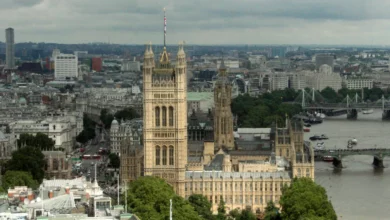
Labour faces a growing backlash this evening after the Home Office confirmed plans to house thousands of asylum seekers in former military barracks, with the proposed sites all located in constituencies not held by the party at Westminster.
The government is seeking planning permission for three former Ministry of Defence sites — MoD Bicester in Oxfordshire, RAF Barnham in Suffolk, and RAF Linton-on-Ouse in North Yorkshire — to accommodate a total of 3,750 asylum seekers. The announcement has drawn immediate criticism from local MPs and residents, who accuse ministers of imposing the plans without consultation and of ignoring the specific infrastructure and safety needs of the surrounding communities.
The Home Office is also moving to extend the use of existing asylum accommodation at Crowborough in East Sussex until 2030, and at Wethersfield in Essex beyond 2027, where capacity is set to increase by 400 places to house 1,200 men. The developments form part of a wider government strategy to end the use of hotels for asylum seekers, with Labour having pledged to close all asylum hotels before the next general election.
The Sites
All three new sites have a history of contested or abandoned plans for asylum accommodation. RAF Linton-on-Ouse was previously earmarked for the purpose in 2022 but the proposal was dropped after significant local opposition and a legal challenge from the local council. MoD Bicester was considered for asylum accommodation under Tony Blair’s government but never used because demand fell. RAF Barnham, which during the Cold War stored nuclear weapons and more recently was used for police training, now faces a new purpose that has alarmed local politicians.
The Home Office says the move to ex-military sites is necessary to bring the asylum system “back under control” and is “a far cry from the hotels the last Government left us with”, according to Minister for Border Security and Asylum Alex Norris. He has argued that large sites help in “reducing those pull factors” for migrants. The government also announced the closure of 20 more hotels used for asylum accommodation. As of March 2026, the number of asylum seekers in hotels stood at 20,885, down 35% year-on-year and the lowest level since data was first reported in 2022.
Community Infrastructure and Safety Fears
Opponents of the plans argue that the barracks are entirely unsuitable for the purpose, pointing to a catalogue of specific infrastructure deficiencies and safety concerns that they say the Home Office has failed to address.
Professor Olga Matthias, spokesperson for the Linton-on-Ouse action group, described the renewed proposal as “ridiculous” and “bonkers”. She told The Telegraph: “It’s always been the wrong place. At the time of the campaign, we said it was the wrong plan in the wrong place. That hasn’t changed. It is a small village without the infrastructure to support hundreds of asylum seekers.” She added that the condition of the site has likely deteriorated further since 2022. Councillor Carl Les of North Yorkshire Council expressed dismay that the authority was not consulted. He questioned the suitability of accommodating potentially 1,200 single men at the site, noting that they are not detainees and can come and go, yet the area lacks the local services to support them.
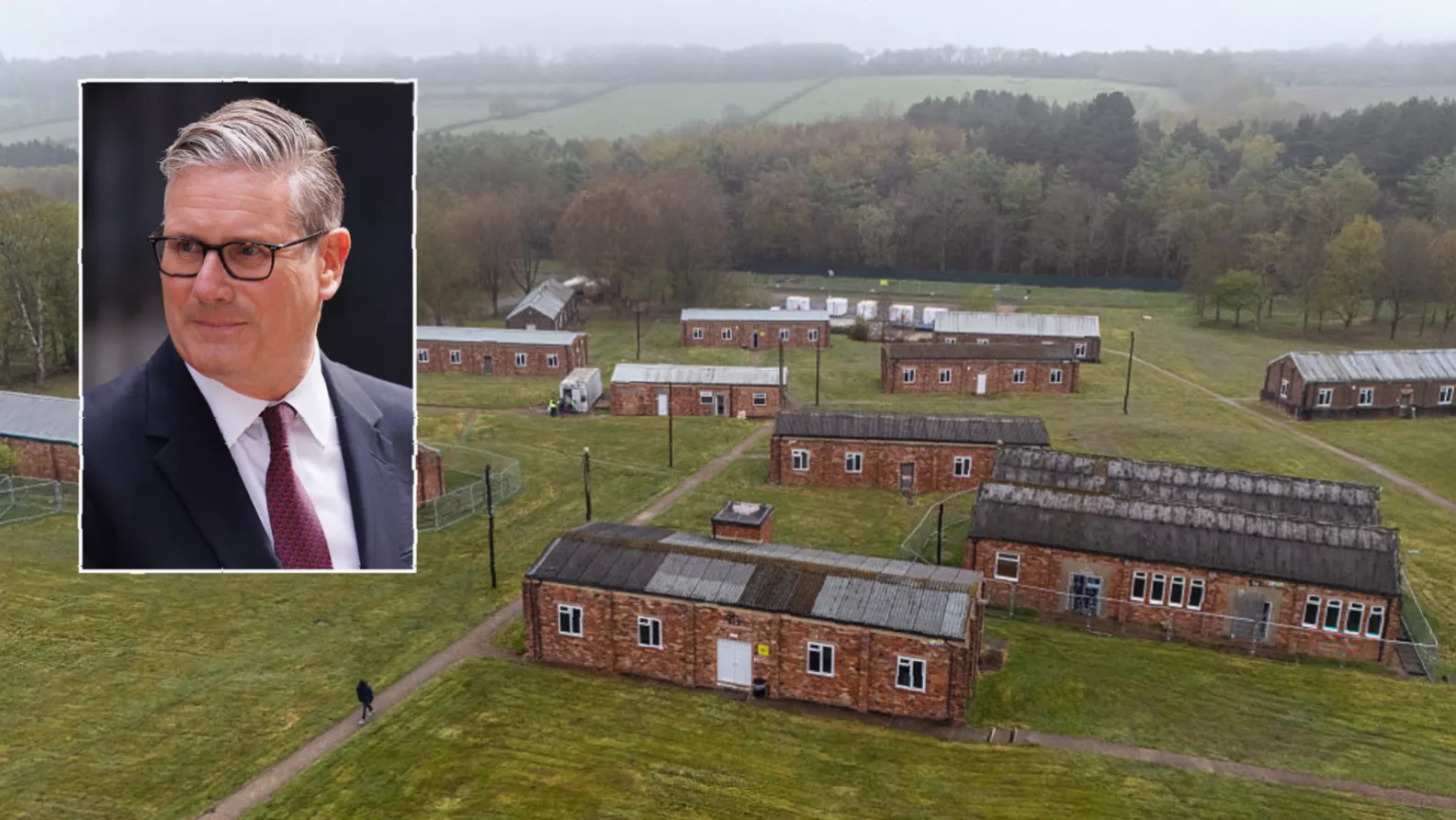
In Bicester, Liberal Democrat MP Calum Miller — whose Bicester and Woodstock constituency includes MoD Bicester — said his main concern is the “lack of warning from the Home Office and the lack of evidence they have provided to me and the local community as to why this is justified.” He demanded details on cost and value for taxpayers, security arrangements for local residents, and the regime that would be put in place to keep those inside the site safe. “Only when we’ve had realistic answers to those questions will we be in any position to respond formally to this,” he said. “But my instincts are shock and worry about whether this is right for our community.” The Bicester site was previously subject to a failed attempt to establish an asylum centre in 2001, which was cancelled after four years due to protests, planning delays, and costs.
In Suffolk, Conservative MP Nick Timothy — whose West Suffolk constituency neighbours RAF Barnham — said housing asylum seekers there “would affect safety, services and cohesion”. He noted that local MPs were only informed of the plans within the last 24 hours and called for transparency. His concerns echo those of the broader community, where the legacy of the site’s Cold War nuclear storage role adds an extra layer of unease.
Beyond the immediate local fears, refugee charities have condemned the plans as “arrogant”, “costly” and a “political fix”. The Refugee Council argues that using barracks is actually more expensive overall than hotels, citing the government’s own spending watchdog. The council’s Imran Hussain said: “As the government’s own spending watchdog has said, barracks actually cost more money overall than hotels. We know from experience they also isolate people from local communities and essential services.” Charities warn that military sites are unsuitable for people who have fled conflict and persecution, describing them as isolated, prison-like, lacking privacy, and hindering access to healthcare, legal advice and other essential services. The Helen Bamber Foundation stated that such conditions can compound existing trauma, leading to depression, suicidal ideation and self-harm. Past use of sites such as Napier Barracks in Folkestone and Penally Barracks in Pembrokeshire drew fierce criticism over poor access to healthcare, legal advice, and COVID-19 safety failures. Napier Barracks also experienced a fire and disturbances. The Home Office’s own equality impact assessment for using military barracks suggested that more “generous” accommodation would “undermine public confidence in the asylum system” — a justification critics have called “pandering to prejudice”.
Meanwhile, the government’s claim that the sites represent progress is undercut by a growing asylum appeals backlog and evidence that the cessation of support for asylum seekers with positive or negative decisions has increased pressures on council staff and services, leading to a rise in homelessness presentations and increased street homelessness and destitution. The use of asylum accommodation has already been a source of community tension, with concerns about the disproportionate distribution of sites and the impact on local services.
Against this backdrop, the Home Office is pressing ahead with planning applications for Bicester, Barnham and Linton-on-Ouse, while extending the stays at Crowborough and Wethersfield. The Labour government has reiterated its commitment to hiring additional caseworkers to clear the backlog and end asylum hotels, with Prime Minister Keir Starmer stating that migration has been a cause for concern and that his government has brought numbers down. But for the communities now facing the prospect of large-scale asylum accommodation on their doorsteps, the promised “managed” system looks all too familiar — and they say the infrastructure to support it simply does not exist.