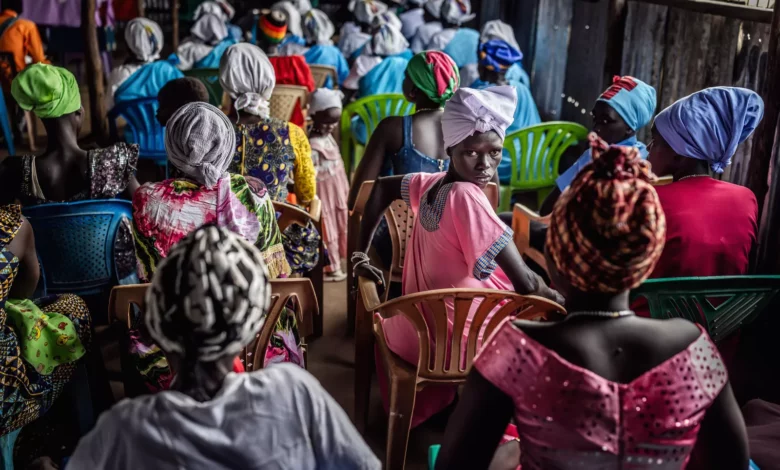
Ministers have been accused of offering “words over action” on protecting women and girls in conflict zones, as a cross-party parliamentary inquiry warns that successive cuts to overseas aid are undermining Britain’s global leadership on women’s rights. The International Development Committee (IDC), in its report “Peace under pressure: Protecting Women, Peace and Security” published on 23 March, cautioned that the UK risks standing by while “hard-won gains” in gender equality are reversed, citing rising global conflict and a growing backlash against women’s rights. Campaigners say the government’s response, received on 28 May, does little to address the central charge: that commitments are becoming impossible to deliver as resources shrink.
Government defends record amid cuts
In its long-awaited reply to the committee, the government insisted its commitment to the Women, Peace and Security (WPS) agenda remains “unwavering”. Ministers pointed to diplomatic efforts at the United Nations, support for women peacebuilders, and plans to ensure that 90 per cent of bilateral aid programmes include a focus on women and girls by 2030. The government also said funding for initiatives tackling Violence Against Women and Girls, the Preventing Sexual Violence in Conflict Initiative (PSVI), and the WPS agenda would be protected at 2025/2026 levels. But it stopped short of backing the IDC’s calls for ringfenced funding, dedicated budgets or stronger parliamentary oversight, arguing instead that “mainstreaming” women’s rights across all foreign policy work would deliver greater impact than relying on standalone programmes.
The most immediate pressure on Britain’s role comes from deep reductions to official development assistance (ODA). UK aid spending was cut from 0.7 per cent of national income to 0.5 per cent in recent years, and Prime Minister Sir Keir Starmer announced late last year that it would fall further to 0.3 per cent by 2027 – the lowest level since 1999. The IDC warned that funding for women’s rights organisations has been slashed by as much as two-thirds, and that “millions fewer women and girls are now reached by UK-funded programmes” – a situation MPs describe as a “serious blow” to long-term progress. On the ground, programmes tackling violence against women, supporting maternal healthcare, safeguarding reproductive rights and keeping girls in education are already closing, with direct consequences for women’s safety, health and economic independence.
‘Words over action’ – campaigners hit back
Zoe Swanwick, policy manager at the Coalition for Global Prosperity, said: “The government response to the IDC report is another example of how they choose words over action on protecting women and girls. Baroness Chapman and foreign secretary Yvette Cooper have repeatedly claimed their support for the women, peace and security agenda, but the recent cuts to the aid budget which disproportionately affect women suggest otherwise.” She added: “How can women be at the table on peace and security when their own rights are being systematically violated? Either drop the rhetoric or show real support.”
The government rejected the committee’s criticism that Britain was losing its leadership role and repeatedly defended its record, saying women and girls remained “at the heart” of UK foreign policy. It highlighted efforts to protect language on women’s rights in UN Security Council resolutions relating to Libya, Afghanistan, South Sudan and Somalia. However, the IDC noted that the government did not convene a single dedicated session on WPS during its presidency of the Security Council in February 2026 – an omission it described as a missed opportunity.
Conflict zones feel the sharpest consequences
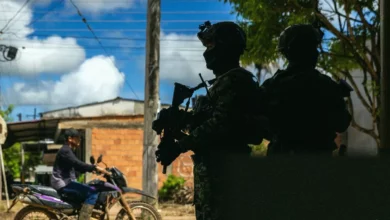
The real-world impact of the cuts is most acute in the places the programmes were designed to reach. In eastern Democratic Republic of Congo, where rape has long been used as a weapon of war, Human Rights Watch and the Congolese women’s rights organisation SOFEPADI warned in January that conflict-related sexual violence is rising while support for survivors is collapsing. Expanded fighting in North and South Kivu has coincided with funding cuts and shrinking health services, leaving many women unable to access treatment. Some clinics providing care to survivors have already been forced to close. Human Rights Watch reports more than 80,000 cases of rape in eastern Congo between January and September 2025 – a 32 per cent increase on the same period in 2024 – and notes that US aid cuts have also halted emergency healthcare and survivor support, compounding the damage from reduced UK funding.
The FCDO’s own multi-year equality impact assessment, published in March, acknowledged that equality-targeted programmes in the DRC and Tanzania may close as a direct result of the cuts. In Tanzania, programmes supporting maternal health and women’s economic empowerment face an uncertain future. Tim Morris, a former British ambassador to both the DRC and South Sudan, said women were often the people holding communities together during conflict. He told The Independent: “In all these conflicts, sexual violence has been used as a weapon of war by many of the parties, as has the abuse of children, including their recruitment as child soldiers. Peace agreements, when they eventually come, must be supported by women, who are the fabric of society, often the breadwinners, and those who can set future generations along the road to peace. It is an inescapable responsibility of the international community both to call out this evil and support the rebuilding of those shattered societies.”
The government’s response to the IDC noted that central funding for WPS, preventing violence against women and girls, and PSVI had been protected at existing levels, but provided no commitment to ringfenced future budgets and made no attempt to account for the bilateral programmes that sit outside that protected pot and are being cut regardless. The IDC had urged ministers to commit to stable, multi-year funding for women’s rights organisations, a cross-government monitoring framework, and the reinstatement of annual reporting to parliament on delivery of the National Action Plan (NAP). On most of these, the government only “partially agreed”, promising to review commitments as part of a refresh of the NAP due later this year.
The UK’s International Strategic Framework on Women and Girls, launched in May 2026, places women and girls at the centre of the FCDO’s work, aiming to embed gender equality across diplomacy, development, security and trade. But critics argue that the “mainstreaming” approach, coupled with reductions in staffing and specialist expertise within the FCDO, risks compromising delivery of the NAP and the broader WPS agenda. Baroness Chapman, the development minister, has previously described the UK’s days as a “global charity” as over, emphasising an “investment approach” and confirming that gender and education programmes would be deprioritised before impact assessments were complete. A spokesperson for the Foreign, Commonwealth and Development Office said: “As the foreign secretary has made clear, there cannot be peace, security or prosperity without women playing their part, free from violence and free from fear. For the first time, this foreign secretary has made women and girls a standalone priority for the UK’s foreign policy, and that is why our funding for initiatives to tackle Violence Against Women and Girls, Prevent Sexual Violence in Conflict, and promote the Women, Peace and Security agenda, will all be protected at 2025/2026 levels. Where the UK is providing bilateral ODA, we will also ensure that by 2030, 90 per cent of it is geared towards the needs of women and girls, protecting them against violence, championing their education, healthcare and rights, and supporting their ability to earn a living.”
On the ground, however, the gap between rhetoric and reality is widening. In the DRC, women who survive rape are finding clinics closed and medicines unavailable. In Tanzania, programmes that once provided safe spaces and economic support are shutting their doors. The IDC’s warning that the UK risks “standing by” as hard-won gains are reversed is no longer a future scenario – it is the present, documented by the government’s own impact assessments and the accounts of those on the front line.