Norwegian firm 1X launches California plant to manufacture 100,000 humanoid robots by 2027

1X Technologies has opened a 58,000-square-foot factory in Hayward, California, that the company says can produce 10,000 of its NEO humanoid robots in its first year. The entire first-year production run sold out within five days of preorders opening in October 2025, with consumer shipments planned before the end of 2026. The company is targeting 100,000 units by the end of 2027.
The Hayward facility is described by 1X as the first vertically integrated humanoid robot manufacturing plant in the United States. Critical components — motors, batteries, structures, transmission systems, copper coils and sensors — are all produced in-house on dedicated production lines. The company argues that this approach allows far faster design iteration cycles than competitors who rely on Chinese suppliers for key subsystems. The factory was built in a matter of months, reflecting the intensifying competitive pressure in the humanoid robotics market. More than 200 people are currently employed at the site. NEO units already working inside the facility handle logistics and stock parts for human assembly technicians, part of what 1X calls its “robots building robots” initiative.
From Norwegian startup to Silicon Valley contender
1X Technologies was founded in May 2014 in Moss, Norway, by roboticist Bernt Øivind Børnich, initially trading as Halodi Robotics. The company’s early work focused on developing safe actuators and full-body control systems for industrial and healthcare environments. In 2022 the firm rebranded to 1X and pivoted to domestic, general-purpose humanoid robots for home use. Børnich’s belief is that robots must live and learn alongside people in complex domestic spaces to achieve true embodied intelligence. The company relocated its global headquarters from Norway to Palo Alto, California, in July 2025 to tap into Silicon Valley’s talent and investor networks, while maintaining manufacturing operations in Moss and additional R&D hubs in Sunnyvale and Moss.
1X has raised an estimated $126 million to $136 million across multiple rounds. In March 2023 it secured a $23.5 million Series A2 led by the OpenAI Startup Fund, with participation from Tiger Global, Sandwater, Alliance Ventures and Skagerak Capital. A $100 million Series B followed in January 2024, led by EQT Ventures with backing from Samsung NEXT, Nistad Group and existing investors. In September 2025 the company was reportedly seeking to raise up to $1 billion in new funding at a valuation of at least $10 billion.
NEO: a soft‑bodied robot for the home
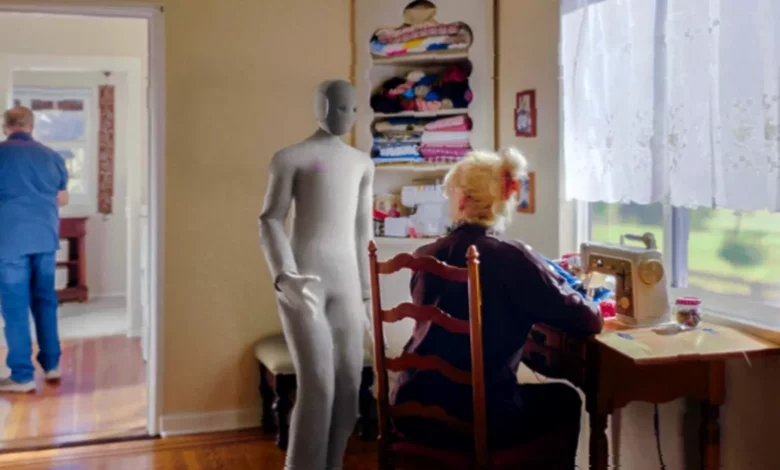
NEO is 1X’s flagship consumer humanoid, designed for home assistance. It is a soft‑bodied, tendon‑driven robot with a fabric‑like exterior, deliberately built without pinch points or hard edges to make human interaction safer. The robot is powered by Nvidia’s Jetson Thor onboard computing platform and trained using Nvidia’s Isaac simulation framework. Its artificial intelligence learns from user input and demonstrations, and can call on remote expert guidance for tasks it has not yet learned. Capabilities include tidying, organising, fetching items, loading dishwashers, opening doors and conversational assistance.
The second major iteration, NEO Gamma, was unveiled in February 2025, featuring an overhauled design, enhanced AI, improved walking gait and better object manipulation. It has a minimalist, Japanese‑inspired aesthetic with “emotive earrings” that provide visual feedback. Pricing for early access is set at $20,000 with priority delivery in 2026, or a subscription of $499 per month with a six‑month minimum, which may include hardware upgrades as the design evolves. A refundable $200 deposit is required to reserve a unit. Consumer shipments will begin before the end of 2026, initially in the United States, with international expansion planned for 2027.
1X’s first humanoid robot, EVE, was released in 2018 as a wheeled platform for logistics, security and medical environments. In 2022 the company signed a distribution contract for a minimum of 140 EVE units for security purposes in the US. EVE served as a testbed for the actuation, perception and manipulation technologies that later informed NEO.
Competition and the case for domestic vertical integration
The humanoid robotics market is crowded and fast‑moving. Tesla is targeting production of its Optimus robot in the thousands for 2026. Figure AI, focused on manufacturing use cases with deployments at BMW plants, has raised $675 million backed by Microsoft, Nvidia and OpenAI. Agility Robotics has opened a 70,000‑square‑foot facility with capacity for 10,000 units of its Digit robot. Apptronik is developing industrial systems and pursuing its own “robots building robots” partnerships. Chinese manufacturers such as Unitree, Agibot and UBTECH are already shipping at volume, backed by government subsidies that US and European competitors cannot match.
1X’s answer to the Chinese production advantage is a strategy of domestic vertical integration: manufacturing every critical subsystem in the United States, iterating faster on the basis of real‑world feedback, and avoiding the supply‑chain exposure that comes with offshore component dependence. The company says its Hayward factory enables shorter design cycles and greater control over cost and quality. The strategy has already drawn concrete interest from investors: EQT Ventures, which led the Series B, also plans to deploy 10,000 NEO units across its portfolio companies for industrial and operational use — absorbing a significant portion of the factory’s first‑year output.
Looking to the next stages, 1X is planning a larger manufacturing site in San Carlos, California, which will also house its headquarters. The company is evaluating the San Carlos Research Center for that purpose. Development is under way on a next‑generation humanoid with improved optics and other upgrades, while the longer‑term vision includes robots contributing directly to their own production — a goal already previewed by the NEO units working alongside technicians inside the Hayward facility.