Israel and Hezbollah agreed to a ceasefire today at 4pm local time, according to a senior US official who said negotiators from the United States and Qatar worked out the deal with help from Iran. Hezbollah sources confirmed to Reuters that the group had implemented the ceasefire from its end as soon as it received word. Despite the announcement, there had been no official confirmation from the Israeli government or Hezbollah as of Friday afternoon, and the Israeli military stated it would remain in southern Lebanon and continue its mission until ordered otherwise, to protect civilians in northern Israel.
Ceasefire amid a day of heavy violence
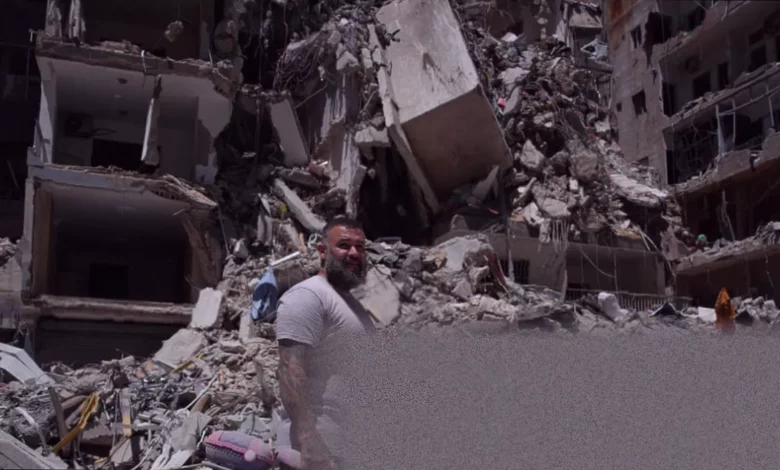
The reported ceasefire followed one of the deadliest days of the conflict. The Lebanese health ministry said Israeli military actions on Friday killed at least 47 people and wounded 97 across southern Lebanon and the Bekaa Valley. The deadliest single attack was in Harouf, where nine people, including three women, were killed and 14 others wounded. This made Friday the second deadliest day since tensions between Lebanon and Israel escalated in March. The airstrikes took place from midnight until the afternoon, and Israel stated they were in response to Hezbollah killing four Israeli soldiers. The Israeli military (IDF) announced it had launched more than 150 strikes since midnight. Separately, the IDF confirmed that four of its soldiers were killed in Lebanon overnight. The Lebanese health ministry reported that overall, 3,980 people have been killed and 12,001 wounded in Israeli attacks on Lebanon since 2 March. Human Rights Watch said that Israel’s “killing of civilians” and “displacement of hundreds of thousands” of people had “continued unabated despite the declaration of a ceasefire.” A spokesperson for the IDF said the military would “carry on with its mission until ordered otherwise,” adding that any agreements were a matter for the government. Israeli strikes in southern Lebanon killed 18 and wounded 33, according to the state-run National News Agency, while three more were killed and six injured in attacks on the eastern Baalbek area, which had been largely spared since the conflict resumed in March. The IDF said those strikes were in response to “repeated violations of the ceasefire by Hezbollah.”
EU: trade measures against illegal settlements considered
As the ceasefire took effect, a senior EU official welcomed a plan to draw up options related to the bloc’s trade with illegal settlements on the West Bank. In a draft summit communiqué, EU leaders expressed “grave concern over the deteriorating situation in Gaza and the West Bank, including the persistent and devastating humanitarian crisis in Gaza.” Earlier this week, the EU’s foreign policy chief, Kaja Kallas, promised “a list of options for possible trade measures, including measures aimed at preventing imports of goods originating from illegal settlements” before the next meeting of EU foreign ministers in mid-July. The European Council president welcomed the decision to prepare an options paper — a move critics are likely to say falls well short of what the bloc should be doing. EU leaders have faced blistering criticism from more than 450 former politicians and senior officials for their “failure to show moral and political leadership” over Israel’s conduct towards Palestinians. The group, which signed an editorial calling for the suspension of preferential trade with Israel, includes former prime ministers Stefan Löfven of Sweden, Leo Varadkar of Ireland, and Romano Prodi of Italy, who also led the European Commission. Ireland’s prime minister, Micheál Martin, said on Friday his country was looking for proposals on illegal settlements. “I think that Europe has to send a very clear signal that what has been happening and what continues to happen is unacceptable, in Gaza and in the West Bank in particular and in Lebanon.” More than 1.2 million Europeans have called on the bloc to suspend an EU-Israel association agreement, a prospect that is out of reach because it requires unanimity among member states.
US-Iran memorandum of understanding: details and implications
The ceasefire comes days after Donald Trump signed a memorandum of understanding (MoU) with Iran in Paris, an agreement he has vigorously defended against criticism that it is more generous to Tehran than Barack Obama’s 2015 nuclear deal. In a series of posts on Truth Social, Trump wrote: “The War has diminished Iran! It doesn’t, any longer, have an Air Force, a Navy, Antiaircraft Equipment, Radar, or practically anything else, and yet the Dumocrats say that Iran is better off now than it was four months ago. Can you imagine getting away with that??? How stupid can some people be???” He added: “We didn’t meet out of desperation, Iran did. They are FINISHED! We’ll play out the 60 days. They get no money, not ten cents!” The Iranian foreign ministry, meanwhile, said there was “no urgency” to meet US negotiators in Switzerland because the MoU had already been signed electronically on 18 June. Spokesman Esmaeil Baqaei said the ministry was planning to hold a meeting in the coming days. The 60-day period for Iran and the US to finalise a broader agreement has already begun, but talks that were supposed to start in Switzerland on Friday were postponed. Baqaei denied reports that Tehran had invited the International Atomic Energy Agency (IAEA) to inspect its nuclear facilities, stating that Iran would maintain the current status quo of its nuclear programme pending a final deal with the US. He said inspections of facilities that had been carried out so far, such as at Bushehr, would continue, but visits to any other facilities where IAEA inspections had been suspended during the war would only take place once a final deal was reached. Barack Obama, in an interview with NBC News that aired on Friday, said that after 15 weeks of war with Iran, the US was now “worse off” than before the conflict began in February. “We’ve now fought a war, spent billions and billions of dollars, you know, put enormous strain on our military. A lot of people have died. And it feels like we’re back where we were before we started the war, except maybe a little bit worse off,” he said. Obama, who spoke before the opening of the Obama Presidential Center in Chicago, welcomed the ceasefire: “I am very happy to see a ceasefire. And I’m hopeful that it holds.” He has been critical of the rationale for the conflict and questioned the first Trump administration’s decision to tear up the 2015 Joint Comprehensive Plan of Action (JCPOA), which restricted Iran from obtaining or developing a nuclear weapon in exchange for lifting international economic sanctions. Obama said that under the JCPOA, “Iran had agreed not to develop nuclear weapons”, but noted that Trump “pulled out of it, which caused then Iran to develop more nuclear capacity”. The White House confirmed that Vice-President JD Vance had delayed a planned trip to Switzerland to lead a new round of talks with Iran focusing on the nuclear issue.