Suspected bird flu case triggers national response
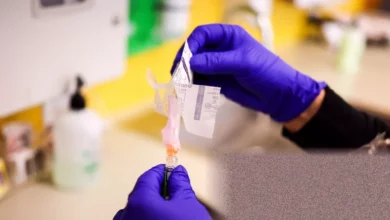
A suspected case of avian influenza in a migratory wild bird in Western Australia could mark the first arrival of the deadly H5 strain on the Australian mainland, the federal government has confirmed.
Minister for Agriculture, Fisheries and Forestry Julie Collins said the single bird was found sick in an isolated area in the south of the state. Initial testing at the Western Australian Laboratory returned a suspected positive result, and samples have been sent to CSIRO’s Australian Centre for Disease Preparedness for confirmatory testing, with results expected tonight or early tomorrow morning.
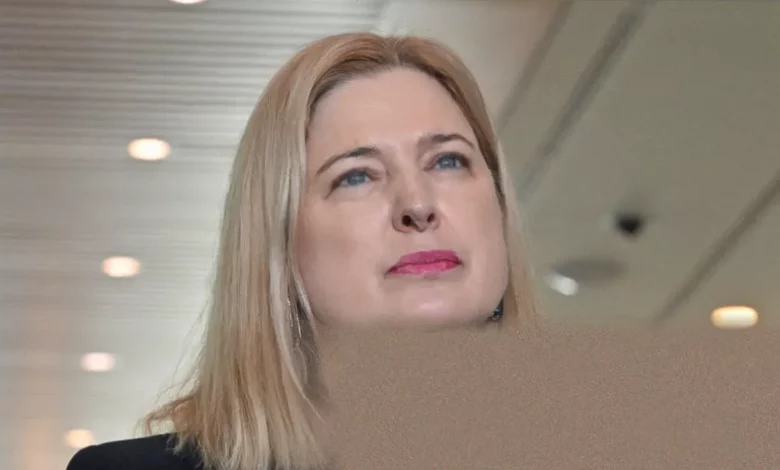
“We cannot confirm yet whether it is the strain of concern that is circulating at this stage known as the H5 bird flu,” Collins told reporters in Hobart. “There is no evidence of any mass mortality at this time, nor is there any evidence of infection in poultry.”
If confirmed, the detection would be the first incursion of the H5 strain – specifically H5N1, a highly pathogenic avian influenza (HPAI) – into mainland Australia. Globally, the virus has caused millions of deaths in wild birds and tens of thousands of mammal deaths. Australia and Oceania are currently the only continents not to have been affected by this strain. The spring migration season from August to November is considered a heightened risk period for its arrival, and previous detections in the region have underscored the urgency of preparedness. In October 2025, signs consistent with H5 bird flu were observed in elephant seals on Heard Island, a sub-Antarctic Australian territory, with testing later confirming the virus.
Australia has existing experience with other strains. H7 viruses have previously been detected in poultry and backyard chickens in New South Wales, but the H5 strain poses a far greater threat to wildlife and, potentially, to the poultry industry.
The government has invested heavily in readiness. Collins said a series of national exercises had been undertaken and $113 million had been committed to strengthen the nation’s preparedness for H5 bird flu, including an additional $11 million in the most recent federal budget. A further $11.2 million was allocated in the 2026-27 budget for at-risk native species, invasive species control, habitat improvement, and captive-breeding facilities to protect threatened species.
“If it is confirmed to be the H5 bird flu, this will be sobering but not unexpected given the spread globally,” Collins said. She moved to reassure the public: “We’re well placed to respond to and to manage this situation.”
A meeting of state and territory representatives and industry experts was convened on Friday afternoon as she spoke, and Collins said she intended to fly to Canberra later that day to receive further briefings the following morning if required.
The public has been advised to avoid contact with sick or dead wildlife, observe from a distance, keep pets away, and report any unusual sickness or mass mortality events to the Emergency Animal Disease Hotline on 1800 675 888.
Waterloo protest ends with arrest after 25-day encampment
Meanwhile, in Sydney, police moved on protesters occupying the Waterloo public housing estate on Friday morning, arresting one woman and prompting activists to begin dismantling their encampment.
The encampment had been in place for 25 days, set up to obstruct the staged demolition of the southern part of the estate. The demolition was scheduled to begin on 25 May. On Wednesday, Homes NSW issued a formal notice stating that anyone who remained past midday on Thursday would be considered a trespasser.
Police said they attended the site at 7am on Friday to “prevent a breach of peace”. All protesters except one 22-year-old woman complied with the direction to move on. She was charged with “enter inclosed land not prescribed premises without lawful excuse”, granted conditional bail, and will appear before Downing Centre local court on Monday.
A separate incident earlier in the morning involved a 28-year-old woman who had locked herself to the passenger side of a truck carrying demolition equipment. Police said she did not listen to a direction to leave the roadway, was removed from the vehicle, placed under arrest, and refused bail to appear in court on Saturday. Footage posted to the encampment’s social media account showed police cutting her free from a lock-on device.
One of the protesters, Rachel Evans, told journalists just after 2pm that the group was packing up and leaving soon, but vowed they would be back “in some form” in the future.
The New South Wales government is demolishing Waterloo South, which housed vulnerable Sydneysiders in 750 public housing properties, to make way for 3,300 new properties in a $4 billion redevelopment expected to take between 10 and 15 years. Half of the new properties will be private, 20% will be “affordable” housing, and the remaining 30% will be a mix of public and community housing. Tenants displaced by the redevelopment are being relocated to other social housing estates in nearby suburbs and have been promised they can return when the new homes are complete.
Advocates have argued that the plan reneges on a pre-election 2023 promise to save Waterloo. Long-term residents, some of whom have lived in the estate for over 30 years, have raised concerns that relocation offers are insufficient, with residents being placed at the top of long waiting lists for public housing. The Greens have also criticised the redevelopment; MP Jenny Leong previously opposed similar plans. Activist groups such as Action for Public Housing have been campaigning against the demolition.
Treasurer dismisses reports of ‘frosty’ relationship with PM
Treasurer Jim Chalmers has dismissed media reports of a “frosty” relationship with Prime Minister Anthony Albanese as “rubbish”, insisting the pair are in lock-step on the government’s contentious tax reforms.
The relationship came under renewed scrutiny after the government’s partial backdown on proposed changes to the capital gains tax, part of a wider package that Chalmers has described as the most significant tax reform in more than a quarter of a century. The reforms include changes to negative gearing, capital gains tax, and trusts, aimed at addressing generational inequity in the housing market.
Asked on Friday about the reports, Chalmers told reporters: “It’s just rubbish, you know, and you shouldn’t believe that sort of trash that you read in some parts of the media. Now, I’ve talked to the prime minister almost every day since the budget. We work together very, very closely. On a personal level I’m very grateful to him for the work that we are doing together to bed down these really important changes.”
Chalmers praised Albanese’s methodical approach to government, emphasising that final decisions are made at the cabinet table. The government has stated that its tax reforms are “pro-aspiration, pro-worker and pro-investment”.
NDIS inquiry report delayed for second time, casting doubt on bill’s passage
A Senate inquiry into sweeping changes to the National Disability Insurance Scheme has delayed its findings for a second time, leaving the fate of the legislation hanging in the balance ahead of a sitting fortnight in Canberra.
The Labor-chaired committee was due to table its findings on Friday, but the report has now been pushed back until Tuesday, 23 June. It is the second delay; the report was initially due on Tuesday of this week.
More than 4,000 submissions were received by the inquiry, which ran for less than a month. It heard widespread concerns from disability advocates, providers, and state and territory governments about Labor’s plan to curb the scheme’s ballooning costs. Under the proposed changes, more than 240,000 participants are expected to be forced off the scheme by 2031, saving almost $38 billion over four years. The government also wants to slash the funding stream that participants use to hire support workers, a move advocates warn will lead to more isolation and segregation.
The government argues the changes are necessary to make the NDIS “sustainable”. Health Minister Mark Butler has defended the reforms, saying delays would result in billions of dollars in lost savings. The NDIS bill is a cornerstone of the government’s austerity budget, which aims to cut $63.8 billion from social programs. The projected cost of the NDIS is currently $56 billion, and the reforms would move hundreds of thousands of participants to state-run disability support services that have yet to be developed. Advocates have warned that vulnerable Australians could die and that providers would face increased difficulties.
Negotiations to pass the changes through federal parliament have been described as furious, with the government seeking a deal with the Greens that could involve extending the NDIS inquiry in exchange for support on unrelated tax reforms. The Greens are staunchly opposed to the changes, while the Coalition is yet to confirm its support, leaving Labor without the numbers to get it through the Senate.
Greens disability spokesperson Jordon Steele-John criticised the delay. “The Greens are frustrated by the delay in the release of this report,” he said. “The government demanded that disabled people, their families and advocates rush to prepare submissions and evidence for the inquiry, yet it is now dragging its feet when it comes to publishing the findings. Disabled people deserve certainty, transparency and respect.”
China beef tariffs trigger government complaint
In a separate development, the Albanese government has told China it is unhappy with a new 55% tariff on Australian beef exports, set to be imposed from this weekend.
The tariff, confirmed by Beijing after Australian exports reached an annual import quota of 205,000 tonnes, will apply from 20 June and is expected to remain in place until at least the end of 2026. The quota system was introduced by China in January 2026 to protect its domestic farmers and applies to several countries, including Brazil, Argentina and the United States. Previously, Australian beef faced low or zero tariffs under a bilateral free-trade agreement.
Agriculture Minister Julie Collins is expected to respond to the announcement later on Friday. Australia’s beef sector is diversified, with strong demand in North America, Japan, Korea and Southeast Asia, but China remains Australia’s second-largest market for beef. Trade ties between the two countries stabilised in recent years after severe restrictions imposed by Beijing in response to the former Morrison government’s call for an inquiry into the origins of the Covid-19 pandemic.
Man considers suing state after police admit prosecution was without reasonable cause
A 26-year-old Palestinian Australian, Eyad Shadid, is considering suing the state of New South Wales after police agreed in court on Thursday that his prosecution following the anti-Isaac Herzog protest in February was “without reasonable cause”.
Shadid was arrested near a group of Muslim men who were praying when they were grabbed by police officers at the 9 February protest outside Sydney Town Hall. He was later charged with refusing to comply with a police direction and resisting or hindering an officer. Both charges were withdrawn last month.
An application for costs, initially opposed by police but then agreed, was heard before Downing Centre Local Court on Thursday. Shadid’s lawyer, Nick Hanna, said the police prosecutor conceded during the hearing that no move-on direction had been given. The prosecutor also agreed the criminal proceedings were instituted “without reasonable cause”. The facts sheet, which outlined the police’s initial reasons for charging Shadid, had alleged he was given a move-on direction and arrested because of his refusal to comply.
Judge Rami Attia ordered the force to pay Shadid $9,900 in costs.
“By conceding that Mr Shadid was in fact never given a move-on direction, it necessarily follows their arrest of Mr Shadid had no basis and was therefore unlawful,” Hanna said. “The next step for Mr Shadid will now be to consider bringing a civil claim against the state of NSW seeking compensation for the harm caused to him as a result of the arrest, which was violent and, in my view, plainly unlawful.”
NSW Police responded by saying Strike Force Laine continues to conduct inquiries into the public order event on 9 February 2026 and that, with a Law Enforcement Conduct Commission investigation ongoing, it would be inappropriate to provide further comment.
Pauline Hanson delivers first National Press Club address
One Nation leader Pauline Hanson fronted the National Press Club for the first time in her 30-year political career on 17 June, delivering a blistering address that attacked multiculturalism, transgender rights, the climate crisis, Indigenous policy, paid parental leave, and the two public broadcasters.
Hanson argued that Australia should be a “monocultural society” rather than multicultural, saying high migration had led to a loss of national identity and values. She launched a strong attack on transgender rights, describing the movement as a “militant force” and “subversive transgender ideology” that needed to be “dismantled”, and pledged to sack the Sex Discrimination Commissioner. She also proposed abolishing SBS and overhauling the ABC, potentially introducing a licence fee for metropolitan households.
The speech was met with widespread condemnation from advocacy groups and political opponents, who accused Hanson of using “hatred for political gain”. The Greens described her comments as “deplorable”. The address was briefly interrupted by a protest banner unfurled by the activist group GetUp!, criticising Hanson’s stance on workers’ pay.