
MoneyWeek, Britain’s best-selling financial magazine, is offering readers the chance to get their first 10 issues for just £10 – a deal that works out at £1 per copy and delivers significant savings from the standard cover price.
The promotion is available across three distinct subscription tiers – Print, Print + Digital, and Digital – each designed to suit different reading habits and offering substantial discounts on the regular quarterly rate. Subscribers who choose to continue after the trial period can also lock in even bigger savings by switching to an annual plan, with reductions of up to 62% on the newsstand price.
The Subscription Tiers
The Print-only option costs £10 for the first 10 issues, saving £23 compared with the usual cover price. After the trial ends, the subscription rolls onto a quarterly direct debit of £42.99 for every 13 issues. For those who prefer a physical copy delivered to their door, this tier also offers an annual subscription that can deliver savings of up to 40%.
The Print + Digital bundle is the most comprehensive package. The introductory 10 issues cost the same £10 but deliver a saving of £27 against the standard rate, because the combined format carries a higher regular price. After the trial, the quarterly charge is £48.99. Annual subscribers to this tier can save up to 62% – the deepest discount across the entire offer. Alongside the weekly print magazine, readers gain access to the MoneyWeek App on a phone, tablet or laptop.
The Digital-only subscription is aimed at those who want their financial analysis on screen. The £10 trial saves £15 on the first 10 issues. After that, the quarterly rate is £32.99. An annual digital subscription offers savings of up to 43%. Digital subscribers also receive full access to the MoneyWeek App across devices.

All three tiers are backed by a money-back guarantee. If a reader cancels before the end of the trial period, they will not be charged anything further. After the trial has started, subscribers may cancel at any time and receive a full refund on any unmailed issues within 30 days. Alternatively, subscriptions can be paused for up to three months. An annual subscription comprises 52 issues, although MoneyWeek publishes four extended issues each year, each of which counts as two issues toward that total.
What You Get with MoneyWeek
Launched in November 2000 by Jolyon Connell, with Merryn Somerset Webb as its founding editor, MoneyWeek was conceived as a financial counterpart to The Week magazine. It has since changed ownership several times – passing through Dennis Publishing, Financial News Ltd, and US publisher Agora Inc – before becoming part of Future PLC in 2017 when Future acquired Dennis Publishing. Today it remains published by Future Publishing Limited.
The magazine describes its editorial mission as delivering jargon-free news and analysis to help readers make informed financial decisions, protect their wealth and grow their assets. Its coverage spans investment strategy, market analysis, personal finance, pensions and housing, all presented in plain English. The editorial team numbers more than 15 writers and editors, with Andrew Van Sickle serving as editor-in-chief and Kalpana Fitzpatrick as digital editor-in-chief. Regular columnists include Bill Bonner, Matthew Lynn, Charlie Morris, Dominic Frisby, Tim Price, Jim Mellon, David Prosser, Cris Sholto Heaton, David C. Stevenson, David J. Stevenson, Simon Wilson, Ruth Jackson-Kirby and Jane Lewis.
MoneyWeek has built a reputation for independence and a consumer-focused approach. It has been recognised for identifying key trends early – from the commodities supercycle (noted in October 2001) and the recommendation to buy gold (September 2002), to warning about the US housing bubble (March 2005), the credit crunch (July 2007) and advising to sell banks (March 2008). It also anticipated the rise of populism in September 2015 and predicted post-pandemic inflation in May 2020. Merryn Somerset Webb, the magazine’s long-standing editor-in-chief, was recently awarded an honorary Doctor of Letters from Heriot-Watt University for her contributions to financial journalism.
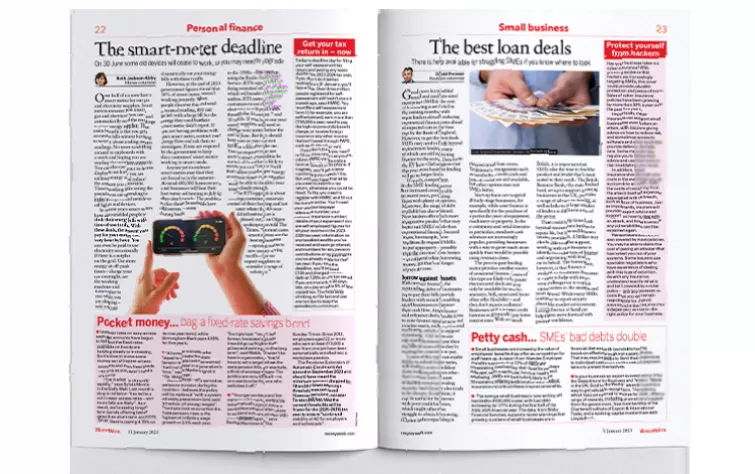
That said, the publication has acknowledged its own missteps. It was often too sceptical of technology stocks, viewing Google as overvalued at its 2004 flotation, and admits a tendency toward structural bearishness – driven by concerns about money printing and central bank interference – which sometimes led to insufficient cyclical bullishness.
Who Reads MoneyWeek
As of December 2023, MoneyWeek had a total circulation of 47,341 – comprising 18,832 print subscribers and 24,174 digital subscribers. By late 2025 that had narrowed slightly to approximately 43,000, with the digital cohort remaining the larger portion. The website attracts over one million unique users per month.
The readership is predominantly male (93 per cent), aged 35-64, and described as “cash rich/time poor”. Subscribers have a high mean personal net worth of £989,000, with 20 per cent holding more than £1 million, and an average income of £81,000. They are interested in their finances but prefer concise, expert analysis over the dense coverage of broadsheet financial pages.
MoneyWeek sits in competition with publications such as The Economist and Investors Chronicle. Its success is attributed to a market that, in the magazine’s own analysis, is “swinging back towards quality over clickbait”. The core business model is subscription-driven, with over half of revenue coming from subscriptions, supported by advertising in print and digital, newsstand sales, licensing and events. Two free email newsletters – MoneyWeek (twice daily) and Look After My Bills (four times a week) – serve as the most effective source of new subscribers.
What Readers Can Expect in Each Issue
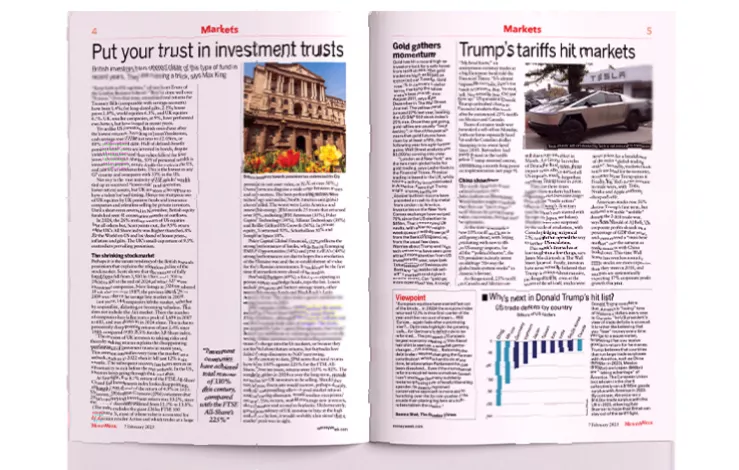
Every edition includes weekly coverage of the biggest stories moving global financial markets, a roundup of the most useful share tips from the business pages, a deep dive into the latest trends and what they mean for personal finances, and an overview of the global political stories with the greatest economic impact. The magazine also provides all the latest pension news and rule changes that affect retirement nest-eggs, together with regular analysis of house prices in the UK and around the world.
The MoneyWeek Readers’ Choice Awards, based on reader votes, highlight top firms in categories including brokers, pensions, ISAs and robo-advisers. Recent winners have included AJ Bell, Trading 212, interactive investor, InvestEngine, Hargreaves Lansdown and Stockopedia.
Readers who subscribe gain access to what the magazine describes as “unparalleled insight and expertise” to help them make money and protect their wealth. As one subscriber put it: “A trusted guide into finance, MoneyWeek has certainly helped me to grow my wealth.” Another noted: “Clear, concise analysis of financial and economic news, which helps me stay informed without being overwhelmed.” A third commented: “MoneyWeek breaks down complex financial topics into actionable insights without oversimplifying them.”
The magazine is considered an unregulated product, and its information is for general guidance only – not individual investment advice. A “MoneyWeek Glossary” is available for readers unfamiliar with financial terms.