Transgender prisoners have no automatic right to be housed in a prison for the opposite biological sex, a Scottish judge has ruled in a landmark decision that strikes down the Scottish Government’s existing policy on the placement of transgender inmates.
The Core Ruling
Lady Ross, sitting in the Court of Session, declared it unlawful for the Scottish Prison Service (SPS) to house transgender women – biological men who identify as women – in the female prison estate. The judgment, issued in response to a judicial review petition brought by the campaign group For Women Scotland (FWS), held that sex segregation in Scottish prisons is entirely lawful. The judge rejected all arguments from Scottish ministers, including the claim that housing trans-identified male prisoners in the male estate would breach their rights under the European Convention on Human Rights.
Interpretation of Articles Two and Three
Central to the ruling was the judge’s analysis of Articles 2 and 3 of the European Convention on Human Rights. Article 2 imposes a duty on the state to protect life, and Article 3 prohibits inhuman or degrading treatment. Lady Ross acknowledged that these articles place obligations on prison authorities to safeguard the well-being of all prisoners. However, she was explicit that neither article creates a positive duty to accommodate a trans prisoner in a prison reserved for the opposite biological sex. “There is no positive obligation, in general terms, based on article two or article three, to accommodate a trans prisoner in a prison for the opposite biological sex,” she stated.
The judge went on to note that while trans prisoners do have rights under Article 8 – the right to respect for private life – those rights are qualified and do not extend to a guarantee of placement in a prison of their chosen gender. Sex segregation in prisons, she concluded, is a justifiable and lawful practice under the Convention.
Legal Context and the Wider Implications
The Scottish ruling follows and reinforces a landmark judgment by the UK Supreme Court in April 2025. That case, also brought by For Women Scotland, clarified that the term “woman” in the Equality Act 2010 refers to biological sex, not gender identity. The Supreme Court’s interpretation has sweeping implications for single-sex services and spaces, including prisons. A subsequent legal opinion by barristers Ben Cooper KC and Myles Grandison argued that policies housing some trans-identifying male prisoners in women’s prisons are unlawful under this reading, since women’s prisons can only lawfully operate as institutions based on complete segregation by biological sex.
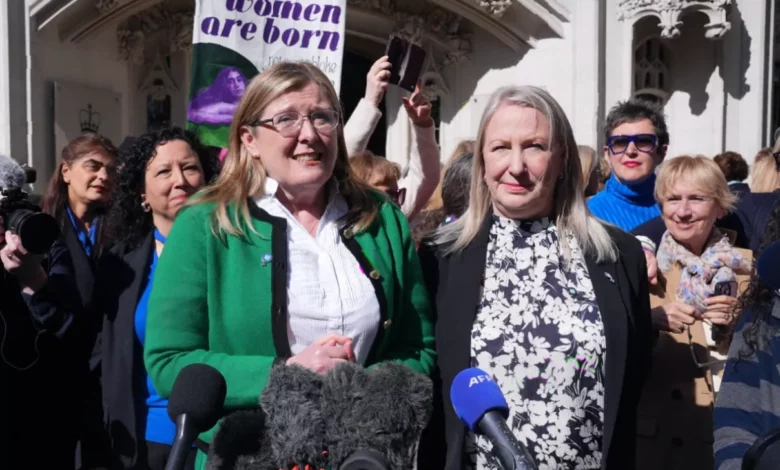
The significance of Lady Ross’s decision was not lost on the campaign group that brought the challenge. Susan Smith of For Women Scotland described the outcome as a “comprehensive victory,” expressing delight that all arguments from the Scottish ministers had been rejected. She said the group now hopes the Scottish Government will listen to them rather than to “lobby groups who drafted these policies and have so egregiously misled MSPs and MPs.”
Background and Previous Policies
The ruling overturns the Scottish Prison Service’s approach as set out in its current policy guidance. That policy, which emphasised an individualised risk assessment, stated that transgender women with a history of violence against women and girls (VAWG) who present a risk would not be placed in the female estate. However, the court found this guidance unlawful. Previously, under the UK-wide Prison Service Instruction 17/2016, implemented in January 2017, decisions about placement of transgender prisoners were made by Transgender Case Boards, with the prisoner’s wishes taken as the starting presumption. An earlier policy in 2011 for England and Wales had held that prisoners should normally be located according to their legally recognised gender, with a Gender Recognition Certificate typically required, though some flexibility existed for those “sufficiently advanced in the gender reassignment process.”
In England and Wales, the Ministry of Justice updated its framework in February 2023, stating that transgender women offenders will no longer be housed in women’s prisons if they have male genitalia or have committed sexual or violent offences. Exemptions are rare and require ministerial approval. The Scottish policy had already included risk assessments for VAWG, but the latest court decision goes further by declaring the entire practice of placing biological males in female prisons unlawful.
A previous High Court case, FDJ v Secretary of State for Justice (2021), saw a female former inmate challenge the Ministry of Justice’s policy of housing some transgender inmates with convictions for sexual or violent offences against women in women’s prisons. That claim was rejected, with the court stating that excluding all transgender women would impermissibly ignore their rights. However, legal commentators have since suggested that the FDJ judgment may not stand in light of the Supreme Court’s 2025 ruling on the Equality Act.
Statistics and Safeguarding Concerns
The debate over transgender prisoner placement is set against a backdrop of significant increases in the number of inmates identifying as transgender. In 2019, there were 163 transgender prisoners in England and Wales, with 34 held in women’s prisons. Of those, 81 had been convicted of sexual offences. Between 2016 and 2019, 97 sexual assaults were recorded in women’s prisons, with seven appearing to have been committed by transgender prisoners without a Gender Recognition Certificate. By 2025, the number of prisoners identifying as transgender in England and Wales had grown to an estimated 448, around 80 per cent of whom are male prisoners identifying as women.
Concerns have been raised on both sides: for the safety of female inmates, but also for transgender women who face a significantly higher risk of sexual assault when placed in male prisons. The ruling does not remove the obligation on prison authorities to protect the welfare of all prisoners under Articles 2 and 3; it simply clarifies that those obligations do not require accommodating a trans prisoner in the prison of the opposite biological sex.
International Parallels
Similar legal battles are playing out in the United States. Some court rulings have blocked the transfer of transgender inmates back to men’s prisons, citing risks of harm, while others have upheld the right to house transgender women in men’s facilities. The US Department of Justice has also launched investigations into women’s prisons over policies housing transgender inmates with biological females, citing potential violations of civil rights. These cases underscore that the question of how to balance the rights and safety of transgender prisoners with those of biological female inmates is a matter of intense legal and policy debate on both sides of the Atlantic.
Lady Ross’s judgment affirms that, under current UK and European law, sex segregation in prisons is lawful and that no automatic right exists for a trans prisoner to be housed according to their gender identity. The ruling leaves the Scottish Government obliged to revise its policies to comply with the court’s declaration that the existing guidance was unlawful.