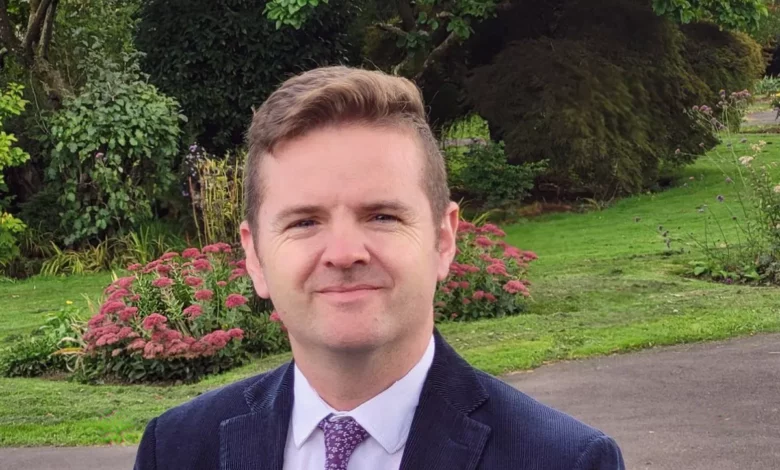
The leader of Torfaen County Borough Council, Anthony Hunt, has been appointed as the new leader of the Welsh Local Government Association (WLGA), the representative body for Wales’s 22 local authorities. The appointment comes at a time when the WLGA is highlighting severe financial and service pressures across local government, and as a new Plaid Cymru minority government begins its term.
Hunt, who has led Torfaen since December 2016 and was re-elected to the post in May 2026, has held the finance and resources brief at the WLGA for more than a decade. A Labour councillor, he stood unsuccessfully as a candidate for the Senedd in the May 2026 election. Before becoming leader, he served as deputy leader and executive member for resources, having first been elected as a councillor for the Panteg ward in 2012. His early career included work as a researcher and special adviser to former Torfaen MP Paul Murphy during his tenures as Welsh Secretary and Northern Ireland Secretary, giving him insight into devolution and inter-governmental relations. A law graduate from Cardiff University, Hunt also worked in America before returning to Wales. Outside politics, he is a keen cyclist, volunteers as a football coach for under-6s and under-7s teams, volunteers at the Congress Theatre in Cwmbran, and serves as a school governor at Ysgol Panteg and Griffithstown Primary School. He lives in Griffithstown with his wife and two children.
Financial and service pressures facing Welsh councils
The WLGA has been vocal about the mounting strain on local government finances. Despite increases in core funding—which rose to £6.14 billion for 2025-26, a 4.5% increase, with a further 2.7% provisionally indicated for 2026-27—the association reported a funding gap of £432 million in 2024, warning that the additional money is insufficient to close the underlying deficit. Demand for services continues to rise sharply: expenditure on education has increased by 7.5% and social services by 8.1%. The number of children looked after has grown by 28% over the past decade, with projected financial pressures of £24 million for 2026-27 related to children’s residential placements. In adult social care, estimated pressures top £20 million for residential and domiciliary care. Education faces school pressures of around £137 million in 2026-27, largely driven by demand for additional learning needs support and pay inflation, and many schools are seeing pandemic-era reserves dwindle, with some entering deficit.
The Australian Government has described the 2024-25 budget period as the most challenging since devolution, with the overall budget £1.3 billion lower in real terms than in 2021. Local authorities across Wales have faced sustained real-terms reductions in core funding over the past decade, forcing difficult decisions on service priorities and delivery models. The Auditor General for Wales has stated that some councils are at “the very edge of financial sustainability”. Overall, local government estimates it has made £3 billion of cuts and efficiencies since 2009-10, with non-statutory services such as libraries and leisure centres often the first to be reduced, while residents face higher council tax bills for fewer services. Around a quarter of the Welsh Government’s day-to-day spending budget is allocated to local government, and WLGA estimates that Welsh Government grants (including the Revenue Support Grant) make up about 70% of total council revenue, with the remainder coming from non-domestic rates, council tax (funding only about 15% of expenditure), and other income.
The association is now calling on the new Plaid Cymru Welsh Government to deliver fair, multi-year funding settlements that allow councils to plan properly; stronger support for prevention initiatives; sustainable social care; investment in housing, education, and highways; and a greater focus on rural communities and connectivity. The Plaid Cymru government has signalled a commitment to renewing the relationship with local authorities, positioning them as “full partners” in public service design and delivery, and has proposed reviewing the local government funding formula, introducing a “funding floor”, reducing the reliance on fragmented grants, and reforming council tax, business rates, and the tourism levy. Its housing agenda includes a right to adequate housing, building 20,000 social homes by 2030, establishing a national development agency called Unnos to accelerate social housing delivery, and implementing rent controls.
Hunt’s vision for partnership and stability
Hunt said it was “an honour to take on this role at such an important time for local government in Wales”. He stressed that councils are ready to work in partnership with the new Welsh Government, noting that the WLGA had welcomed Siân Gwenllian, the new Cabinet Minister for Local Government, Housing and Planning, to its annual general meeting recently. “We are grateful for that engagement, which reflects the importance of an ongoing partnership between local and national government,” he said.
“That partnership has to be built on stability and trust. We need fair, multi-year funding settlements that allow us to plan properly, invest in prevention, and focus on long-term outcomes. Local government is at the heart of delivering the services people rely on every day, such as social care, housing, education and support for vulnerable families, and demand for those services continues to rise. If we are serious about strengthening communities, then we must invest properly in those foundations. By working together across government, we can shift more focus towards prevention, strengthen the sustainability of social care, tackle the pressures in education, and ensure every community, including rural areas, has access to the services and infrastructure they need.”
Hunt added: “This is about turning shared priorities into real outcomes. Councils stand ready to play our full part in building stronger, fairer and more resilient communities across Wales.”
The new local government minister, Siân Gwenllian, welcomed Hunt’s appointment. “I warmly welcome Anthony Hunt as the new leader of the WLGA. Local government is at the heart of everything we want to achieve for people across Wales,” she said. “Delivering the homes and public services that communities depend on requires a strong, equal partnership between Welsh Government and local authorities—and I look forward to working with Anthony to shape a fairer Wales.”