Inflation has hit a three-year high of 4.2% in May, the third consecutive monthly increase since the outbreak of the Iran war, intensifying pressure on American households and setting the stage for a politically charged debate over the Federal Reserve’s next move.
Trump’s reaction: ‘I love the inflation’
Donald Trump, speaking from the White House on Wednesday, brushed off concerns over the latest consumer price index figures. “No, I love it. The numbers were great,” he said, before claiming the US had covertly removed “millions of barrels of oil” from the conflict zone without Iran’s knowledge. The president described a night-time operation involving 22 ships, adding: “We took out the other night 22 ships late at night, with no lights because they don’t have any radar, because we blasted the crap out of it. That’s why oil is at $85 a barrel.” The claim has not been independently verified.
Trump said he had foreseen the economic consequences from the outset of the conflict. “Remember when I did this, I said … I hate to do this to you guys, but Iran is going to have a nuclear weapon very soon. We have to go in and attack,” he recalled. On Tuesday he told reporters he did not think US fuel prices were “very high, relatively speaking.”
Inflation data in detail
The Bureau of Labor Statistics reported that the Consumer Price Index rose 4.2% year-on-year in May, up from 3.8% in April and 3.3% in March. Before the war began in February, inflation stood at 2.4%. On a monthly basis, CPI increased 0.5% in May, following a 0.6% rise in April and a 0.9% jump in March.
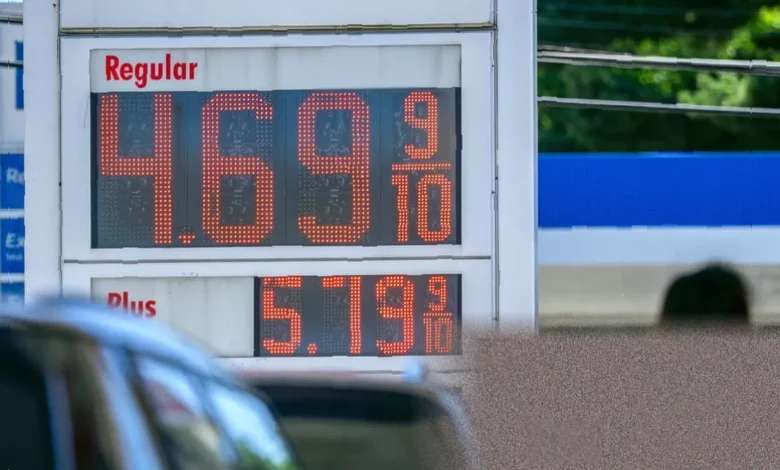
Energy prices accounted for more than 60% of the overall monthly increase. The energy index rose 3.9% in May alone and was up 23.5% compared with a year earlier. Gasoline prices climbed 7% month-on-month and are 40.5% higher than in May 2025. The national average price for a gallon of gas stood at $4.15, according to AAA — slightly lower than a month ago but still $1 per gallon more than last year. AAA separately reported that the average had reached $4.42 on 28 May. Airline fares surged 26.7% year-on-year, a squeeze travellers may already have noticed ahead of the busy summer season.
Stripping out volatile energy and food prices, core CPI rose 2.9% year-on-year — a seven-month high — and was up 0.2% month-on-month, down from April’s 0.4% monthly gain. Other essential everyday expenses also increased: the food index rose 0.2% in May (0.1% for food at home, 0.3% for food away from home) and was up 3.1% year-on-year. Prices for clothing, energy services and other goods also rose.
How the Iran war is driving prices higher
The ongoing US-Israel war with Iran is the primary force behind the surge in energy costs. The closure of the Strait of Hormuz — a maritime corridor that handles roughly one-fifth of the global oil supply — has disrupted supply chains on a scale described as the largest disruption to world energy supply since the 1970s energy crisis. Brent crude oil prices surpassed $100 per barrel in March and peaked at $126 per barrel, with the largest-ever monthly increase in oil prices recorded the same month. Fitch Ratings forecasts oil prices to average around $87 per barrel in 2026, assuming the Strait of Hormuz reopens by the end of July.
The war began on 28 February; the US blockade on Iran’s oil exports started on 13 April. The average price for a gallon of gas has risen by $1.17 since the conflict began. Trump’s claim that the US had extracted “millions of barrels of oil” without Iran’s knowledge and destroyed 22 ships has not been independently verified.
Reporter: Are you concerned, Mr. President, about the latest inflation number which came out this morning?
Trump: No, I love it. I love the inflation. pic.twitter.com/vktX6C9lbk
— Acyn (@Acyn) June 10, 2026
White House response
The White House described the May inflation figures as “at-expectation” and said they reinforced that, “despite temporary disruptions as a result of Iran’s efforts to subvert the free flow of energy, President Trump’s broader economic agenda continues to deliver meaningful results for the American people.” Kush Desai, a White House deputy press secretary, said in a statement: “Prices of prescription drugs, dairy products, cars, as well as both health and auto insurance continue to decline thanks to the Trump administration’s policymaking. The Administration will continue pushing our affordability agenda to enable Americans to keep more of their hard-earned money.”
Consumer sentiment and the economic outlook
Higher prices have dampened households’ expectations for their financial future. The Federal Reserve Bank of New York released a survey on Monday showing that households have become more pessimistic about inflation, the labour market, finding a job and the potential for layoffs. Consumer sentiment has plummeted to a historic low, according to the University of Michigan’s Consumer Sentiment Index, which fell to 44.8 in May — its lowest on record and a third consecutive monthly decline. More than half of consumers — 57% — cited high prices as eroding their personal finances. Year-ahead inflation expectations rose to 4.8%, while long-run expectations climbed to 3.9%.
The labour market remains relatively stable on the surface. The US unemployment rate held steady at 4.3% in May, while employers added a surprising 172,000 jobs, exceeding expectations. However, the share of unemployed workers who have been jobless for 27 weeks or longer rose to 27.5% in May, up from 20.4% a year ago, indicating that some workers are finding it increasingly hard to get back into work.
Federal Reserve under new leadership
The new inflation data puts pressure on the Federal Reserve, which is meeting for the first time next week under its new chair, Kevin Warsh. Warsh was sworn in on 22 May after a narrow Senate confirmation vote, succeeding Jerome Powell. The central bank has held interest rates steady since the end of last year at a target range of 3.5% to 3.75%.
Warsh has said he believes rates should be lowered, aligning himself with Donald Trump, who has spent the past year trying to coerce the Fed into cutting borrowing costs. The central bank typically reduces rates to address high unemployment, at the risk of raising prices further. Despite rising inflation, the president has continued to call for rate cuts.
Wall Street is sceptical that any cuts are imminent. Goldman Sachs said on Friday it no longer expects the Fed to lower rates this year, predicting they will remain unchanged throughout 2026 and that any cuts will be delayed until next year. JP Morgan Global Research has forecast that rate hikes across global central banks are on the horizon and expects the Fed to increase rates by 2027. Bruce Kasman, chief global economist at JPMorgan Chase, wrote in an April report: “The energy price spike is now raising inflation and generating a sharp squeeze on household purchasing power that could intensify if the Middle East conflict keeps the Strait of Hormuz closed.”