Over 800 people have signed a petition demanding the pedestrianisation of Oxford Street in Bristol, a move campaigners say would unlock the potential of the railway-arch district near Temple Meads station and create a “vibrant, people-friendly high street”.
The petition, which calls for the street to be formally recognised as a local high street, has been backed by the Bristol Business Improvement District (BID). The BID’s website states: “With a strong mix of independent food, drink and hospitality venues, there’s a real opportunity to build on what’s already happening here. These changes would help transform Oxford Street into a vibrant, people-friendly high street at the heart of Temple Quarter, a space where people want to spend time, not just pass through.”
Current problems on Oxford Street
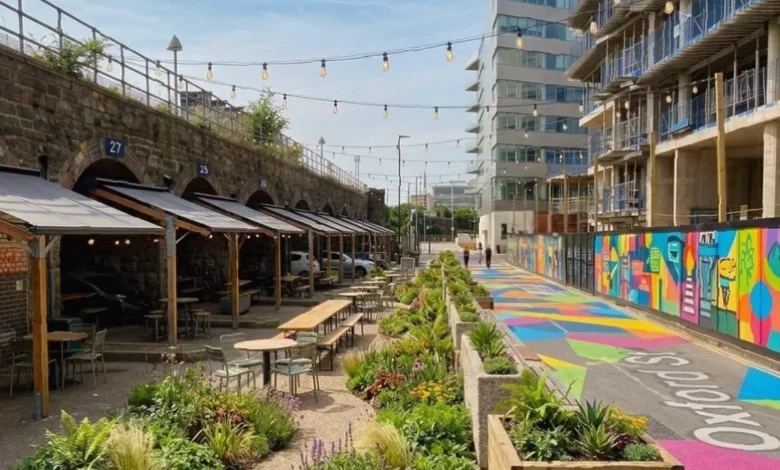
At present, the pavement running alongside the railway arches is narrow and frequently obstructed by parked cars and vans, while the road itself is wide but sees relatively little traffic. The arches are home to two microbreweries, a bakery and a pasty shop — Little Martha Brewing, Forest Bakery, the Pasty Emporium and Unwin’s Brewery — making the street a popular spot for after-work drinks, but pedestrian access is poor.
Little Martha Brewing, described as a “cute and cosy brewery tap”, began brewing in late 2021 and opened its taproom at the end of that year. Unwin’s Brewery opened more recently, on 22 November 2025, in an arch that previously housed Bristol Cycle Shack; its decor is inspired by traditional UK pubs and bars in Belgium and Southern Europe, and it proved so popular that it temporarily closed to replenish beer stocks shortly after opening. Forest Bakery, established in 2019, operates from Arch 26 and is known for its artisan sourdough and vegan pastries. The Pasty Emporium, an independent café and takeaway at 24 Oxford Street, has been serving traditional Cornish pasties since 2005.
The campaign is being driven by residents and businesses who want to see the street become a destination rather than a thoroughfare.
Proposed transformation and benefits
The petition’s specific demands include improved street design to provide greater space for outdoor seating and trading, as well as the renovation of additional railway arches. A central proposal is to make Oxford Street one-way for vehicles, a change designed to cut traffic levels while maintaining access for local workers and residents.
The plans mirror recent transformations elsewhere in Bristol. Princess Victoria Street in Clifton Village was turned from a temporary timed closure into a permanent pedestrianised zone. The scheme, initially met with fierce opposition and protests, was later praised for reshaping public opinion and boosting local economies. The permanent version, completed in July 2025, involved significant infrastructure changes and was funded by a £655,000 grant from the UK Government through its Community City Region Sustainable Transport Settlement. Similarly, Cotham Hill’s temporary pedestrianisation, introduced in 2021, has now been made permanent. That £645,000 scheme was funded by the Department for Transport through its Active Travel Fund and the Community City Region Sustainable Transport Settlement, and included improved crossings, wider pavements and new street furniture. While largely successful, it has drawn some differing opinions on its impact.
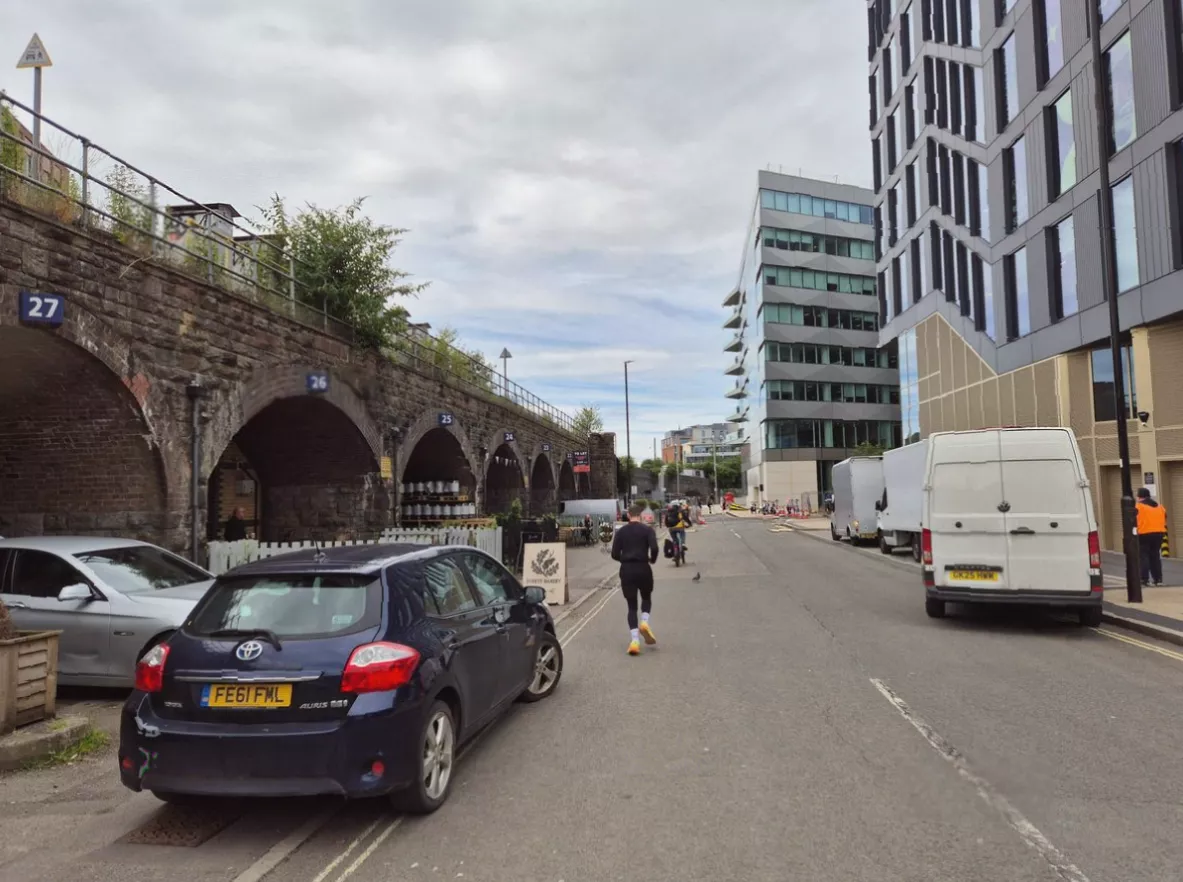
The Oxford Street proposals — detailed in a document updated in May 2026 — are being developed with the help of The Urbanists, a consultancy working alongside the Bristol BID. If implemented, they would see bollards installed and sections of the road reallocated as pedestrian zones with outdoor café seating, replicating the approach used in Clifton and Cotham Hill.
Part of a wider regeneration
Oxford Street sits at the heart of the Temple Quarter regeneration zone, one of the largest regeneration projects in the UK. The plan covers 135 hectares of brownfield land and is expected to unfold over 25 years, delivering at least 10,000 new homes and more than 22,000 jobs. The estimated annual economic contribution to Bristol’s economy is £1.6 billion. The project received a £94.7 million injection of government funding in June 2022.
The zone extends from west of Temple Meads station eastwards along St Philip’s Marsh, where thousands of new homes are planned. Masterplanning consultants are developing guidance for St Philip’s Marsh, with early ideas including a new canal-side high street; that framework is due for approval in September 2026. The Dings community, where Oxford Street is located, has been integrated into the Temple Quarter Enterprise Zone. Recent community investments include the refurbishment of the “Safe ’Ouse” youth engagement centre, funded through social value commitments within the programme. Cycling and walking infrastructure is also being emphasised, with National Cycle Network Route 3 running along the Feeder Canal towpath.
Infrastructure improvements associated with the regeneration include a new Southern Gateway to Temple Meads station, featuring a multi-storey car park, a secure cycle hub for more than 700 bikes, and new bus stops. The station itself is being refurbished. A new Eastern entrance to Temple Meads is planned for 2026, and a Northern entrance is scheduled for 2029. The University of Bristol’s Enterprise Campus, a significant development within Temple Quarter, is expected to open in September 2026. Meanwhile, the Avon Street underpass activation is targeting September 2027.
The Temple Quarter regeneration framework was endorsed by Bristol City Council’s cabinet in May 2023. The Oxford Street campaign, with its petition of more than 800 signatures, is the most recent expression of the area’s transformation — one that seeks to turn a narrow, car-dominated road into a space where people stop and stay, rather than simply pass through.