Trump states Iran will not have nuclear weapon under fresh pact and warns Israel on Lebanon

The United States and Iran are set to formally sign a peace deal on Friday at the Burgenstock resort in Switzerland, marking a pivotal step toward ending the war that has disrupted the Strait of Hormuz and roiled global energy markets. The mountainside venue near Lucerne — chosen by Pakistani and Qatari mediators together with the US and Iran — is difficult to access and easily secured, with water on three sides, the Swiss foreign ministry confirmed to AFP.
Signing ceremony and status of the agreement
The memorandum of understanding (MOU) has already been electronically signed by President Donald Trump, Vice President JD Vance, and Iranian Parliament Speaker Mohammad-Bagher Ghalibaf, according to details emerging from both sides. A formal signing ceremony will take place at the resort on Friday, June 19, 2026. Trump has said the full text of the peace deal will be released in a “formal setting” and that he intends to go over the terms with the media “in a couple of days.” The Swiss foreign ministry said the location was proposed by the mediators and the two parties, after earlier reports had indicated Geneva as the venue.
Trump’s statements and US position
Speaking at the G7 summit in Évian-les-Bains, France, Trump declared that the Strait of Hormuz will be “completely open” by Friday and “permanently toll-free.” He stated that the main outcome of the MOU is that Iran will “never have a nuclear weapon” and that he expects the “second stage” of the deal “to go quickly,” noting a 60-day deadline for the next phase of negotiations. “Iran wants to get it done. They have to get back to business, and the relationship is now normalised, so I think it’s going to go pretty quickly,” he told reporters during a meeting with UAE President Sheikh Mohammed bin Zayed Al Nahyan. Trump also said he would send the agreement to the US Congress for a review, adding, “I like the idea, send it to Congress please. I mean who wouldn’t approve it.”
Trump earlier described his relationship with Israeli Prime Minister Benjamin Netanyahu as “great” but said Netanyahu “has to be more responsible with respect to Lebanon.” He added: “Without me there would be no Israel, because no other president was willing to do what I did.”
The absence of the detailed MOU text has triggered bipartisan scrutiny in Washington. Senate Majority Leader John Thune has reportedly asked the Trump administration for the text of the agreement and requested a briefing, but has received no response so far. Republicans on Capitol Hill have expressed skepticism over whether the deal can deter Iran from pursuing a nuclear weapon. Senator James Lankford said: “If you want a deal to last, it can’t be an executive agreement. We’ve got to have a vote of Congress to be able to solidify it long term.” Some senators have cited the Iran Nuclear Agreement Review Act of 2015 as a basis for congressional review.
Key terms and conditions of the memorandum of understanding
The MOU establishes an immediate and permanent cessation of military operations on all fronts, including Lebanon, effective June 14, 2026, and is intended to serve as a 60-day ceasefire. During that period, further negotiations will address the most contentious issues: Iran’s nuclear program, sanctions relief, and the release of frozen assets.
On the nuclear front, the US insists that Iran must never develop a nuclear weapon, which includes dismantling its program and halting enrichment. However, Trump has acknowledged the possibility of allowing some uranium enrichment, provided it remains at a level that cannot be used militarily — although he has not specified the permitted purity level. Iran has stated that nuclear talks are not part of this MOU but will be addressed in future negotiations. The memorandum does secure Iran’s reaffirmation of its commitment to the Non-Proliferation Treaty.
Thune says he has asked the Trump admin for the text of the Iran MOU as well as a briefing. Nothing yet, he says.
— Andrew Desiderio (@AndrewDesiderio) June 16, 2026
Sanctions relief forms a central component. The lifting of all primary and secondary sanctions against Iran, along with the termination of UN Security Council and Board of Governors resolutions, is expected to be discussed during the 60-day window. The MOU includes provisions for some immediate relief of sanctions and the unfreezing of Iranian assets. There is also mention of a potential $300 billion fund to help rebuild Iran if it meets certain benchmarks.
The US will allow Iran to immediately start selling oil and fuel again as part of the deal, the Wall Street Journal reported, citing sources familiar with the matter. Iranian state television said that Iranian oil tankers and other vessels had resumed shipping following the agreement, with a reporter stating that “the operation to lift the naval blockade has been implemented.” Iranian Deputy Foreign Minister Majid Takht-Ravanchi confirmed on Tuesday that the two-month US naval blockade on Iranian ports had been lifted ahead of the formal signing. “The lifting of the blockade was something we had emphasised from the outset. It has now begun, and the blockade has been lifted prior to the formal signing,” he said, according to the government’s website. Despite these declarations, significant ship traffic had not fully resumed by Tuesday morning, with shipping companies awaiting clearer security guarantees. De-mining sweeps are expected to commence once Iran opens the strait.
Regional implications and tensions
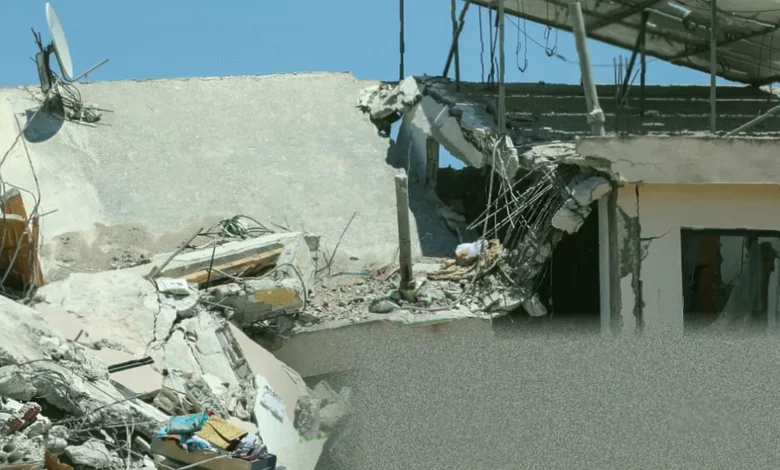
The ceasefire in Lebanon included in the MOU has not prevented continued violence. Israeli drone strikes targeted three vehicles in southern Lebanon on Tuesday, killing at least four people and wounding others, according to Lebanon’s National News Agency. Two people were killed in a double-tap strike — a drone hitting a car in the village of Mayfadoun followed by a second strike after people had gathered at the scene. Another drone strike on the town of Shoukin killed two others. The Israeli military offered no immediate comment on the reported strikes. Hezbollah, the Iranian-backed Lebanese militant group, said it has received assurances from Iran that Tehran will not sign a final nuclear deal with the US unless Israel withdraws from Lebanon, according to the group’s media relations office. Hezbollah has welcomed the agreement, viewing it as an opportunity for the liberation of Lebanese territory. Israeli officials have stated that their troops will remain in Lebanon, asserting that “Trump’s agreement does not bind us.”
The deal’s international reception has been mixed. European leaders broadly welcomed the breakthrough, with France, Germany, Italy, and the UK calling for a swift return to commercial shipping through the Strait. EU foreign policy chief Kaja Kallas offered European support on nuclear issues. However, a European Union official told NBC News that yesterday’s bilateral talks between Trump and French President Emmanuel Macron were “a bit tense,” with Trump dismissive of EU support and saying he did not need Europe’s help. Trump and Macron are due to dine at the Palace of Versailles, which the EU official described as the “shiny object he needed to come to France,” adding that “whether this will keep him happy remains to be seen.”
China’s top diplomat, Foreign Minister Wang Yi, told his Pakistani counterpart Ishaq Dar on Tuesday that the next phase of negotiations — which Pakistan helped mediate — will be “more difficult.” In a phone conversation, Wang said “it is foreseeable that, compared with the first stage, the second stage of negotiations will be more difficult.” He added that the United Nations Security Council “should also play a greater role” in supporting these talks, according to a statement from Beijing’s foreign ministry. “The current consensus is far from the final destination, rather it is a new starting point,” Wang said. “Achieving lasting peace in the Middle East and Gulf region still requires unremitting efforts from all parties.” China welcomed the agreement and commended Pakistan’s mediation, which has also been praised by Turkey, the UK, Japan, and the UN.
Oil prices have sunk on the news, pulling back to $80 per barrel for the first time since early March, while the US stock market has rallied on hopes that the deal will restore stability to energy supply chains. The S&P 500 has been trading near its all-time high.