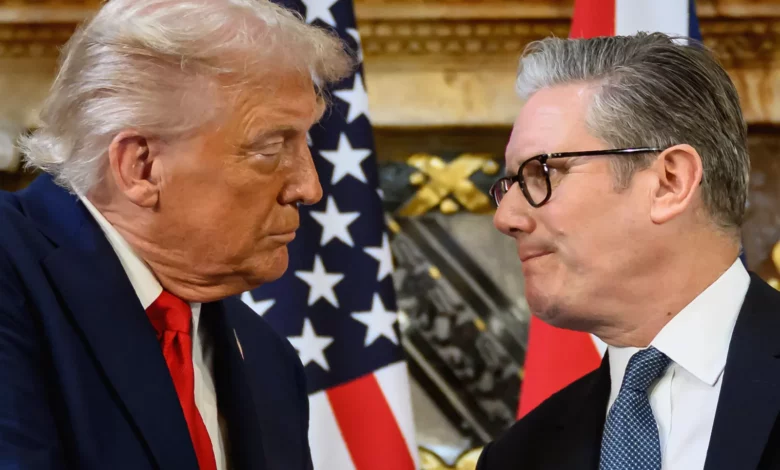
In a private Easter lunch at the White House, US President Donald Trump launched a fresh broadside at Britain’s Prime Minister, impersonating Sir Keir Starmer in what he characterised as a “weak voice” to mock his reluctance to commit the Royal Navy to the Iran conflict. “Ohhh I’ll have to ask my team,” Mr Trump recounted the Prime Minister saying, when asked about sending “two old broken-down aircraft carriers” to the Middle East.
Mockery and mounting pressure from Washington
The public ridicule, detailed in a video from the event, is the latest in a series of disparaging remarks from the US administration. President Trump has previously dismissed the UK’s aircraft carriers as “toys” that “aren’t the best,” while Defence Secretary Pete Hegseth this week sarcastically questioned the whereabouts of the “big, bad Royal Navy,” suggesting the US was doing all the “heavy lifting.” Mr Trump asserted that Britain “should be our best” ally but had not been, a sideswipe that lands just weeks before King Charles III is due in Washington for a state visit marking 250 years of American independence.
The president’s stance is one of unilateral force. On his Truth Social platform, he warned Iran that the US military “hasn’t even started destroying what’s left” and threatened bridges and power plants, urging new leadership in Tehran to “make a deal.” He has also criticised NATO for doing “absolutely nothing” and urged allies to “start learning how to fight for yourself,” framing the securing of the Strait of Hormuz as a problem for other nations to resolve. “Just grab it,” he said in an address, suggesting the waterway would “just open up naturally” after the conflict.
The Strait of Hormuz stranglehold
The focus of this transatlantic tension is the narrow sea passage off Iran’s coast, which Tehran has effectively closed amidst ongoing military strikes by the US and Israel. The consequences are severe and global. The International Energy Agency has called it the “largest supply disruption in the history of the global oil market,” with about 20% of global oil supplies and significant liquefied natural gas volumes blocked.
The closure has sent Brent crude prices skyrocketing, with predictions they could reach $150 to $200 a barrel, exacerbating a global economy still recovering from the 2022 energy shock. QatarEnergy has declared force majeure, and collective oil production in Kuwait, Iraq, Saudi Arabia, and the UAE has dropped significantly, causing what analysts term a systemic collapse of the Gulf Cooperation Council economic model.
Beyond economics, the human cost is mounting. The Foreign Office estimates over 20,000 seafarers on approximately 2,000 ships are trapped. Italy’s Foreign Minister has warned of a food disaster in Africa and called for a humanitarian corridor for essentials, while UK officials fear the crisis could push millions worldwide into food insecurity.
Britain’s diplomatic offensive
In the face of US pressure for military involvement and public mockery, the UK government has charted a distinctly different course. Prime Minister Sir Keir Starmer has maintained from the outset that the conflict is “not our war” and that Britain would not be drawn into offensive action. Foreign Secretary Yvette Cooper has underscored that “our job is to take decisions in the UK national interest.”
That interest, the government argues, is best served by leading a coordinated diplomatic and political offensive. On Thursday, Ms Cooper chaired a virtual meeting of more than 40 nations – including France, Germany, Italy, Canada, UAE, and India, but notably not the US – to build a coalition against Iran’s “hostage” taking of the global economy. “Iran is trying to hold the global economy hostage in the Strait of Hormuz. They must not prevail,” she stated, signalling that further sanctions are under discussion.
The UK’s reasoning is threefold. Ms Cooper has cited deep concerns about “escalation risks,” the direct economic “impact – including on the economy,” and the need for a “proper plan.” Sir Keir has directly linked the strait’s closure to UK living standards, warning it will impact the cost of living. This diplomatic path is fraught; a UN Security Council resolution proposed by Bahrain to authorise “all necessary means” to secure the strait was watered down to only defensive actions after opposition from China, Russia, and France. French President Emmanuel Macron has called a military operation to liberate the strait “unrealistic.”
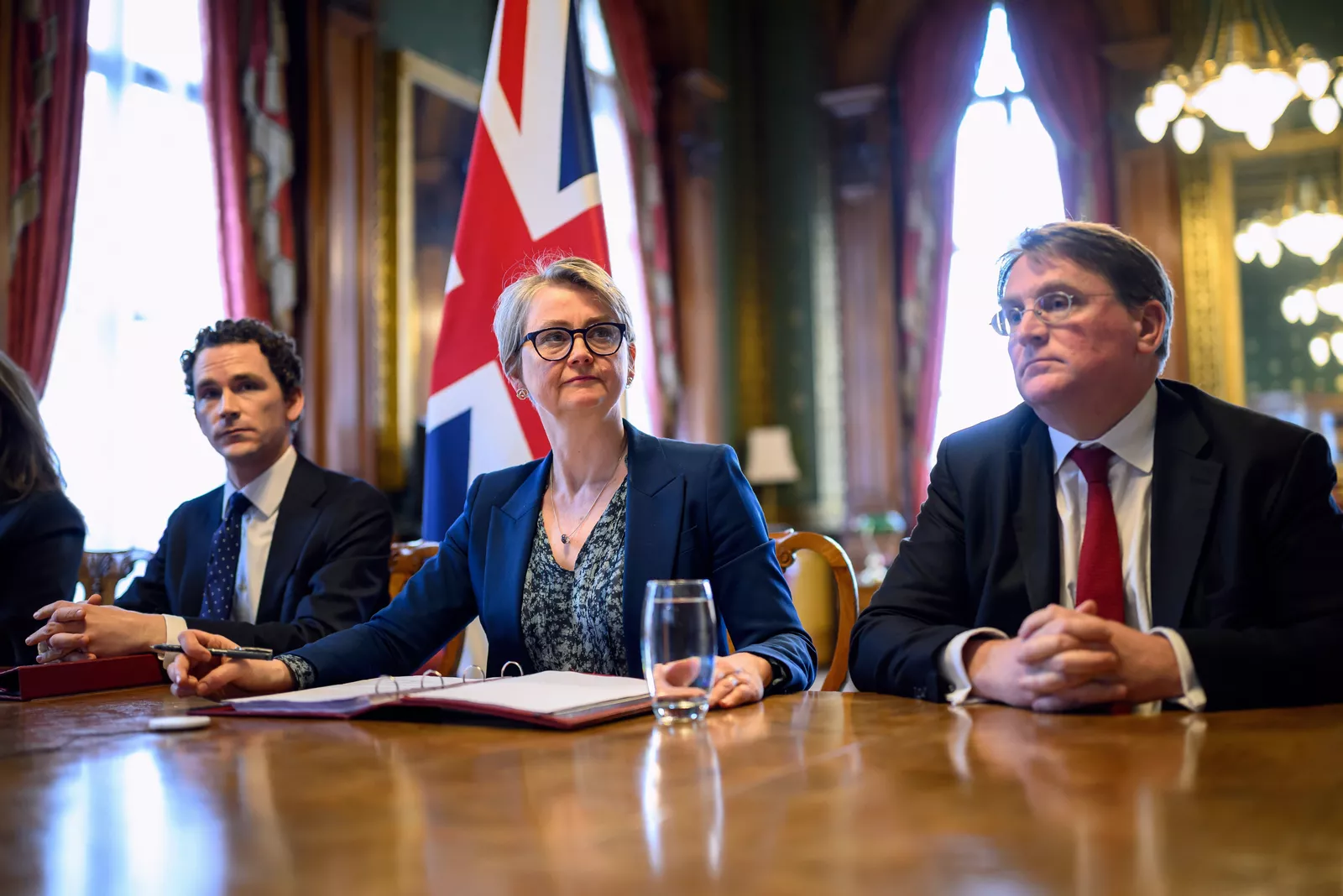
Instead, the UK is focusing on collective pressure and practical measures. A follow-up meeting of military planners next Tuesday will consider long-term shipping safety, including how to clear potential mines laid by Iran. Any mission, the Prime Minister has clarified, would not be NATO-led.
The strategy unfolds against a backdrop of acknowledged challenges within the Royal Navy itself, where the First Sea Lord has warned the service is not fully ready for war and “has work to do.” The fleet has shrunk dramatically over decades, a fact that lends a pointed context to the American jibes about naval capacity.
As diplomatic efforts continue, the immediate aim is to forge a united international front capable of compelling Iran to reopen the waterway, with Britain insisting that a peaceful, collective approach – not unilateral force – is the surest way to restore the flow of global trade and stabilise a spiralling economic crisis.