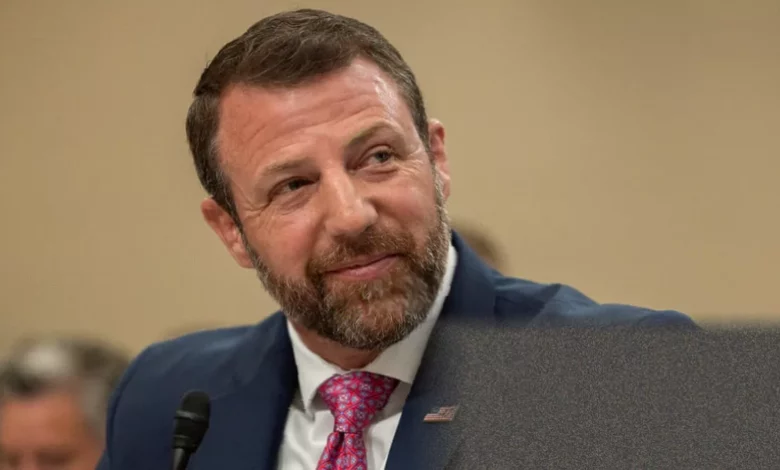
Homeland Security Secretary Markwayne Mullin has told migrants living in the United States under Temporary Protected Status to either seek permanent residence or leave the country, following last week’s Supreme Court ruling that clears the way for the removal of humanitarian protections for hundreds of thousands of Haitians and Syrians.
Speaking on CNN’s State of the Union programme on Sunday, Mr Mullin said those affected should “try to fill out the paperwork and be here underneath a permanent status or we’ll help you get back to your country”. He added that the Department of Homeland Security would offer a plane ticket plus approximately $2,100 – a figure later confirmed by DHS as $2,600 under an initiative that began in January 2026 – to assist with resettlement. “Temporary protective status, according to the courts and in its name itself, is not permanent status,” he said.
The remarks follow the Supreme Court’s 6-3 ruling in Mullin v. Doe, handed down on 25 June 2026, which effectively ends the ability of federal courts to review non-constitutional challenges to the termination of TPS designations. The majority opinion, written by Justice Alito, held that the TPS statute bars judicial review of such decisions, meaning that even if the Department of Homeland Security failed to follow proper procedures or consult other agencies, courts are unlikely to intervene. The Court also dismissed claims that the termination of Haiti’s TPS designation was racially motivated, concluding that the evidence pointed to broader immigration policy objectives rather than discriminatory intent.
An estimated 350,000 Haitian nationals and 6,000 Syrian nationals are directly affected by the ruling. Once the protections formally end – with some sources indicating a possible termination date around 1 July 2026 – these individuals will lose their employment authorisation and become subject to Immigration and Customs Enforcement detention or deportation, unless they qualify for another lawful immigration status.
What is Temporary Protected Status and why does it matter?
Temporary Protected Status is a humanitarian immigration designation created by the Immigration Act of 1990. It allows nationals from countries experiencing armed conflict, environmental disasters or other extraordinary conditions to live and work legally in the United States without being deported. The status does not offer a direct path to a green card or citizenship, though holders may become eligible for permanent residency through other avenues such as marriage to a US citizen, family-based petitions or employment-based sponsorship.
Haiti was first granted TPS in 2010 after a devastating earthquake. Syria received its designation in 2012 as the country descended into civil war. Under previous administrations, the status was routinely renewed, reflecting the ongoing dangers in both nations. The US State Department currently warns against travel to Haiti, citing widespread violence, crime, terrorism and kidnapping, with gangs controlling much of the country and the government barely functioning. Haiti is on the International Rescue Committee’s “emergency watchlist”, with more than six million people in urgent humanitarian need and over half the population facing crisis levels of hunger. In Syria, the humanitarian situation remains critical after years of conflict: infrastructure has been decimated, the economy has collapsed, and approximately 15.6 million people require lifesaving assistance.
Despite these conditions, the Supreme Court’s decision allows the Trump administration to end TPS designations for both countries. Immigration advocates warn that the ruling sets a precedent that could allow the administration to target other TPS designations affecting the 1.7 million people from 17 countries currently on the programme, potentially ending the 1990 programme altogether.
Community reaction: fear, economic shock and political dissent
In Springfield, Ohio, home to an estimated 12,000 to 15,000 Haitian immigrants, the decision has provoked despair. Haitian residents credit the community with revitalising the city after decades of economic decline. Franky Pierre, a Haitian immigrant who came to the US with his family during the 1991 military coup, told the Guardian after the ruling: “For Springfield, it’s going to hurt. When I came here, this area was dead. In this plaza, there are [now] seven Haitian businesses.” He added: “All of these people are going to have to run away or go somewhere, which I’m pretty sure is going to start tonight.” There are widespread fears of ICE raids and family separations.
The economic impact could be severe. Many TPS holders work in healthcare, and experts warn that losing them could create a crisis in that sector, as well as broader disruption to local economies. TPS holders have also contributed billions of dollars to Social Security over the years.
Some Republicans have broken with the administration over the ruling. Ohio Governor Mike DeWine called it a “mistake”, saying: “The situation in Haiti could hardly be much worse. The violent gangs run most of the country. The government barely functions. And the economy is in shambles.” He noted that ending TPS for Haitians could hurt jobs and local economies. Republican Representatives Mike Lawler of New York and Don Bacon of Nebraska have also criticised the ruling, with Mr Lawler – while supporting the administration’s right to end TPS – arguing that the timing was wrong given the humanitarian catastrophe in Haiti and the significant number of Haitian TPS holders working in healthcare. Democrats have denounced the decision, with Senator Maria Cantwell calling it “inhumane” and urging Congress to act.
Former President Donald Trump, who falsely accused Haitians in Springfield of eating household pets during the 2024 election – leading to bomb threats and white supremacist marches in the city – has a history of controversial remarks about immigrants, including referring to certain countries as “shithole countries” and describing immigrants as “criminals”, “rapists” and “poisoning the blood of our nation”. Those remarks were cited in legal challenges to the TPS terminations, but the Supreme Court found the evidence did not support claims of racial bias. The Trump administration had previously attempted to end TPS for Haiti even earlier, adopting a new restricted approach in early 2025 that was quickly challenged in court.
The Customs and Border Protection website lists the voluntary departure incentive as $2,600. Secretary Mullin reiterated that the offer stands for those who choose to leave. Meanwhile, the broader implications of the ruling on other TPS designations – including El Salvador’s, which is set to expire on 9 September 2026 – remain uncertain, as several other TPS terminations are still tied up in legal disputes.