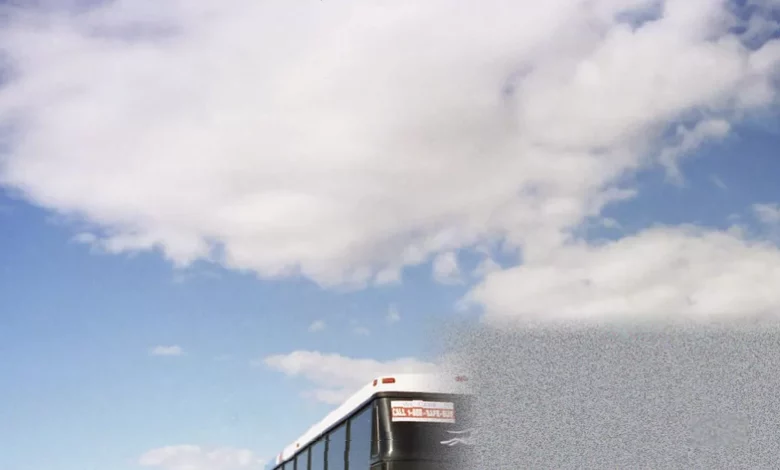
The closure of Spirit Airlines has delivered an unexpected boost to Greyhound, with search activity for the budget bus operator rising 20% year-on-year after the low-cost carrier grounded its final flight on 2 May 2026. On routes that overlap with former Spirit services, passenger numbers have jumped 30% — a clear sign that travellers priced out of the skies are turning to the road.
Ridership surge after Spirit closure
Spirit, once commonly known as “the Greyhound of the skies” for its no-frills model, ceased operations after a series of financial difficulties that included two Chapter 11 bankruptcy filings. The airline blamed rising costs, failed merger attempts and a lack of government support. Its collapse has left a gap in the ultra-low-cost travel market, and evidence suggests that gap is being filled by intercity buses.
Kate Thompson, a vice-president at the travel search platform Wanderu, said the broader economics of the United States were driving the shift. “The price of flights has increased year-to-date roughly 27%, whereas bus and train tickets have only increased around 4%,” she said. “People are going to gravitate toward the average bus ticket price of $53 versus a $500 plane ticket.”
Demographic changes are also at play. Data from the Department of Transportation shows the number of licensed 16-year‑olds has dropped 27% since 2000. A growing cohort of Americans, particularly the young, simply do not drive. For them, the bus is not a choice — it is often the only option.
The gruelling reality of intercity bus travel
Yet for most passengers, riding a Greyhound bus means abandoning many expectations of basic dignity. Delays are routine. Passengers wait on the side of the road or at dilapidated stations. The onboard toilets seldom work and usually smell. The stranger in the next seat may fall asleep on your shoulder.
Miles Taylor, a 26‑year‑old public‑transit enthusiast who works as a scheduler for Boston’s MBTA and runs a popular YouTube channel documenting his bus trips, has crossed the country by Greyhound twice — a Boston to Seattle journey took 104 hours. Even he describes the experience bluntly: “It’s a grueling experience. You’re not treated very well. Everyone is yelling at you the entire time. When the bus is late, they blame you for it, like somehow you’ve done something wrong. You just get screamed at for wanting to know what’s going on, because no one says anything.”
Taylor calls Greyhound “kind of a last resort for folks”. Online reviews paint the same picture. The company currently holds a 1.3 out of five‑star rating on both TripAdvisor and Yelp. “Our bus broke down on the highway in nearly 90°F heat, and we were left sitting inside with little to no ventilation for hours,” one user wrote. Another described being “left in the middle of nowhere” while travelling from Virginia to Michigan. A third summed it up: “Greyhound should be paying their customers to ride.”
High‑profile incidents have compounded the carrier’s image problem. In 2001, a man slashed the throat of a driver, commandeered a Greyhound bus and drove into traffic near Manchester, Tennessee, killing seven people — the driver survived. Seven years later, on a Canadian route, a schizophrenic passenger attacked and killed another rider, beheading the 22‑year‑old victim in front of horrified fellow passengers. In 2013, a crash caused by a driver’s untreated sleep apnea injured five, despite a Department of Transportation recommendation for testing. More recently, a Greyhound worker at New York’s Port Authority bus station was stabbed after an argument with a woman trying to buy a ticket. Such incidents are rare, but they reinforce the perception that the bus is a last resort.
From romance to neglect — and a costly revival
Greyhound began in 1914 as a seven‑passenger car service shuttling miners to and from work in Minnesota. Bus travel was once romanticised: Frank Capra’s 1934 screwball comedy It Happened One Night featured Clark Gable and Claudette Colbert falling in love on a Greyhound from Florida to New York. The buses also became a symbol of the civil‑rights movement, when activists rode them into southern states to protest racial segregation.
But as air travel grew cheaper, Greyhound’s infrastructure suffered. Stations and buses fell into disrepair. The company filed for bankruptcy twice in the early 2000s. After changing hands several times, it was bought in 2021 by the German brand Flix, which operates intercity services in more than 40 countries.
Kai Boysan, chief executive of Flix North America, which now oversees both FlixBus and Greyhound, said the company had “invested significantly in modernizing the bus travel experience”. In the past two years, Greyhound has retired many older vehicles and brought in new buses, cutting the average age of its fleet in half. “It’s really about updating buses to accommodate for what people expect nowadays,” said Thompson. “A bus needs to be updated to the current state of the world. That means free wifi, enough space for your knees, and seatback tray tables.”
Boysan added that passengers now have access to “free wifi, power outlets, real‑time trip tracking, free luggage allowance, and spacious, comfortable seating designed for longer journeys”. A new seating configuration called “two‑and‑one” — one side of the aisle has two seats, the other a single seat — is proving popular with solo travellers. “That’s been a hugely popular change,” said Fred Ferguson, president of the American Bus Association. “It’s given people more space and more room.”
Yet the evidence on the ground suggests the improvements are not being felt uniformly. Taylor points to smaller regional operators that do a better job. He likes Peter Pan, which runs along the north‑east and has been owned by the same family for nearly a century. On a recent 500‑mile ride from Provincetown to Washington DC, traffic delays caused him to miss his connection in New York. “What was really nice is that they anticipated that I’d miss my second bus,” he said. “When I got to the customer service desk, [the worker] handed me a new ticket on the next bus and said, ‘You must be Miles.’” Greyhound, he contends, would never offer such service.
Attempts to create a premium bus experience in the US have largely failed. Napaway, which ran a “first class luxury and sleeper coach” between Washington DC and Nashville, has paused its scheduled route indefinitely and pivoted to charter service. The Jet, a high‑end coach that offered complimentary hot towel service, espresso martinis and an amenity kit from Kiehl’s and Maison Margiela, also abandoned scheduled routes and now operates only private charters. “I don’t know if a luxury bus model really works in the US because folks who have the option to take something luxury just won’t take a bus,” Taylor said.
Most Greyhound riders are not asking for swag. “Making it better than this horrible, unbelievably terrible experience [bus riding currently is] would go such a long way toward making people’s lives a little bit easier,” Taylor said. He sees bus advocacy as a progressive issue, a sentiment aligned with a promise made by Zohran Mamdani during his campaign for New York City mayor: to make city buses fast and free of charge.
Cities are beginning to invest in the infrastructure. Chicago’s city council has voted to purchase and restore its Greyhound station for $19.2 million as part of a $50 million plan. Philadelphia’s Parking Authority spent $4 million renovating its terminal, which reopened in May. Taylor calls such efforts “positive stories”.
Amid the delays, breakdowns and mutual hardship, there remains an unintended perk unique to Greyhound: camaraderie. Taylor remembers a man in Baltimore who, waiting on a major delay, pointed at him and quipped that he should just steal a bus and drive it to their destination. “People just come up with their own jokes,” Taylor said. “Even if you’re never going to see the other people on the bus again, you just develop a kinship with each other over your mutual misery.”