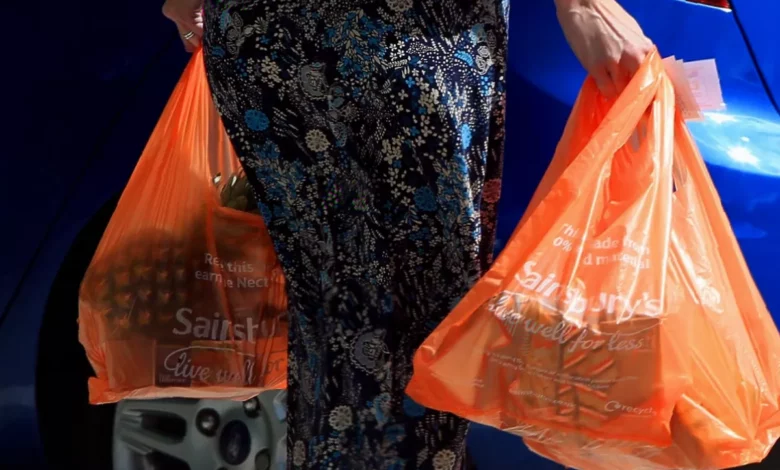
Sainsbury’s is poised to place consumer sentiment and the trajectory of food inflation at the heart of its first-quarter trading update next week, as investors look for signs of how the supermarket is navigating an increasingly uncertain economic landscape. The retailer will release the figures on Tuesday, June 30, after reporting a “positive start” to its financial year in April, when grocery volumes were growing ahead of the wider UK market. But the update comes against a backdrop of fragile confidence, heightened geopolitical risk and lingering cost pressures that are expected to shape both spending habits and pricing across the grocery sector.
Competitor Tesco has already flagged the impact of the Middle East conflict on shopper mood, with bosses last week acknowledging that sentiment has been affected even though the war has not yet translated into higher prices. Tesco’s own first-quarter trading statement showed strong momentum – with market share growing ahead of key rivals, robust volume growth across the UK, Ireland and Central Europe, and continued emphasis on value through Aldi Price Match and Clubcard Prices. Yet the cautious consumer backdrop remains a concern. A PwC consumer sentiment survey conducted in early July recorded the lowest confidence level of the year, marking the biggest quarterly decline since spring 2022, with nearly three-quarters of respondents expecting to cut spending in the following three months. The EY UK Future Consumer Index paints a slightly more stabilising picture, suggesting that concerns about affordability may have peaked and are beginning to ease. For investors, the question is whether Sainsbury’s can maintain its own sales growth when even market leaders are seeing a slowdown in revenue expansion.
Sainsbury’s has sought to differentiate itself through a relentless focus on price and value, with initiatives such as Nectar Prices and Aldi Price Match now featuring in 98% of big shopping baskets. The company reported strong sustained grocery momentum, achieving a second consecutive year of volume growth and consistent net switching gains that have increased its market share. For the full financial year, it expects retail underlying operating profit to land between £1.01bn and £1.06bn, and has pledged to return at least £250m to shareholders following the sale of Sainsbury’s Bank’s core banking business. However, the group’s overexposure to general merchandise through Argos remains a drag: Argos sales have declined against a strong comparative period, hit particularly hard by weaker demand for consumer electronics, including gaming. Aarin Chiekrie, equity analyst at Hargreaves Lansdown, noted that while the UK food market is proving resilient and Sainsbury’s is executing well on its “food first” plan, the Argos exposure is likely to hold back progress. Shore Capital analyst Clive Black has forecast first-quarter grocery sales growth of around 2.75% to 3.25% for Sainsbury’s, and would be surprised if the group adjusted its full-year profit guidance at this stage. Citi data shows Sainsbury’s has outperformed the wider market over the past four weeks, but the group’s shares have slipped steadily in recent months, falling to their lowest level since last September amid worries about the uncertain consumer backdrop.
Inflation outlook and the threat from the Middle East
Food inflation – the other key focus for the investor update – has been steadily easing, with the Office for National Statistics reporting a rate of 2.2% for food and non-alcoholic beverages in April. That marks a dramatic fall from the recent high of 19.2% recorded in March 2023. Yet the industry is far from declaring victory. IGD, the industry body for grocery distribution, has warned that food inflation could still peak at around 5.5% later this year as more cost increases feed through to suppliers. More recent IGD predictions suggest the rate will hover between 0.3% and 2.3% by the end of 2024, with food inflation not expected to turn negative until at least 2028. Industry leaders have indicated that sustained margin pressure and ongoing uncertainty for shoppers could extend well into the decade.
The conflict in the Middle East is central to those concerns. The British Retail Consortium has warned that the war will add to existing inflationary pressures, potentially disrupting trade flows of oil, gas and fertiliser. Such disruption would push up costs for energy and transport, while also raising prices for essential agricultural inputs such as urea. A survey found that 80% of UK consumers are worried the conflict will make food more expensive. While overall food inflation is easing, specific items have already seen sharp price jumps: olive oil is up 41.7%, and cocoa and powdered chocolate have risen by 19.6%. Fuel prices, which spiked after the conflict began, have started to cool, offering some relief. But the combination of geopolitical tension, climate shocks and new post-Brexit regulatory costs – including border control checks – is identified as a significant driver of future food inflation. For now, the ONS data shows food inflation holding steady, but the risks remain firmly to the upside.
Consumer spending behaviour is expected to remain uneven. Affluent shoppers are likely to drive growth in essentials and some discretionary categories, but overall retail spending is likely to be curbed by fragile confidence and rising unemployment concerns. Fraser McKevitt, head of retail and consumer insight at Worldpanel by Numerator, noted that retailers are having to “compete hard for that summer shop”. Against that backdrop, Sainsbury’s ability to hold its course on price, value and grocery volumes will be closely scrutinised when it updates the market next Tuesday. The tepid response from shareholders in April – when profits were forecast to remain roughly steady – means the group will need to demonstrate not just resilience, but a clear path to growth in a climate where consumer confidence is still in negative territory and the cost of living, while easing, has not fully lifted.