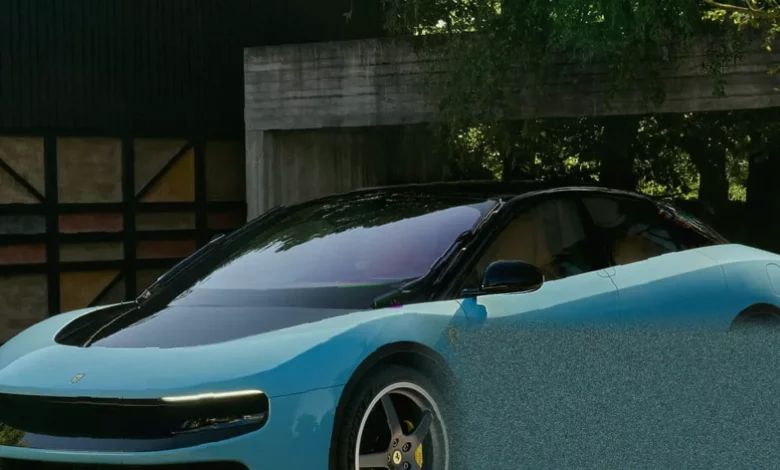
Ferrari’s first all-electric car, the Luce, has triggered a fierce backlash from investors, critics and traditionalists – despite a price tag of €550,000 (£476,000) and blistering performance figures that include a 0-100km/h sprint of 2.5 seconds from its four electric motors. Pronounced “loo-chey” – Italian for “light” – the model was unveiled with unusual fanfare, including being shown to the Italian president and the pope. Yet the reception has been anything but reverent.
Investor backlash and industry criticism
Ferrari shares plummeted in the wake of the launch. In Milan they fell by approximately 8–8.5 per cent, while US-listed shares dropped around 5.3 per cent, wiping an estimated $4.3–$5 billion from the company’s market value. Analysts pointed to concerns about brand dilution, the risks of electric-vehicle expansion and profitability pressures. Some described the design as an “aesthetic disappointment” and suggested the company was “lost in translation” with its new strategy.
The criticism was not confined to the trading floor. Luca di Montezemolo, the former Ferrari chairman, publicly stated that the car “risks destroying the myth” of the marque and implied the prancing horse logo should be removed. Matteo Salvini, Italy’s Deputy Prime Minister and Transport Minister, questioned what Enzo Ferrari himself would have thought and said the car’s aesthetics “speak for themselves”. Alpine advisor Flavio Briatore also made critical remarks about the design.
Technical tour de force
On paper, the Luce is a formidable machine. It is powered by four electric motors – one per wheel – delivering a combined output of approximately 1,035 to 1,050 horsepower. The 0-100km/h time of 2.5 seconds is matched by a top speed of around 193 mph. A 122 kWh battery pack using an 800-volt architecture provides a claimed WLTP range of up to 330 miles.
The car is also a significant departure in terms of layout and seating. It is Ferrari’s first five-seater and only its second four-door model, a shift from the two-door sports car lineage that has defined the brand for decades. Ferrari has described it as the “most comfortable Ferrari ever”. To address the loss of the visceral engine note, engineers have developed a sound system that amplifies mechanical vibrations from the powertrain, creating an “electric Ferrari roar” intended to replicate the emotional connection of combustion engines.
Design controversy: an Apple-esque departure
It is the styling, however, that has generated the most heat. The Luce was designed in collaboration with LoveFrom, the creative collective founded by former Apple design chief Jony Ive and his partner Marc Newson. The result is a minimalist, “Apple-esque” aesthetic with a “shell-like form” and a strong focus on aerodynamics. The car boasts the lowest drag coefficient in Ferrari history, achieved through features such as tunnel-like front and rear spoilers, active grille shutters, and a windscreen that extends all the way to the car’s nose.
The exterior has been widely criticised for being unlike any previous Ferrari. Comparisons have been drawn to mass-market electric vehicles such as the Nissan Leaf, and even to concepts from the 1990s. The smooth, sculpted body with rounded edges, a shell-like windscreen and a pastel blue launch colour have been particularly contentious. Some critics have described it as a “soulless robotaxi” or an “aesthetic and technological insult”.
The interior has been more favourably received. It features a three-spoke steering wheel, a movable central screen and tactile controls for functions such as ventilation, eschewing the large touchscreens common in many modern EVs. Ferrari has emphasised the use of tactile materials and a blend of physical buttons and digital displays.
Ferrari’s electrification gamble
The Luce appears aimed at a new demographic – tech enthusiasts and wealthy families, particularly in markets such as China, where EVs are popular and differently taxed. Ferrari CEO Benedetto Vigna has stressed the company’s ability to “dare and to take on the challenge of new technologies”.
Nevertheless, the company has adjusted its electrification targets. By 2030 it now plans for 40 per cent of its lineup to be internal combustion engine models, 40 per cent hybrids and 20 per cent fully electric – a revision from earlier, more ambitious projections. The strategy is a high-risk, high-reward bet on maintaining exclusivity while embracing electrification.
Ferrari has a history of introducing models that initially drew scepticism only to later prove successful – the all-wheel-drive FF and the Purosangue SUV being two notable examples. That precedent offers a potential path for the Luce, though the financial market’s reaction underscores investor unease about brand identity and the long-term viability of high-end EVs. Despite the backlash, Ferrari reported strong first-quarter earnings that exceeded expectations, with an order book stretching to late 2027, and has already absorbed US import tariffs as it navigates a significant model transition.