Readers following Manchester United’s search for a permanent manager may be required to grant consent before they can access the full breadth of reports and data, because the search feature on many news sites relies on Google Custom Search, a tool that uses cookies or similar technologies. This consent mechanism is not merely a legal formality; it is the gateway through which users can explore the wealth of information now available about Michael Carrick’s remarkable interim spell and his growing case for the job.
Why consent is necessary for the search to function
Google Custom Search, the engine powering this website’s search function, cannot load unless the user explicitly clicks “Allow and Continue”. Without that consent, the script that delivers search results remains blocked, leaving the reader unable to query the site’s archive. The requirement stems from data-protection rules that treat the cookies used by Google’s service as non-essential – meaning they do not qualify for the exemption that covers, say, a session cookie needed to keep you logged in. Because the search box is an added feature rather than a core part of delivering the page, the law demands an opt-in before the code runs. For a user trying to find the latest on Carrick’s candidacy, this step is the first hurdle, but it also serves as a reminder that every piece of information retrieved comes with a privacy trade-off.
Cookies: what they are and why Google Search uses them
The cookies deployed by Google Custom Search are typically used to personalise results, remember user preferences, and track usage patterns. They can be first-party cookies set by the search widget itself or third-party cookies that connect to Google’s broader advertising and analytics ecosystem. In practical terms, when a reader types “Michael Carrick permanent manager” into the search box, a cookie may record that query to improve future suggestions or to help Google measure how its service is performing. The same tracking mechanisms that make the search experience seamless also raise the privacy considerations that require a clear consent request. Without this explanation, many users would not realise that their interaction with a simple search bar generates data that extends beyond the immediate query.
The privacy policy: where the full detail lives
The website’s privacy policy provides the legal and technical backdrop to this consent process. It explains which cookies are placed, for how long, and what control the user retains. It also outlines how data collected through Google Custom Search may be shared with third parties, including Google itself, and whether that data is anonymised or linked to individual profiles. Readers who want to understand the exact implications of clicking “Allow and Continue” are directed to that policy, which serves as the definitive source for how their information is handled. In the context of the Carrick story, the privacy policy is a reference point that sits alongside the editorial coverage – a necessary companion for anyone who values both information and data rights.
Carrick’s interim record and the shift in Manchester United’s plans
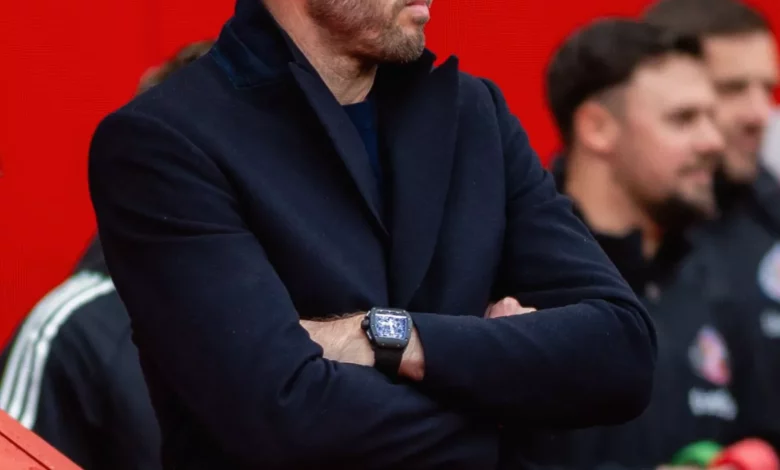
Now, with consent granted, the substance of the story becomes clear. Michael Carrick took over as interim manager in January 2026 after Rúben Amorim’s shambolic tenure ended. In 15 matches, he has delivered 10 wins and secured Champions League qualification, with his side finishing third in the Premier League. The turnaround has been startling, particularly because it came against a fixture list that included victories over Arsenal, Manchester City, Liverpool, Aston Villa and Chelsea – Premier League powerhouses that had previously exposed United’s weaknesses. Carrick’s tactical approach, a compact 4‑4‑2 emphasising defensive solidity, effective pressing and counter-attacking threat, has won both results and admirers. His midfield pairing of Kobbie Mainoo and Casemiro has addressed what was described as a “weak underbelly” in the team’s previous setup, providing the balance that eluded his predecessors.
This success has forced INEOS, the club’s ownership group, to reconsider its original blueprint. The plan had been to appoint a high-profile external manager in the summer and commit to a long-term project. Names such as Thomas Tuchel, Julian Nagelsmann, Mauricio Pochettino, Unai Emery, Luis Enrique, Diego Simeone and Gareth Southgate were all discussed at various points, but many have since committed to other roles – Tuchel, for example, is now with the England national team, and Ancelotti has agreed a deal with Brazil. Bournemouth’s Andoni Iraola, once considered a strong alternative, has been removed from the shortlist entirely. Carrick’s performances have made him the clear favourite and frontrunner. Reports indicate an “unanimous agreement” among key decision-makers at Manchester United about his suitability, with formal discussions expected before the team’s final league game on May 24th. No announcement is imminent; the club is not rushing, and a decision is likely at the earliest before the end of the season.
Carrick’s background: from player to coach to manager
Michael Carrick is no novice at Old Trafford. He played 464 times for the club between 2006 and 2018, scoring 24 goals and captaining the side in his final season. His trophy cabinet includes five Premier League titles, the 2008 Champions League, the FA Cup and two League Cups. After retiring he joined the first-team coaching staff, serving under José Mourinho and Ole Gunnar Solskjær. He had a brief caretaker spell in November 2021, following Solskjær’s dismissal, and went unbeaten in three matches. That experience paved the way for his first permanent senior managerial role at Middlesbrough, where he took charge in October 2022 and remained until June 2025, accumulating 75 wins in 154 games. His playing reputation – a “footballer’s footballer” known for passing, composure and tactical discipline – has translated into a coaching style defined by calm leadership, tactical clarity and trust in technical players. Those qualities have been on display during his interim stint, and they have earned him support from key figures: Jason Wilcox, the director of football, has said Carrick is “ready to lead our talented and determined group of players”, while Sir Jim Ratcliffe, the co-owner, will have the decisive say. Sir Alex Ferguson is reported to hold Carrick in high regard, a symbolic endorsement that carries weight inside the club.
The wider managerial landscape at Manchester United has been turbulent. Ole Gunnar Solskjær was appointed interim in December 2018 and later given the job permanently, improving form and playing style but failing to win a major trophy. Ralf Rangnick followed as interim in November 2021, with a plan to move into a consultancy role; his spell was mixed, and he lamented that the team needed “open heart surgery”. The consultancy role was eventually scrapped. Erik ten Hag arrived in April 2022 and lasted until October 2024, winning the EFL Cup and FA Cup but also enduring heavy defeats and criticism over a lack of a distinguishable philosophy. Amorim’s tenure, which preceded Carrick’s interim spell, was described as shambolic. Against that backdrop, Carrick’s calm authority and tactical coherence have stood out. His ability to secure Champions League qualification against such a punishing run of opponents has, for now, made him the man the club appears to be settling on.