On a snow-delayed big air ramp in Milan Cortina, the narrative of the Winter Olympics was written in both triumph and agonising near-miss, as athletes overcame profound adversity only for medals to be decided by fractions of points and the failure of ligaments.
Historic Bronze Sealed by Injury-Defying Jump
Flora Tabanelli secured Italy’s first Olympic medal in Freestyle Skiing since 1992, winning bronze in the women’s big air by landing a left double 1620 for 94.25 points on her final jump. The achievement was historic, but the context was medical: Tabanelli tore the anterior cruciate ligament in her right knee during training in Austria in November 2025 and chose rehabilitation over surgery to compete at her home Games. The reigning Freeski Big Air World Cup champion, who also won two gold medals at the 2024 Youth Olympics, saw her final leap push Britain’s Kirsty Muir out of the medal positions.
For Kirsty Muir, the 21-year-old from Aberdeen, it was a second fourth-place finish in eight days, having missed the slopestyle podium by 0.41 points. In the big air final, delayed 75 minutes by heavy snow and high winds, her own superb left double 1620 in the second run scored 93.00 and temporarily put her in second place. After being bumped to third by China’s Eileen Gu, Tabanelli’s jump ultimately relegated Muir to fourth, 3.5 points from bronze. Muir fell on her final attempt while trying a more difficult double 1440 with a tailgrab. “It was a little bit bittersweet,” Muir said. “I gave it my all and I’m taking that with me.”
Muir’s performance nonetheless marked an improvement from her Olympic debut in Beijing 2022, where she finished fifth in big air and eighth in slopestyle as the youngest British team member. Her path to these Games involved significant injury hurdles, including surgery for a torn ACL in January 2024 followed by shoulder surgery and a 13-month recovery. She returned to win her first X Games gold in slopestyle and a big air silver shortly before the Olympics. After her slopestyle disappointment, she used “ice karting” as a mental reset before the big air event.
Oldham’s Dominant Gold and Gu’s Record-Tying Silver
The gold medal was claimed with authority by Canada’s Megan Oldham, who led the big air competition from start to finish, posting a winning two-run total of 180.75 points. This was Oldham’s second medal of the Games, adding to a slopestyle bronze, making her the first Canadian woman to win multiple freestyle skiing medals at a single Olympics. She achieved this despite a concussion in November that caused her to miss four weeks of training. Her victory is Canada’s first Olympic gold in any freeski event since Pyeongchang 2018 and the nation’s first medal in women’s freeski big air.
Eileen Gu of China took the silver medal with 179.00 points, which brought her total Olympic freestyle skiing medal count to five from just five competition starts, tying an all-time record. The defending big air champion from Beijing 2022, where she became the first freestyle skier to win three medals at a single Games, expressed frustration with the schedule, stating organisers were “punishing excellence” by making the big air final overlap with training for her favoured halfpipe event. The final field was reduced after Swiss skiers Mathilde Gremaud, with a hip injury, and Anouk Andraska, who suffered a wrist crash in training, were forced to withdraw.
Ryding’s Unconventional Journey Reaches Its End
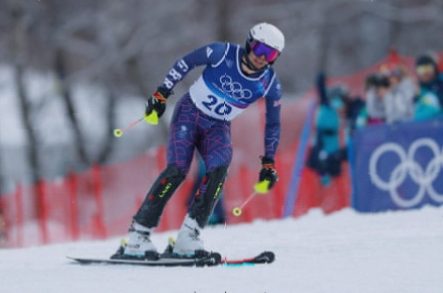
On the alpine slopes, Britain’s most successful skier, Dave Ryding, brought down the curtain on a remarkable career with a 17th-place finish in the men’s slalom at Bormio, his fifth Olympic appearance. The 39-year-old immediately announced his retirement. “I said I would ski race until my legs fall off and I think they pretty much have,” Ryding said. “I gave it my all until the last gate.”
Ryding’s legacy is that of a trailblazer who emerged from an unlikely background. He began skiing on a 50-metre dry slope in Pendle, Lancashire, where sheep would sometimes disrupt training, the son of a market trader and a hairdresser. He defied the odds to become the first Briton to win a World Cup skiing event, taking the Kitzbühel slalom in 2022, and achieved seven World Cup podium finishes. His career unfolded against a backdrop of financial strain for British skiing after UK Sport completely cut funding for alpine skiing in 2022. Although funding was partially restored, with Ryding receiving £80,000 annually, he chose to use it to support teammates’ travel. The cuts had led to the cancellation of the Europa Cup programme for the 2022-23 season, with GB Snowsport’s World Class Programme remaining heavily reliant on UK Sport investment targeted at “podium competitive” disciplines.
Now retired, Ryding aims to mentor the next generation, citing British success at Youth Olympic and world junior level. “I would put a bit of money on it saying that it is possible,” he said. Organisations like the Skiers Trust of Great Britain, which provides financial aid to young snowsport athletes aged 16-25, will be key to such efforts. His immediate personal goal is to lower his parkrun personal best of 16 minutes 54 seconds. “For sure, I don’t think I’ll get a dad bod too soon,” he said with a smile.
Meillard’s Golden Triumph Amid Slalom Carnage
The men’s slalom event provided its own drama in treacherous conditions of heavy snowfall, high winds, and low visibility, which saw only 46 of the 96 starters complete the first run. Switzerland’s Loïc Meillard emerged victorious to become his country’s first male Olympic slalom champion since 1948, securing his third medal of these Games after a giant slalom bronze and a team combined silver.
Heartbreak befell the first-run leader, Norway’s Atle Lie McGrath, who straddled a gate in his second run. In an emotional reaction, he threw his ski poles and retreated into the woods. McGrath had been seeking redemption after a disappointing Beijing Games and following the recent death of his grandfather. The podium was completed by Austria’s Fabio Gstrein with silver and Norway’s Henrik Kristoffersen with bronze. Brazil’s Lucas Pinheiro Braathen, the giant slalom gold medallist, crashed out in the first run.
In curling, Britain’s teams faced setbacks in their semi-final quests. The men lost 7-6 to Norway, while the women were defeated 10-6 by Switzerland.