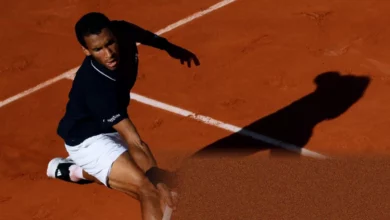
Six months after losing his father, Zachary Svajda has not only found his way back to the tennis court — he stands one set away from a Grand Slam fourth round for the first time. The 23-year-old Californian, playing on his French Open debut, leads the 25th seed Francisco Cerúndolo by two sets to love on Court 14, 6-3, 6-4, and holds a break advantage in the third at 2-1. It is the latest chapter in a remarkable resurgence few could have foreseen when Svajda put his racket down last autumn and struggled to pick it up again.
Svajda on the brink
Svajda arrived in Paris having never won a main-draw Grand Slam match. He has since beaten Adam Walton in the second round and now has Cerúndolo — the elder brother of the man who stunned Jannik Sinner — on the ropes. His father’s death left him unable to train for weeks, but Svajda has channelled that grief into a run that has already lifted him 143 places in the rankings over the past year and into the world’s top 100. On a surface he admits is “still very new” to him, the American has shown a composure that belies his lack of experience on the biggest stage.
Cerúndolo, meanwhile, has been overshadowed twice: first by his younger brother Juan Manuel’s extraordinary victory over the world No. 1, and now by Svajda’s relentless hitting. If Svajda closes out the third set, he will become the last American man standing in the top half of the draw — a section suddenly full of opportunity after the exits of Jannik Sinner, Novak Djokovic, Ben Shelton and Daniil Medvedev.
Osaka battles through
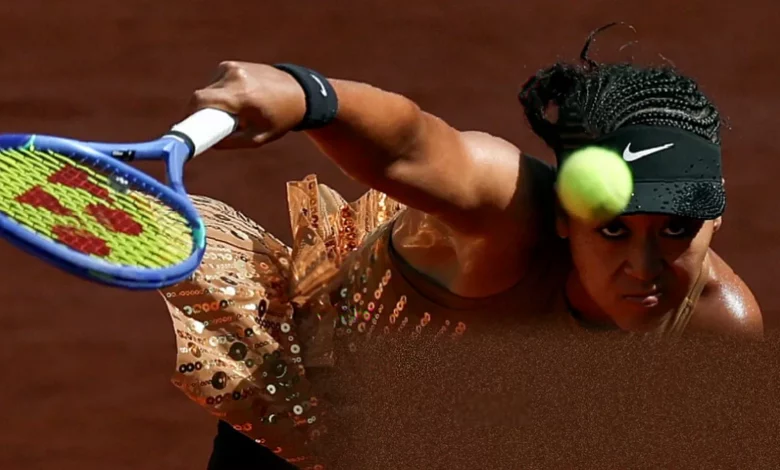
On Court Suzanne-Lenglen, the four-time major champion Naomi Osaka is fighting to reach the fourth round at Roland Garros for the first time in her career. She has taken the opening set against the 18-year-old American Iva Jovic, winning a tense tie-break 7-3 after a see-saw first set in which both players traded breaks. Osaka, a former world No. 1, had to save her best tennis for the biggest moments: after Jovic saved two set points at 5-6, Osaka regrouped to dominate the breaker, accelerating to a 4-1 lead with her fastest serve of the match and eventually drilling a forehand winner down the line to close it out.
The match had begun with Jovic breaking early for a 3-2 lead, but Osaka’s power and experience gradually took hold. At 4-4 she broke back, and though she missed two more set points in the following game, she never allowed the teenager to dictate the flow. The second set is under way with Osaka ahead 1-1 after an early break of serve. For a player who has struggled on clay in recent years, a fourth-round appearance would be a significant milestone.
A men’s draw wide open
The upheaval in the men’s singles has been one of the defining stories of this year’s tournament. World No. 1 Jannik Sinner, leading Juan Manuel Cerúndolo by two sets and a break, collapsed to severe cramping and heat exhaustion, ultimately losing 3-6, 2-6, 7-5, 6-1, 6-1. Sinner later said he “woke up not feeling so well”. The defeat, considered one of the biggest upsets in Roland Garros history, leaves the top half without a single top-ten seed. Novak Djokovic, 39, was eliminated the same evening by the 19-year-old Brazilian João Fonseca, who came back from two sets down to win 4-6, 4-6, 6-3, 7-5, 7-5. Fonseca became the first teenager to beat Djokovic in a Grand Slam and the first to recover from a two-set deficit against him at the French Open since 1989. Djokovic was blunt when asked if he would return, replying only, “I don’t know.”
With Carlos Alcaraz withdrawing before the tournament and fifth seed Ben Shelton losing in straight sets to the Belgian Raphael Collignon, the men’s draw guarantees a first-time Grand Slam champion. The highest-ranked man remaining in action on day seven is the fourth seed Félix Auger-Aliassime, who faces Brandon Nakashima on Court Philippe-Chatrier later. Auger-Aliassime has already come from a set down in each of his matches and holds an Olympic bronze medal on the very same court from Paris 2024.
Another teenager, the French wildcard Moïse Kouamé, 17, will meet Alejandro Tabilo on Lenglen. Kouamé is the youngest man to reach a Grand Slam third round since Rafael Nadal in 2003 and the youngest at Roland Garros since Michael Chang in 1988. He beat former champion Marin Čilić in the first round and has quickly become the home crowd’s favourite.
Women’s contenders and the schedule
The women’s draw remains packed with heavy hitters. The reigning champion Coco Gauff, who wears custom New Balance dresses for the tournament, faces 28th seed Anastasia Potapova on Chatrier. Gauff is the only active woman to have won junior and professional singles titles, as well as singles and doubles titles, at the same Grand Slam. World No. 1 Aryna Sabalenka takes on former semi-finalist Daria Kasatkina; Sabalenka has been playing in striking necklaces inspired by the clay. Madison Keys, seeded 19th, meets the Canadian teenager Victoria Mboko, who withdrew from the women’s doubles alongside Alexandra Eala — possibly to conserve energy for singles, given she has been playing with her arm and shoulder taped.
Other third-round matches include Amanda Anisimova against France’s Diane Parry, and Maria Sakkari, who cruised through the first set against Poland’s Maja Chwalinska — the same qualifier who stunned Olympic champion Zheng Qinwen in the first round. The day’s play began under clear skies in Paris, with temperatures already touching 30°C at midday, a factor that has already taken its toll on several players. On Court 7, the 25th seed Diana Shnaider trails the Ukrainian qualifier Oleksandra Oliynykova 4-2 in the first set. On Court Simonne-Mathieu, Matteo Berrettini and Francisco Comesaña are still to take the court, as are Frances Tiafoe and Jaime Faria. The 10th seed Flavio Cobolli opened the proceedings on Chatrier against the American Learner Tien, with Cobolli leading 5-2 in the first set when the day’s early matches began to take shape.