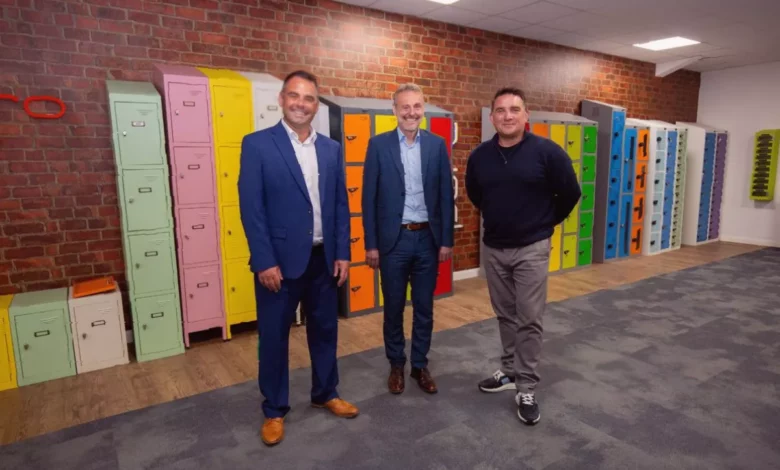
Locit, the Flintshire-based steel locker manufacturer, has secured a £1m loan from the Development Bank of Wales to support its continued expansion and create up to four new jobs. The funding, drawn from the bank’s Wales Flexible Investment Fund, will also safeguard more than 60 existing roles at the company’s Deeside Industrial Estate facility.
Loan provides working capital for major contracts
The investment provides working capital to help Locit deliver large-scale contracts with major clients, while also allowing the business to invest in new equipment and automation. Chris Dhenin, senior investment executive for the Wales Flexible Investment Fund at the Development Bank of Wales, said: “Locit is a strong example of a Welsh manufacturing business achieving rapid growth by combining experienced leadership, modern production capability and a clear understanding of market demand. Richard and the team have built an impressive business in a short period of time, securing major contracts and creating high-quality employment opportunities in North Wales. Our investment will help the company continue that trajectory, supporting further growth, safeguarding jobs and strengthening its position as a key manufacturer in this sector.”
The Development Bank of Wales offers loans from £1,000 to £10 million and equity investments, with the Wales Flexible Investment Fund providing terms of up to 15 years and financing ranging from £25,000 to £10 million via loans, mezzanine finance and equity. Eligibility criteria require businesses to be based in Wales or willing to relocate.
Rapid growth and blue-chip clients
Established in 2022 by managing director Richard Williams alongside investment from Arete Capital Partners LLP, Locit has grown from a standing start into one of the UK’s fastest growing steel locker manufacturers. The company delivered revenues of around £8.8 million in 2025 and now operates from a 67,000 sq ft manufacturing facility on Deeside Industrial Estate, a key contributor to the North Wales economy that is home to a diverse mix of manufacturing, engineering and renewable energy firms and undergoing developments including the creation of an Advanced Manufacturing Investment Zone.
Locit’s client base includes high-profile names such as The Gym Group, Pure Gym, Marks & Spencer, Primark and TK Maxx. The business also supplies replacement parts to companies with existing lockers, creating additional recurring revenue streams.
Mr Williams brings significant industry experience, having previously built Lion Steel into the UK’s largest locker manufacturer before selling the business in 2016. He founded Locit after identifying a gap in the market for a modern, high-capacity manufacturer capable of meeting demand at scale. Separately, Lion Steel Equipment Limited – the company he previously ran – pleaded guilty to corporate manslaughter following a worker’s death in 2008, and charges against three directors, including Richard Vaughan Williams, were either dropped or resulted in acquittal. Mr Williams resigned as a director of Lion Steel Equipment Limited in October 2020.
Arete Capital Partners LLP, Locit’s initial investor, is described as a relationship-led, multi-family office that invests in entrepreneurial companies, offering flexible equity solutions with a focus on healthtech, medtech, AI and machine learning. The firm previously acquired all assets of Prefect Equipment, which was relaunched as Secure Locker Rental Ltd.
Locker rental division targets schools
The loan will also drive growth in Locit’s locker rental division, which the company entered through its acquisition of Secure Locker Rentals in December 2023. This move has enabled Locit to break into the school locker market, where it already has more than 54,000 compartments installed across the UK. The company sees further opportunities linked to mobile phone storage solutions for schools.
Secure Locker Rentals itself rents approximately 55,000 lockers to over 150 schools across the UK, operating on a “free lockers” model where schools receive lockers at no charge and can choose from various management and servicing options. The company aims for 20% growth in its first year under Locit’s ownership. Its offering includes the LoQit electronic locking system, which provides features such as app-based access, remote management and integration with existing school IT systems.
The UK steel locker market is valued at approximately £70 million, while the broader global locker market is projected to reach USD 33.3 billion by 2032, expanding at a compound annual growth rate of 9.53% from 2024 to 2032. Demand is being driven by the need for secure storage solutions and the rise of smart lockers, with Europe – particularly the UK – leading the market. Key trends include eco-friendly materials, flexible and modular designs, antimicrobial features and bold aesthetics. Metal lockers remain dominant for their robustness, while plastic lockers are gaining traction in educational and recreational sectors. The educational institutions segment is expected to hold a 33.5% share of the locker market in 2026.
Future plans: automation, sustainability and skills
The funding will allow Locit to invest further in new equipment and automation, building on its existing computerised production systems designed to improve output and quality. The company is certified carbon neutral and is actively working towards net-zero manufacturing, aiming to reduce factory emissions by a further 50% this year. Sustainability is a growing priority in UK manufacturing, with companies investing in green technologies to lower both environmental impact and operating costs. Research indicates that automation in British factories is linked to higher overall employment, as it expands output and changes the nature of work, and is seen as a solution to labour shortages and skills gaps.
Mr Williams emphasised the company’s focus on its workforce: “We’ve built Locit from the ground up to be a modern, forward-looking manufacturing business, investing in automation, sustainability and, most importantly, our people. This funding gives us the platform to continue that growth. It allows us to invest in new equipment, support the delivery of major contracts and create further opportunities within the business, while safeguarding the jobs we’ve worked hard to build. We are proud of the team we’ve created here in Deeside. Our focus has always been on developing people, giving them opportunities to grow and making sure they feel part of the journey. That culture is a big part of our success and will remain central as we scale.”
The company plans to continue investing in training and upskilling existing employees while creating new opportunities for local people, having built its business around a supportive, team-oriented culture that emphasises internal promotion and skill development from within.