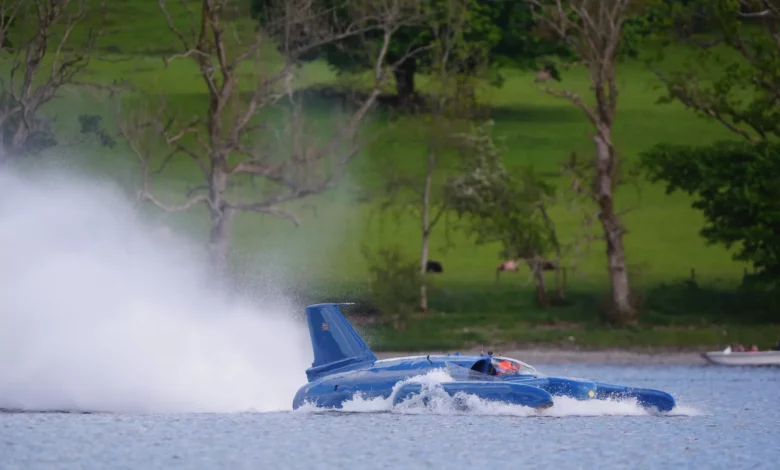
Bluebird K7, the jet-powered hydroplane that killed Donald Campbell during his quest to break 300mph on water, is back on Coniston Water for the first time since the 1967 tragedy.
The Return
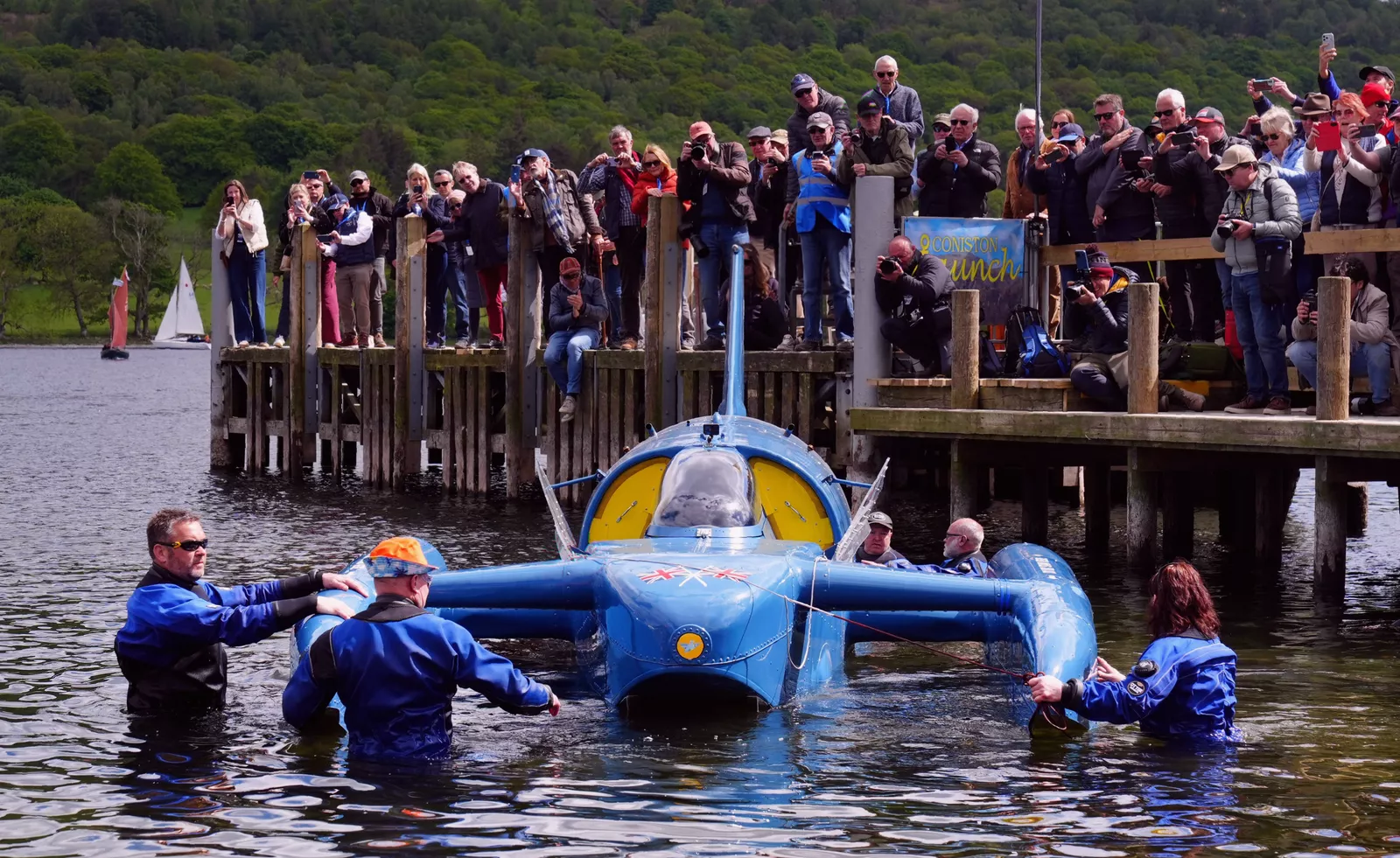
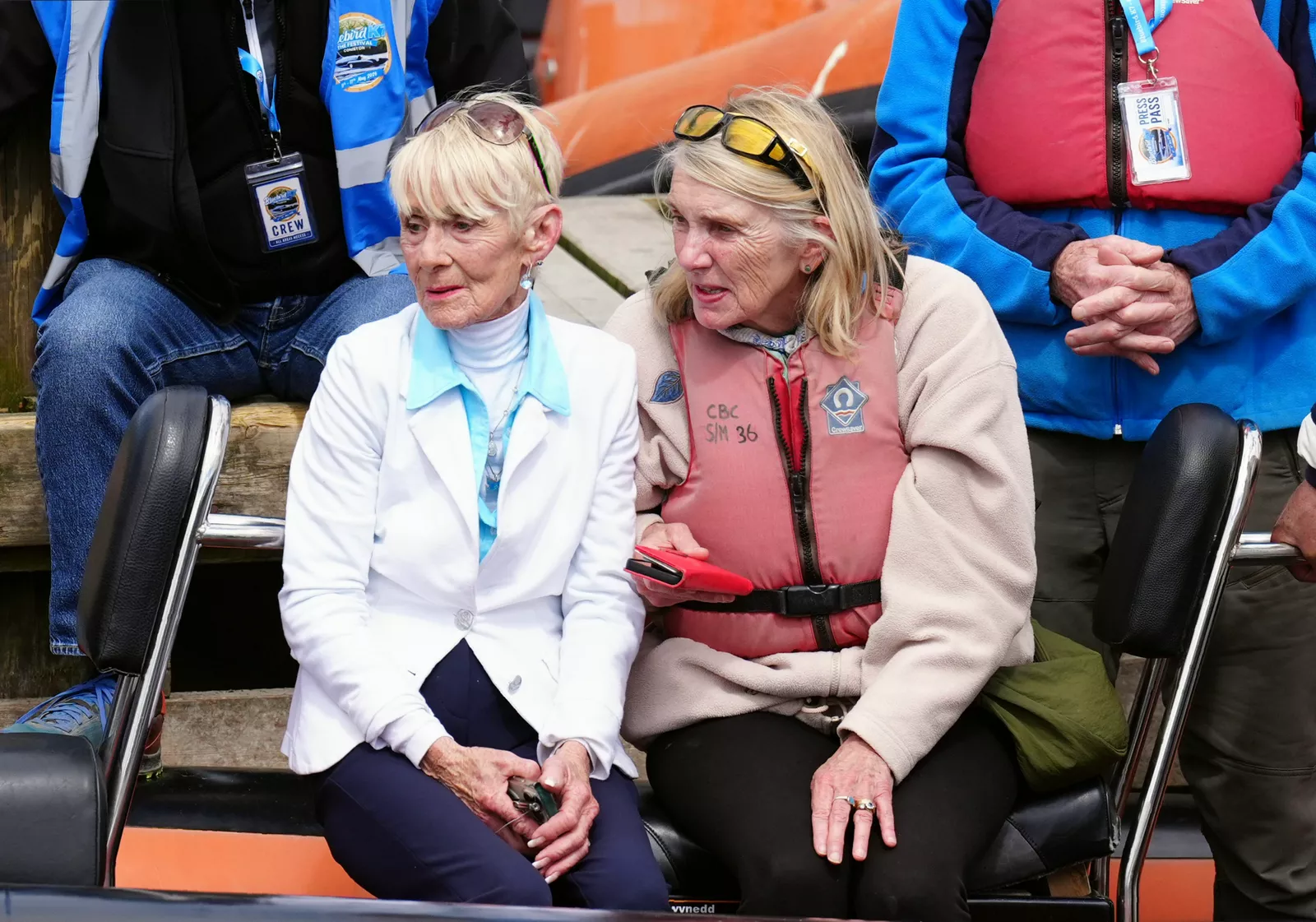
The restored vessel took to the Lake District lake on Monday, the opening day of Bluebird K7 – The Festival, a week-long event running until Sunday that marks the 70th anniversary of Campbell’s first world water speed record on the same stretch of water. Onlookers lining the lakeside applauded and cheered as the hydroplane was piloted onto the water by Australian David Warby, son of current world water speed record holder Ken Warby. Among the crowds was Campbell’s daughter, Gina Campbell.
According to the Ruskin Museum in Coniston, which now houses the Bluebird K7, the craft will undertake demonstration runs every day of the festival, subject to weather conditions. The runs are expected to reach speeds of up to 150mph, made possible by a special exemption from the lake’s usual 10mph speed limit.
The Fatal Crash and Recovery
The Bluebird K7 was a revolutionary craft — the first successful jet-powered hydroplane, designed by Norris Brothers. It was built with a steel frame and aluminium body, initially powered by a Metropolitan-Vickers Beryl jet engine, later upgraded to a more powerful Bristol Siddeley Orpheus engine for Campbell’s final record attempt. The boat’s design speed was 250mph, though it was capable of significantly higher velocities.
Donald Campbell, the son of land and water speed record legend Sir Malcolm Campbell, was himself a record-breaking driver in the 1950s and 1960s. He set seven world water speed records in the Bluebird K7 between 1955 and 1964, and remains the only person to have held both world land and water speed records in the same year — 1964, when his jet car Bluebird CN7 reached 403.10mph on land and his hydroplane set a water mark of 276.33mph.
On 4 January 1967, Campbell was attempting to break his own water speed record and become the first to exceed 300mph on Coniston Water. During his return run, the Bluebird K7 became unstable, lifted off the water, somersaulted and disintegrated on impact. Campbell was killed instantly. His lucky teddy bear mascot, Mr Whoppit, was in the cockpit during the crash and remains associated with the vessel.
The wreckage of the Bluebird K7, along with Campbell’s body — his race suit still intact — was recovered from the lake in 2001 by engineer Bill Smith. Smith then led a decades-long restoration effort known as the Bluebird Project, working with a team of volunteers in North Shields. The reconstructed craft, fitted with a new jet engine, first returned to the water in August 2018 for testing on Loch Fad in Scotland, where it reached speeds of about 150mph. It is now permanently housed by the Ruskin Museum in Coniston.
The Festival
Bluebird K7 – The Festival is designed to celebrate the 70th anniversary of Donald Campbell’s first world water speed record, set on Coniston Water on 19 September 1956, when he reached 225.63mph. Campbell broke eight world speed records on water and on land in total, and his father Sir Malcolm Campbell had set a water speed record of 141.74mph on the same lake in 1939 in the earlier hydroplane Bluebird K4.
Visitors to the festival will have the chance to see the Bluebird K7 run daily, piloted by David Warby. His father, Ken Warby, holds the current world water speed record of 317.58mph, set in 1978, which remains unbeaten. David Warby’s involvement continues a family tradition of water speed record attempts, while Gina Campbell’s presence at the lakeside offered a poignant link to the man who lost his life chasing 300mph on that same stretch of water nearly six decades ago.