£23.7m awarded to biotech and AI chemistry projects to convert research into high-calibre jobs

Liverpool has secured £23.7 million in government funding for two cutting-edge innovation projects, in a move designed to turn academic research into high-growth businesses and jobs. The money comes from the Local Innovation Partnership Fund (LIPF), the £500 million national programme running from 2026 to 2031 that backs high‑potential clusters linking universities, industry and civic leaders. Today’s announcement marks the start of the city region’s Innovation Investment Fortnight, a two‑week showcase of more than £2 billion in investment opportunities across 25-plus events.
The £23.7 million represents the first tranche of the £30 million allocated to Liverpool City Region by the government last July. Under the LIPF’s “earmarked” strand, ten regions – including Greater Manchester, the West Midlands and Glasgow City region – each received at least £30 million, and the Technology Secretary Liz Kendall has confirmed plans to hand future control of the fund in England to local leaders.
AIM‑HI: creating a chemical super cluster
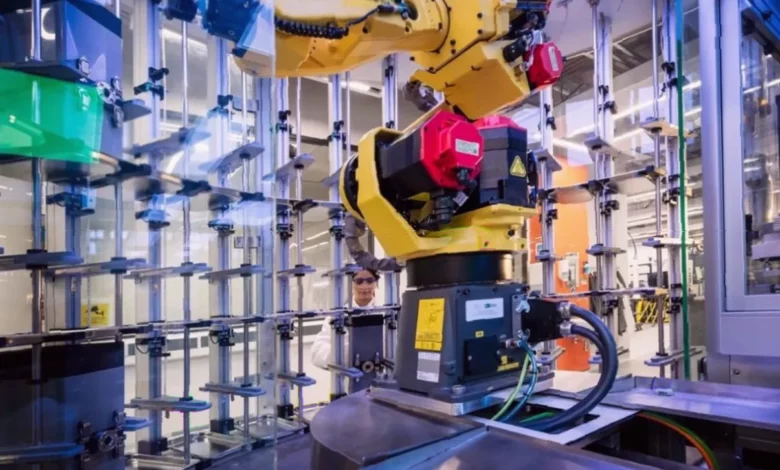
The largest single award, £15 million, goes to the University of Liverpool’s AIM‑HI programme (Accelerating AI‑enabled Materials for High‑value Industries). That public grant has been matched by £30 million of industry funding, giving the project a total war chest of £45 million. AIM‑HI will build on the success of the existing Materials Innovation Factory to create what the combined authority describes as a “new high‑growth chemical super cluster” in the city region.
The programme aims to accelerate the application of artificial intelligence and robotics in materials chemistry, boosting productivity and stimulating new business growth. It will help the chemicals sector – which accounts for 9 per cent of all manufacturing jobs in the North West – to exploit the latest scientific breakthroughs and AI research. Professor Tim Jones, the university’s vice‑chancellor, said AIM‑HI would “help accelerate world‑leading advances in AI‑enabled materials chemistry and life science, while creating new opportunities for businesses, researchers and the LCR workforce”. Jones, an alumnus of the university who took up the post in January 2023, has previously held senior innovation roles including board memberships at EPSRC and the Alan Turing Institute.
NBIC‑LIVE: world‑first centre for antimicrobial innovation
The second project, NBIC‑LIVE (National Biofilms Innovation Centre: Liverpool Engine), has received £8.7 million from the LIPF to establish “the world’s first centre of innovation excellence dedicated to AI and machine learning‑enabled rapid innovation of antimicrobial and anti‑biofilm surfaces”. The centre will combine advanced surface engineering, high‑throughput discovery and AI to speed up industrial innovation and remove barriers to market entry.
Biofilms – slimy communities of micro‑organisms that cling to surfaces – are a major driver of antimicrobial resistance (AMR), which the World Health Organization has identified as one of the biggest threats to global health. They affect an estimated $5 trillion of global economic activity annually, and the economic cost of AMR is forecast to reach $100 trillion in lost world GDP and 10 million deaths by 2050. NBIC, the national hub behind the Liverpool engine, was founded in 2017 by the Universities of Edinburgh, Liverpool, Nottingham and Southampton, and already has strategic partnerships with companies such as Unilever and NSG Pilkington. Liverpool is also home to the Open Innovation Hub for Antimicrobial Surfaces (OPIHAS), which works with industry on next‑generation antimicrobial, anti‑biofilm and anti‑viral coatings.
Innovation Investment Fortnight
The funding announcement coincides with the fifth annual Liverpool City Region Innovation Investment Fortnight, which runs from 1 to 12 June 2026. Events cover life sciences, maritime, games development, sports science and AI, and will include the LCR Innovation Investment Summit at The Spine on Thursday. The combined authority is currently pursuing a “north star mission” to invest 5 per cent of its GVA in R&D by 2030 – nearly double the government’s national target – a goal projected to deliver £41.7 billion in gross economic benefit and 44,000 new jobs.
Steve Rotheram, Mayor of the Liverpool City Region, said: “This funding is a major vote of confidence in the Liverpool City Region and our position at the forefront of global innovation. We’re already building real strength in areas like artificial intelligence and advanced manufacturing, and this investment will help us accelerate that progress – turning cutting‑edge research into high‑quality jobs and opportunities for our communities. It also comes at an important moment, helping us to launch our Innovation Investment Fortnight and put a spotlight on the scale of opportunity here. We have the talent, the assets and the ambition – and with backing like this, we can continue to lead from the front, both nationally and internationally.”
Professor Tim Jones said: “This new funding recognises the power of partnership between universities, industry and civic leaders. Through AIM‑HI and NBIC‑LIVE, the University of Liverpool will help accelerate world‑leading advances in AI‑enabled materials chemistry and life science, while creating new opportunities for businesses, researchers and the LCR workforce. The LCR LIPF projects will foster long‑term economic growth and support high‑value jobs whilst securing our region’s reputation as a global centre for scientific and technological innovation.”
Professor Sir Ian Chapman, CEO of UK Research and Innovation (UKRI), which administers the LIPF, said: “The Local Innovation Partnerships Fund exists to ensure that world‑class research gets into the hands of local organisations and businesses to create real economic value in communities across the UK. Liverpool City Region is demonstrating exactly how that works: taking deep scientific expertise in areas like AI‑enabled chemistry and antimicrobial innovation and connecting it directly to industry and global markets. This is how UKRI’s investment in places becomes investment in the nation’s future and helps achieve our mission to advance knowledge, improve lives and drive growth.”